

Xiaomi’s new XRing O3 is more than another flagship processor launch. It is the clearest sign yet that Xiaomi wants tighter control over the parts of the smartphone experience that companies such as Apple, Google, Samsung and Huawei increasingly treat as strategic: computing, graphics, AI, imaging and power efficiency.
The chip arrives at an interesting moment. Google has just launched the Tensor G6 inside the Pixel 11 series, but independent testing shows that Google still trails the fastest Android rivals in raw CPU and GPU performance. Xiaomi, meanwhile, is moving in the opposite direction: building more of the silicon stack itself and preparing to put that work inside an upcoming flagship foldable.
What Xiaomi has actually announced
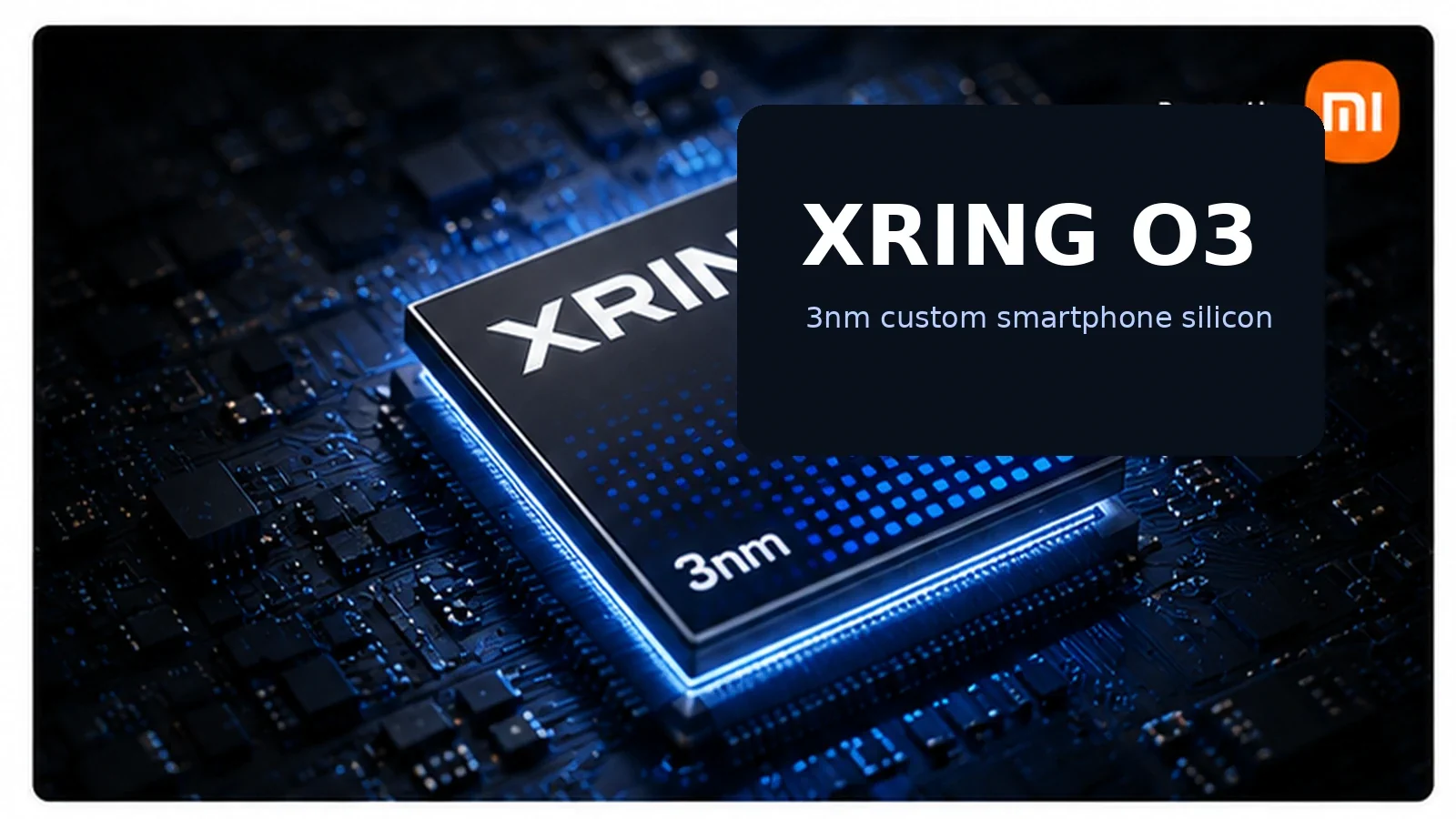
Xiaomi unveiled the XRing O3 on August 24, 2026. Reuters reports that the chip has entered mass production and will be manufactured by TSMC using an advanced 3nm process. The processor is expected to power an upcoming flagship folding phone, with initial O3 shipments reportedly targeted at roughly 200,000 to 300,000 units.
Key takeaway
Xiaomi's 3nm XRing O3 puts custom silicon at the center of its premium smartphone strategy. PhonesGate examines what is confirmed, how it compares with Google's Tensor G6 approach, and why a flagship foldable is the perfect test.
That manufacturing detail matters. Advanced nodes are expensive and difficult to secure, so moving directly into 3nm production shows that Xiaomi’s custom-silicon effort is no longer a small experiment. The company has already invested billions of dollars in its chip program and expanded its semiconductor design team to more than 3,000 people.
XRing O3 looks unusually aggressive on paper
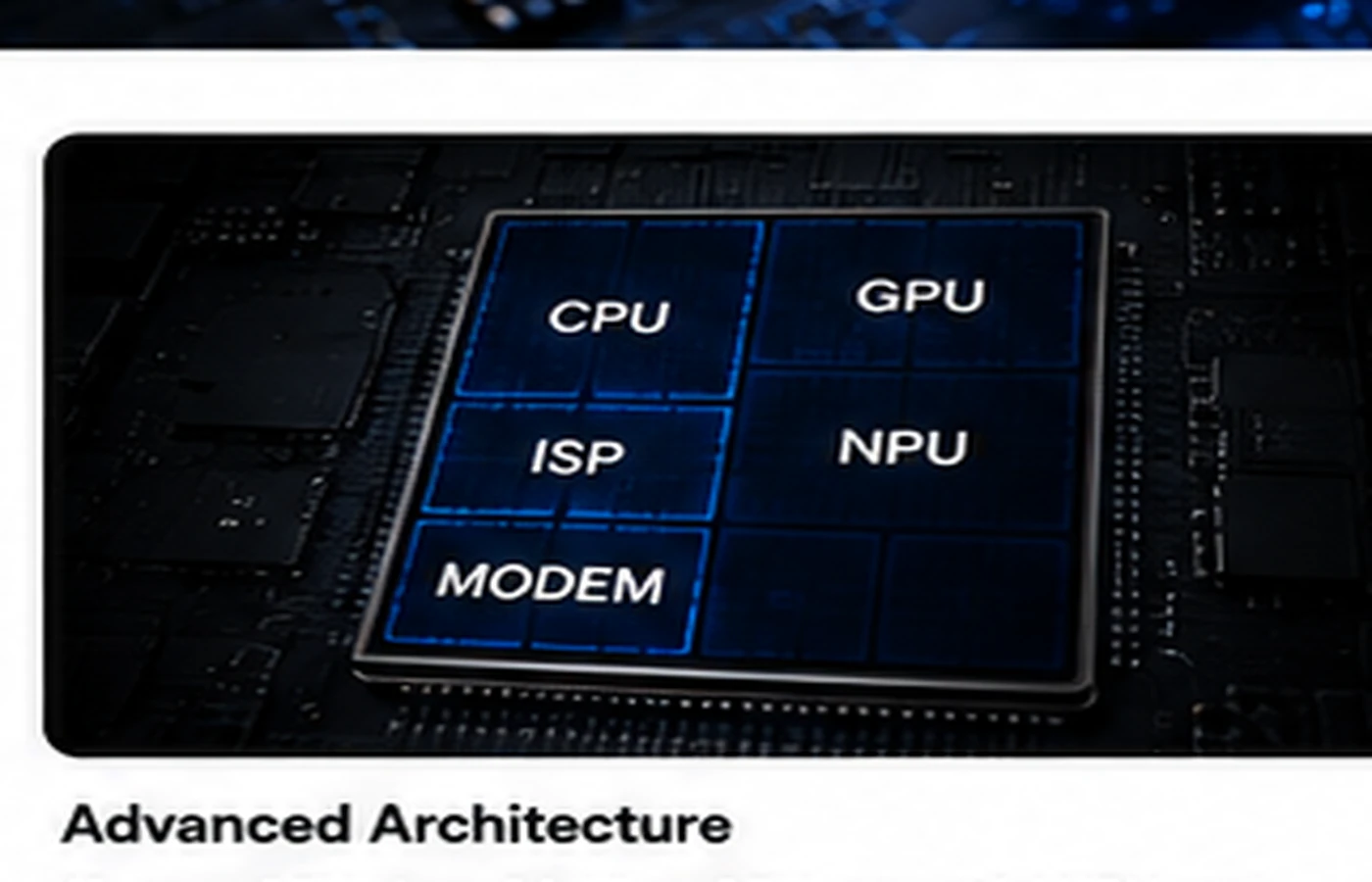
According to Xiaomi’s published details reported by Android Authority, XRing O3 uses a 10-core CPU configuration and does not rely on the traditional “little core” arrangement seen in many mobile processors. The GPU is also notable: Xiaomi is using an Arm G2-Ultra NX design with 16 graphics cores, eight NX neural accelerators and support for AI-assisted techniques such as super-resolution and frame interpolation.
7 min read
Google coverage from PhonesGATE. Published Aug 28, 2026.
Those specifications do not tell us how fast the finished phone will be. Clock speeds, cache sizes, thermal limits, memory bandwidth and software scheduling can change real-world performance dramatically. Until independent benchmarks arrive, the correct conclusion is that O3 looks ambitious — not that it has already defeated Snapdragon, Dimensity or Tensor.
Why Google Tensor G6 is the interesting comparison
Google and Xiaomi are both building custom smartphone silicon, but their priorities appear very different. Tensor G6 is deliberately optimized around Google’s AI, imaging and software features rather than benchmark leadership. Google says its newest TPU provides substantially more AI compute than the previous generation, while the chip also improves CPU efficiency and enables Pixel-specific camera features.
That strategy works when the software experience is the product. The problem is that Tensor G6 still gives up a lot of raw performance to competing flagship chips. Recent testing of the Pixel 11 series found healthy generational CPU gains, but much weaker graphics performance compared with top Snapdragon, Dimensity, Exynos and Apple silicon.
Xiaomi appears less willing to make that trade. O3 is being positioned with a large CPU configuration and a much more ambitious graphics subsystem. If it can combine that raw hardware with Xiaomi’s own AI and imaging stack, the company could pursue both sides of the equation instead of choosing between them.
XRing O3 vs Tensor G6: what we know today
Area Xiaomi XRing O3 Google Tensor G6 Manufacturing TSMC 3nm, according to Reuters sources TSMC 3nm CPU direction 10-core design 7-core Arm C1-based design GPU direction Arm G2-Ultra NX, 16 cores reported PowerVR CXTP-48-1536 AI strategy Custom Xiaomi AI stack plus GPU neural acceleration Google fifth-generation TPU, deeply integrated with Pixel AI Primary advantage today Very aggressive hardware specification on paper Mature Pixel-specific software and AI integration Independent O3 benchmarks Not yet available Available in shipping Pixel 11 devices
The final row is the most important. Tensor G6 is a product we can measure today. XRing O3 is not yet available in a retail smartphone that independent reviewers can test. Any claim that one “wins” overall would therefore be premature.
Why debuting in a foldable makes sense
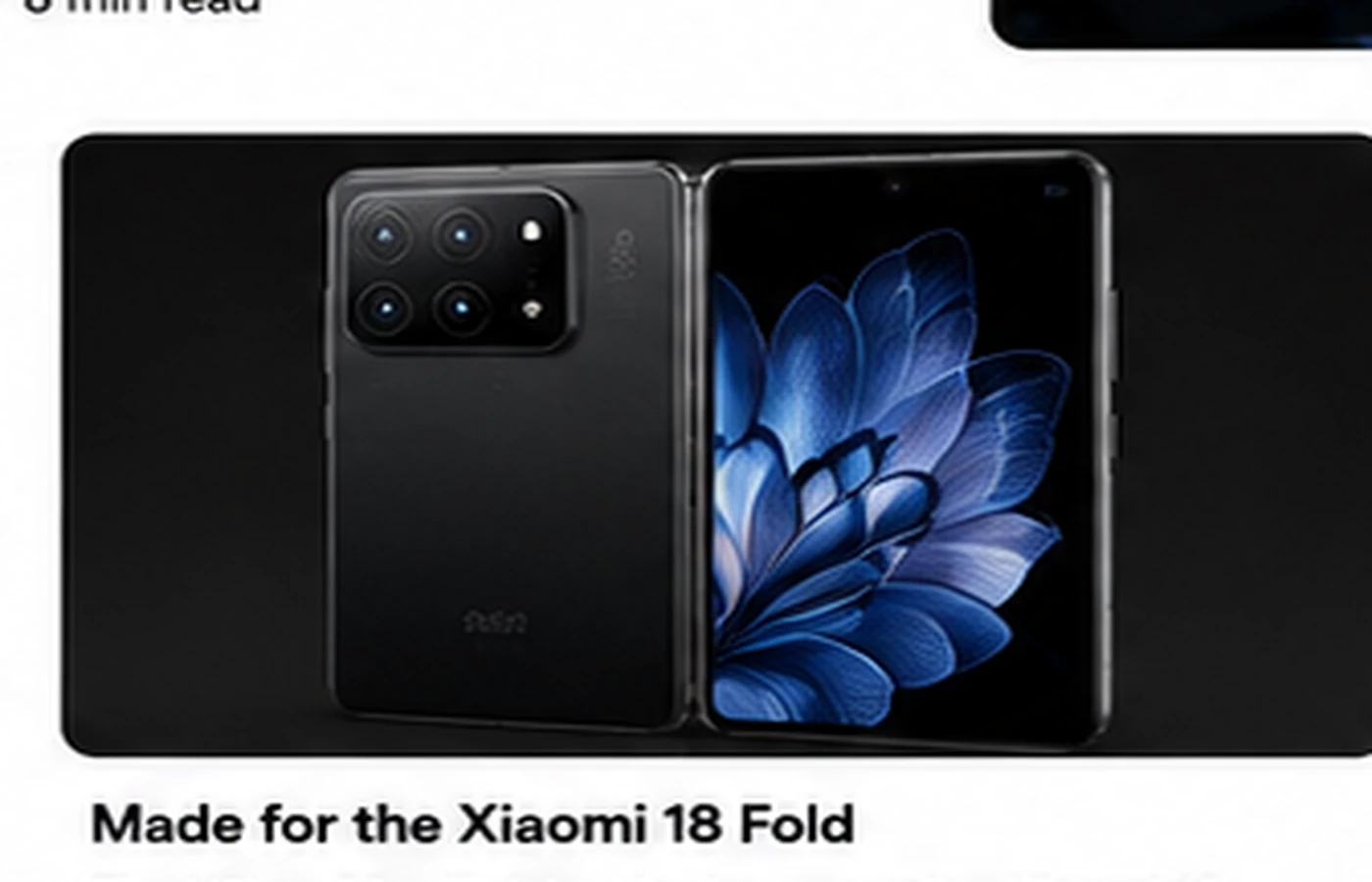
Reports point to the O3 debuting in Xiaomi’s next flagship book-style foldable, widely referred to as the Xiaomi 18 Fold. That would be a smart showcase for the new chip because foldables expose almost every weakness in mobile silicon at once.
They need strong multitasking performance for large displays, efficient graphics to drive complex interfaces, sophisticated image processing for multiple cameras and excellent power management because the chassis is thin and thermally constrained. If Xiaomi wants to prove that its silicon is ready for premium hardware, a foldable is a much harder — and more convincing — test than a conventional slab phone.
Custom silicon gives Xiaomi something Qualcomm cannot
Qualcomm and MediaTek build chips for many manufacturers. That scale is a strength, but it also means their processors must work across many different product strategies. Xiaomi’s own chip can be tuned around Xiaomi’s specific cameras, AI models, power-management goals and operating-system features.
This is the same strategic advantage Apple has exploited for years. Apple does not merely buy a fast processor and place it inside an iPhone. It designs the hardware, operating system and application frameworks around one another. Google is attempting a similar integration with Tensor, particularly for machine learning.
Xiaomi’s long-term opportunity is therefore not simply to beat Snapdragon in a benchmark. The bigger prize is to create features competitors cannot reproduce as easily because they do not control the same combination of hardware and software.
Gaming may reveal whether the strategy works
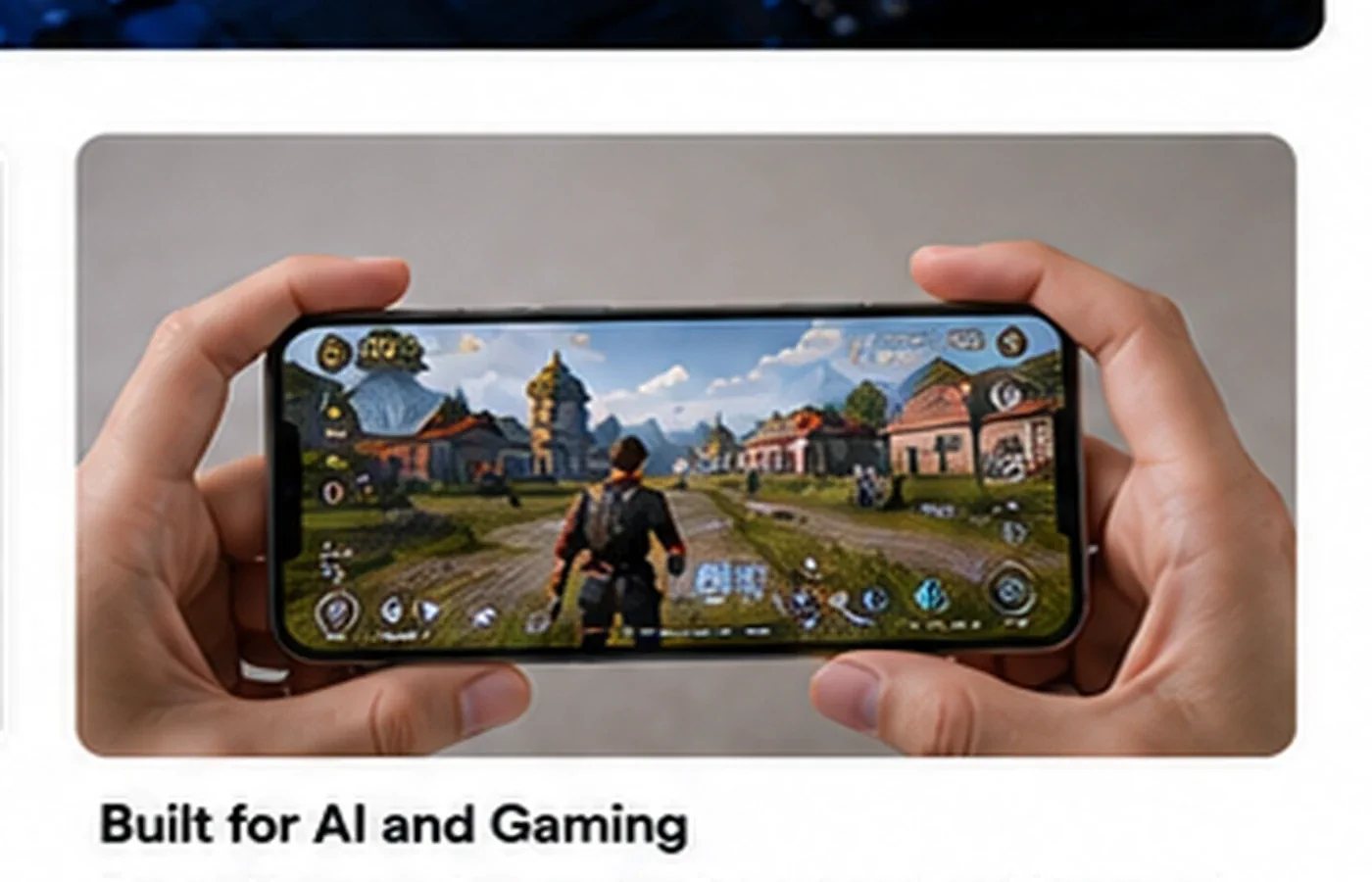
The G2-Ultra NX GPU makes gaming one of the most interesting areas to watch. Xiaomi is highlighting AI-assisted super-resolution and frame interpolation, techniques designed to produce a smoother or sharper experience without forcing the GPU to render every pixel and every frame conventionally.
That direction mirrors a wider industry shift. Modern mobile graphics are becoming less dependent on brute-force rendering and more dependent on intelligent reconstruction. If Xiaomi can control both the GPU implementation and the software stack that feeds it, the company may be able to optimize specific games and system workloads more aggressively.
The bigger Xiaomi silicon roadmap matters even more
Reuters reports that XRing O3 is only one part of Xiaomi’s semiconductor strategy. The company is also developing the XRing O100, a neural-processing chip intended to support Xiaomi’s MiMo AI model, and the XRing D100 for autonomous driving.
That tells us Xiaomi is not building one processor merely to claim it has an in-house chip. It is building a broader silicon organization spanning smartphones, AI and vehicles. This is strategically important because Xiaomi is one of the few consumer technology companies operating at scale across phones, connected devices and electric cars.
Could Xiaomi become the Apple of Android silicon?
Not yet. Apple has spent more than a decade refining custom smartphone and computer processors while controlling the operating system, development tools and hardware around them. Xiaomi is much earlier in that journey.
But O3 makes the comparison less ridiculous than it would have sounded a few years ago. Xiaomi has the shipment volume, engineering budget and increasingly broad device ecosystem needed to make custom silicon economically meaningful.
The more immediate consequence may be competitive pressure. If O3 performs well, Google will face even more questions about Tensor’s raw performance compromises, while Qualcomm and MediaTek will have another major manufacturer capable of shifting at least some premium devices away from their chips.
PhonesGate take
XRing O3 matters because Xiaomi is no longer satisfied with choosing between other companies’ processors. The 3nm manufacturing process, 10-core CPU and ambitious G2-Ultra NX graphics design suggest a company willing to spend heavily to control its own silicon roadmap.
We should not call it a Tensor killer before independent testing exists. Tensor G6 already powers shipping phones and remains tightly integrated with Google’s AI and camera software. But if Xiaomi can deliver competitive performance while building equally deep software integration, Android’s custom-silicon conversation could change very quickly.
The Xiaomi 18 Fold may therefore be more than another foldable launch. It could be the first real-world proof that Xiaomi intends to become a silicon company as well as a smartphone company.