
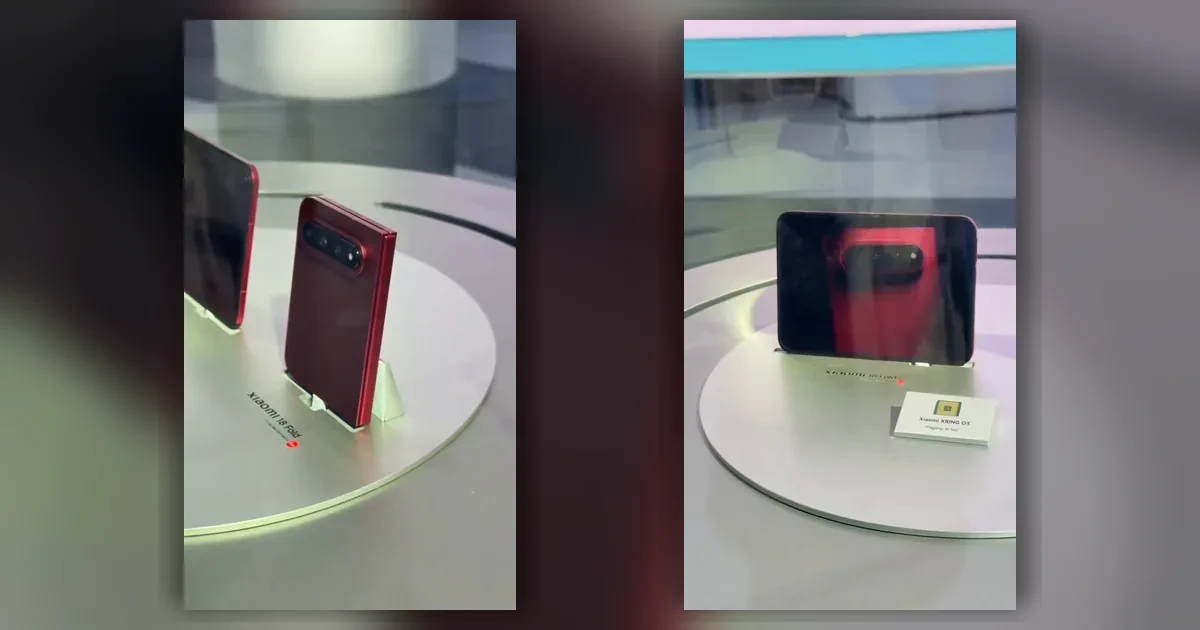

The Xiaomi 18 Fold is no longer just a collection of leaked renders and engineering-sample photos. Xiaomi is now showing the wide-screen foldable publicly at IFA 2026 in Berlin, and real-world footage gives us a much better sense of what the phone actually looks like outside a press render.
The first impression is simple: the proportions are the story. Xiaomi has moved away from the tall, narrow shape associated with earlier book-style foldables and toward a shorter, wider format. In person, the device looks almost square when closed, with rounded corners, a deep Cherry Red/Burgundy finish and a horizontal camera bar running across the upper part of the rear panel.
The video above is especially useful because Xiaomi has not yet published the complete retail specification sheet. What we can see with our own eyes — and what Xiaomi has now officially confirmed — is therefore more valuable than filling the gaps with rumor.
Key takeaway
Real-world show-floor footage gives us a close look at the Xiaomi 18 Fold’s wide proportions, Cherry Red finish and horizontal triple-camera bar. Xiaomi has also confirmed XRing O3, LPDDR6 memory and a September 7 China launch.
The wide design makes much more sense on video
Foldables are difficult to judge from isolated product renders because a few millimeters of width can completely change how the device feels. The 18 Fold’s new proportions are obvious in the show-floor footage. When closed, the phone looks wider and more compact than the traditional “remote-control” shape that defined some early foldables.
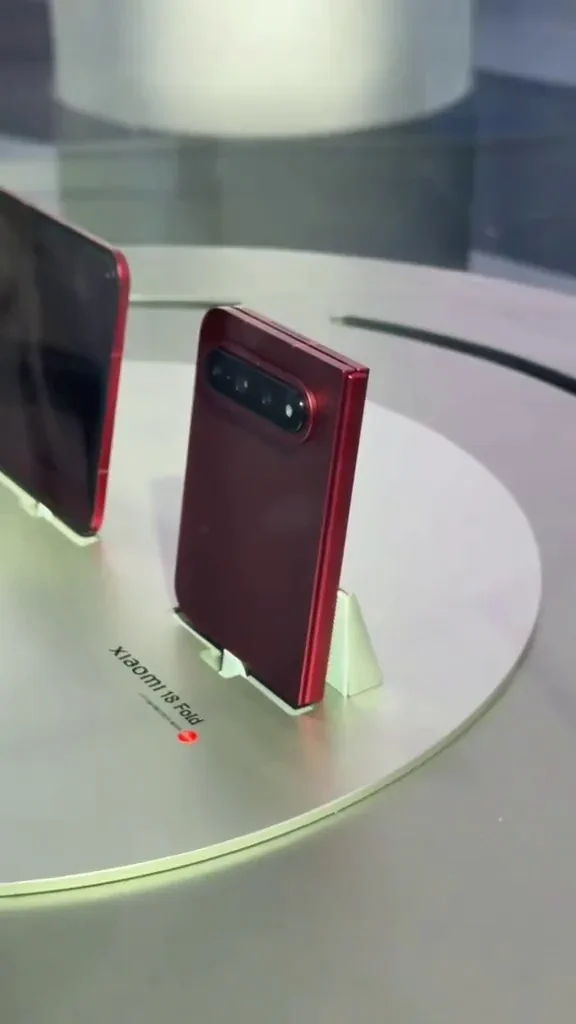
That could be important for everyday usability. A wider cover display should feel more like a conventional smartphone for typing, messaging and browsing, reducing the need to unfold the device for every task. At the same time, opening a wider foldable can create a more landscape-friendly canvas for multitasking, video and documents.
8 min read
Xiaomi coverage from PhonesGate. Published Sep 5, 2026.
We should not overstate the ergonomics before anyone is allowed to handle a final retail unit. Xiaomi’s IFA display is a first look, not a full hands-on review. But visually, this is a more convincing shape than Xiaomi’s older narrow foldable formula.
The horizontal camera bar gives the phone its identity
The rear camera design is just as distinctive as the body shape. The Cherry Red panel is interrupted by a long, glossy horizontal camera bar containing what appears to be three rear cameras and an LED flash. Android Authority’s close look at the IFA unit also notes camera-bar markings that appear to indicate a focal range from roughly 17mm to 80mm.
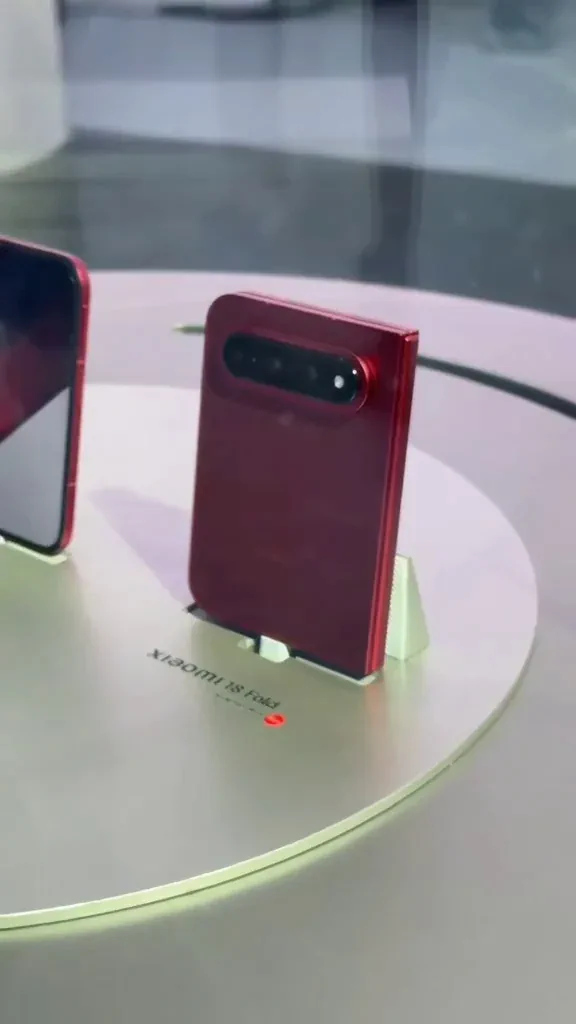
That focal-range marking could point to an optical telephoto in the neighborhood of 3x, but Xiaomi has not yet published the full camera specification. Until it does, the correct description is simply what the hardware visibly shows: a triple-camera flagship foldable with a wide horizontal camera module.
The camera bar also gives the 18 Fold a stronger visual identity than a generic vertical stack of lenses. Whether people love it or hate it, the phone is immediately recognizable from the back — useful in a foldable market where designs are starting to converge.
The side profile looks surprisingly controlled
Another useful part of the video is the side view. Foldables can look thin in a render and bulky once two halves are stacked together. The IFA display shows the 18 Fold from an angle where the folded edges and hinge area are clearly visible.
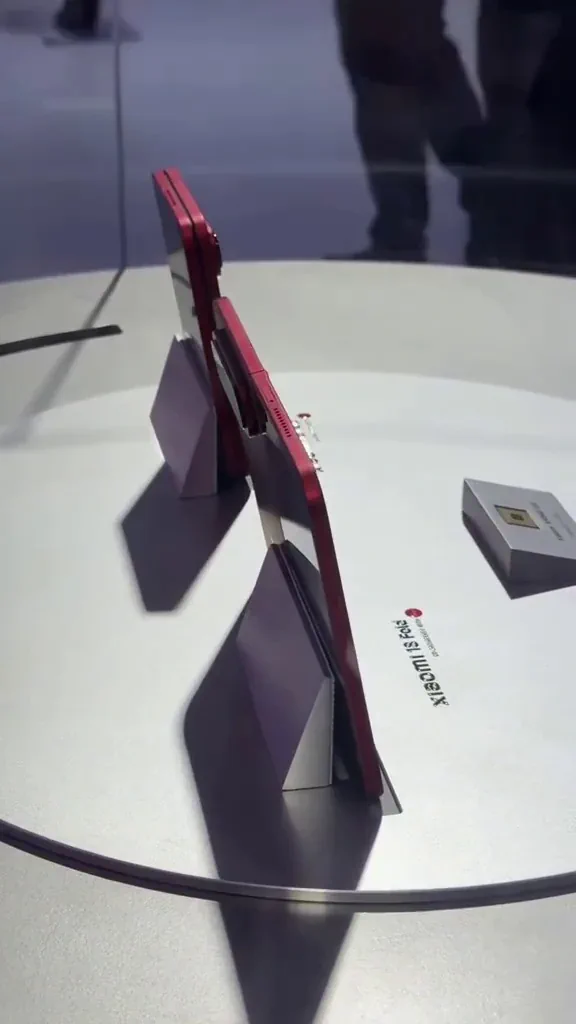
Without official dimensions, it would be misleading to attach a millimeter figure to what we see. What is fair to say is that the profile does not look excessively bulky for a book-style foldable, especially given the wide chassis and large camera module. The final weight, hinge feel and pocketability remain unanswered until proper hands-on testing is allowed.
XRing O3 is the bigger technology story
The design may get the attention, but the processor is arguably the more important development. Xiaomi says the 18 Fold will be the first flagship smartphone powered by its next-generation XRing O3 chip.
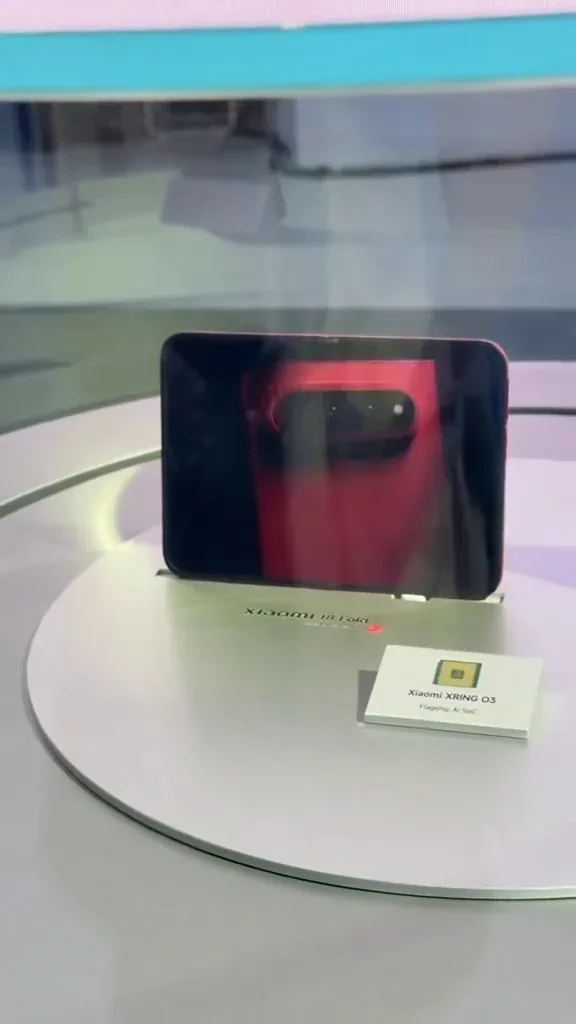
Reuters reports that XRing O3 is a new 3-nanometer in-house Xiaomi processor and that the 18 Fold will pair it with LPDDR6 memory from ChangXin Memory Technologies (CXMT). Xiaomi and CXMT have both confirmed the LPDDR6 plan.
That pairing matters because it gives Xiaomi much more control over the platform than simply buying a complete flagship reference design from Qualcomm or MediaTek. A foldable is one of the hardest devices on which to prove that strategy. Two displays, demanding multitasking, camera processing, battery constraints and thermal limits all put pressure on the SoC.
If XRing O3 performs well here, the story is bigger than a single phone. It would show that Xiaomi’s own silicon can support one of the company’s most expensive and technically complex consumer devices.
LPDDR6 makes the 18 Fold an early next-generation memory showcase
CXMT says it has started mass production of LPDDR6 DRAM and will supply the memory for Xiaomi’s new foldable flagship. Reuters notes that LPDDR6 is CXMT’s most advanced mobile memory technology, while Android Authority reports speeds of up to 12,800Mbps for the memory platform Xiaomi is discussing around the 18 Fold.
Higher memory bandwidth can be particularly useful in a foldable because large-screen multitasking encourages heavier workloads. Split-screen apps, AI processing, high-resolution camera pipelines and gaming can all move significant amounts of data between the CPU, GPU, NPU and memory subsystem.
Of course, memory speed alone does not make a phone fast. Latency, thermal control, storage performance and software scheduling are equally important. But the 18 Fold is clearly being used as a technology showcase rather than merely as a cosmetic redesign.
What Xiaomi has confirmed — and what is still unknown
At this stage, the confirmed picture is relatively clear:
- Xiaomi 18 Fold is real and is being publicly shown at IFA 2026.
- It uses a wide book-style foldable design.
- The phone shown publicly has a Cherry Red/Burgundy finish and a visible triple-camera rear system.
- It will be Xiaomi’s first flagship using XRing O3.
- Xiaomi and CXMT have confirmed LPDDR6 memory.
- Xiaomi has confirmed a China launch on September 7, 2026.
What is still missing is equally important. Xiaomi has not yet released the complete official specification sheet covering final display sizes and resolutions, exact battery capacity, charging speeds, full camera sensor details, weight, dimensions, storage configurations or global availability.
That means any article presenting a complete “final specs” table before the launch risks mixing confirmed data with leaks. PhonesGate will keep those categories separate and update the device once Xiaomi publishes the retail specification.
Why the video adds more value than another render
There is an SEO and editorial reason to include the show-floor footage in this article. Readers can directly inspect the real displayed hardware instead of relying only on a written description. The video reveals reflections, thickness, camera protrusion, proportions and color in a way a perfect press image cannot.
It also makes one limitation clear: this is still a display-unit first look. The phones are presented on stands rather than being freely handled. We cannot judge hinge resistance, crease visibility under normal use, camera quality, software fluidity, haptics or thermal behavior from this footage.
That distinction matters. Real-world video is valuable evidence of design; it is not a substitute for a review.
PhonesGate take
The Xiaomi 18 Fold already looks more convincing in real-world footage than it did in the first leaks. The wide proportions give the phone a more purposeful identity, the Cherry Red finish works surprisingly well with the horizontal camera bar, and the side profile does not immediately look compromised by the new shape.
But the bigger reason to watch this phone is underneath the chassis. XRing O3 and LPDDR6 make the 18 Fold Xiaomi’s most important silicon showcase yet. If Xiaomi can combine its own 3nm processor with strong battery efficiency, stable thermals and a polished foldable experience, the 18 Fold becomes much more than another competitor to Samsung.
The September 7 launch will answer the remaining questions. For now, the show-floor video tells us enough to say one thing with confidence: Xiaomi is not simply bringing back the MIX Fold formula under a new name. The 18 Fold is trying to establish a different shape, a different platform and a much more ambitious position in Xiaomi’s flagship lineup.
Sources
Media note: the embedded vertical video and the still images in this article come from the footage supplied to PhonesGate for this article. The video is used at its original visual resolution and has only been remuxed for faster web playback; it has not been re-encoded or quality-reduced.