

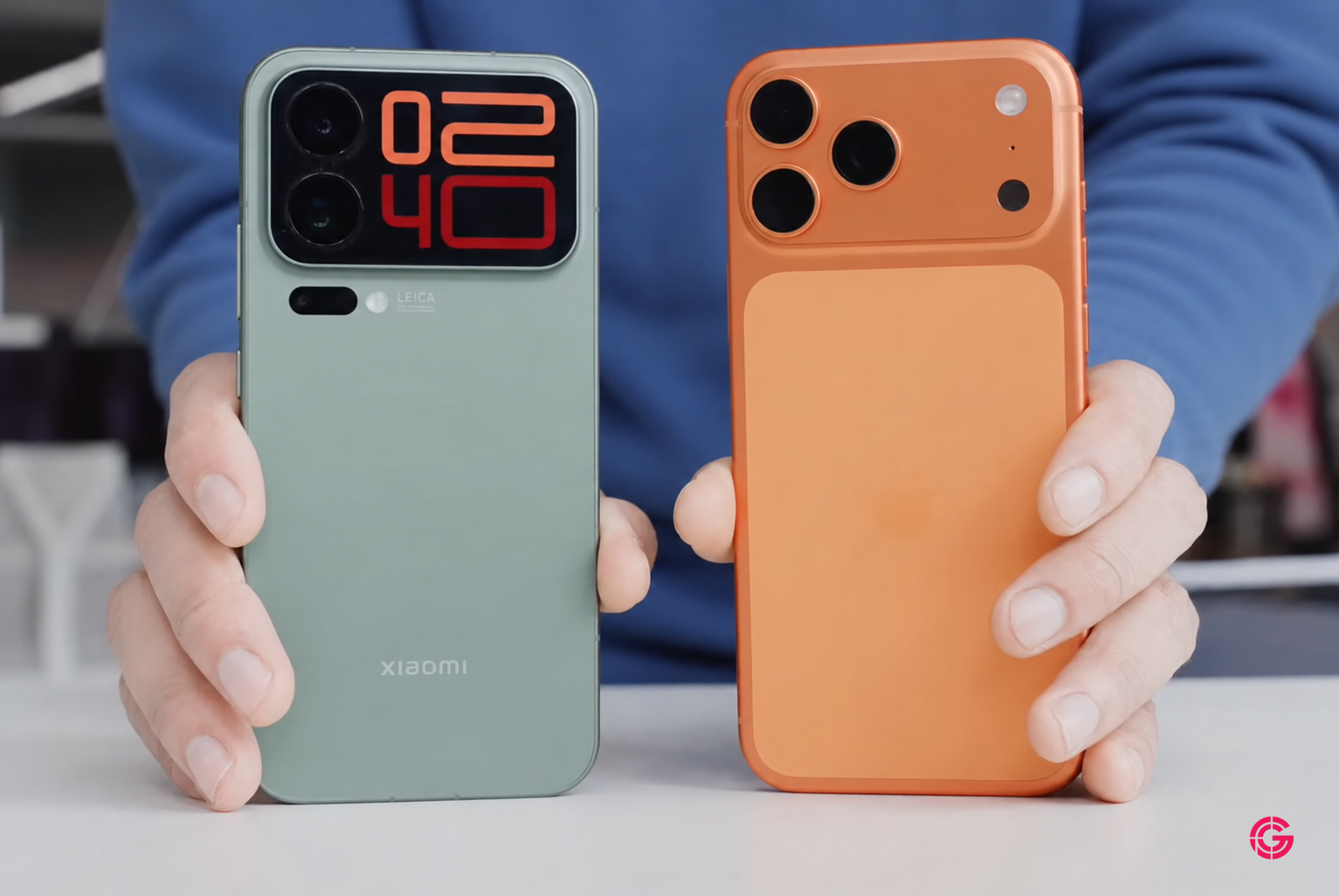
The Xiaomi 17 Pro Max is often described as a “Chinese iPhone,” but the comparison with Apple’s iPhone 17 Pro Max becomes more interesting once the design similarities are set aside. Xiaomi offers a much larger battery, substantially faster charging, more RAM and a rear OLED display. Apple answers with global availability, a mature ecosystem, stronger resale value and a more predictable ownership experience.
The result is not a simple story of imitation. The Xiaomi 17 Pro Max borrows familiar design language, then uses China-market hardware priorities to challenge Apple in the areas where the iPhone is usually most conservative.
Quick answer
Choose the Xiaomi 17 Pro Max if you prioritize battery capacity, charging speed, memory, hardware experimentation and the rear-display camera experience—and you are comfortable importing a China-market phone.
Key takeaway
The Xiaomi 17 Pro Max looks deliberately familiar, but its 7,500mAh battery, 100W charging, rear OLED display, 16GB RAM and triple 50MP camera system create a very different flagship proposition from the globally available iPhone 17 Pro Max.
Choose the iPhone 17 Pro Max if you prioritize official global availability, local warranty, Apple ecosystem integration, software consistency, long-term resale value and minimal setup friction.
PhonesGate verdict at a glance
Category Assessment Design Unapologetically iPhone-like, but well built with IP68 and pre-installed protection Display Large, bright 6.9-inch panel with a smaller cutout than the iPhone Performance Snapdragon 8 Elite Gen 5 credibly challenges Apple's fastest silicon Battery Enormous 7,500mAh silicon-carbon cell in a body lighter than the iPhone Charging 100W wired with the charger included, 50W wireless, 22.5W reverse wireless Cameras Three genuinely strong 50MP cameras with an excellent 5x telephoto Rear display The most complete version of the back-screen idea yet, past gimmick territory Availability China-only model, the single biggest obstacle for most buyers
11 min read
Xiaomi coverage from PhonesGATE. Published Jul 22, 2026.
The imitation is the strategy
The resemblance is not subtle. The flat sides, the speaker and antenna layout, the general proportions and especially the large rear camera plateau all echo Apple's current design language. The software follows the same playbook: a pull-down control centre, stock app aesthetics, widgets and even a pill-shaped status area that mirrors the Dynamic Island concept.
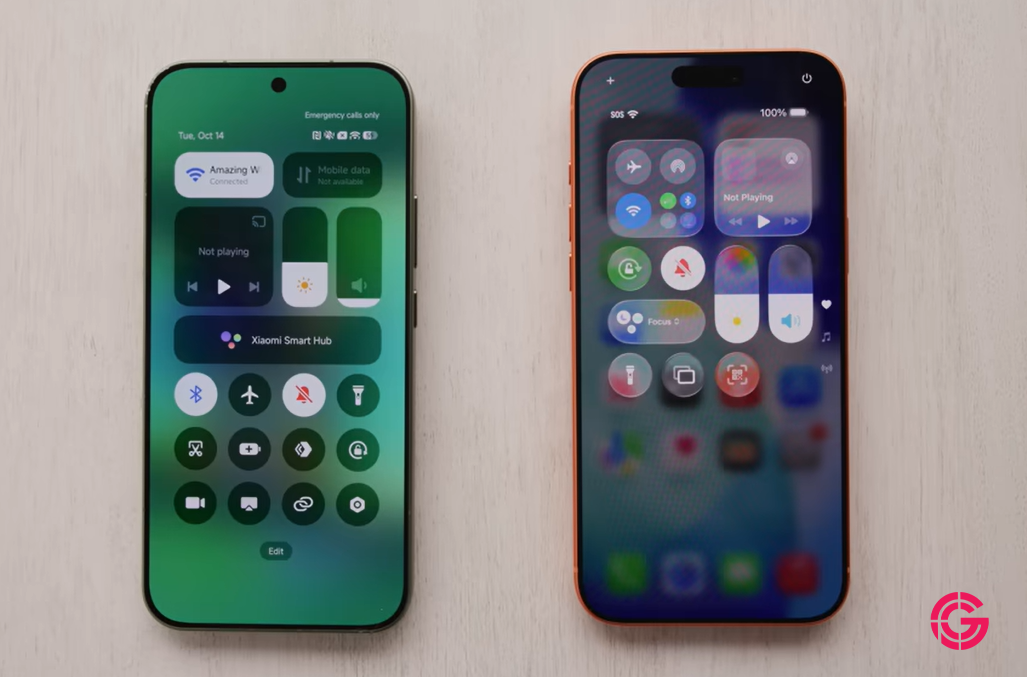
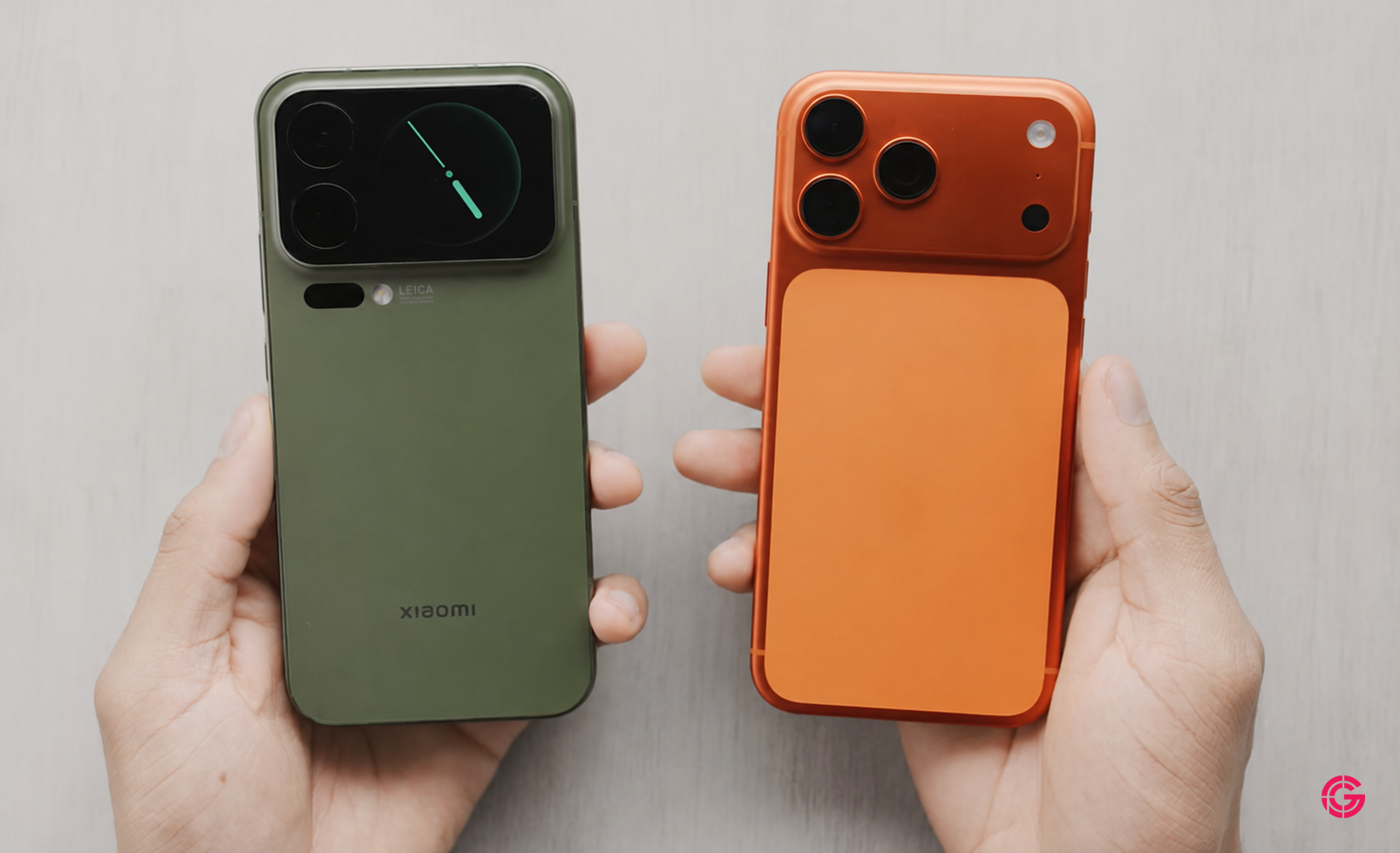
This is not laziness; it is a customer-acquisition strategy. Familiarity removes the friction of switching. An iPhone user who picks up the Xiaomi 17 Pro Max knows immediately how to use it. The real pitch begins after that first impression, and it is built entirely on specifications Apple does not match.
A display that trades Face ID for something faster
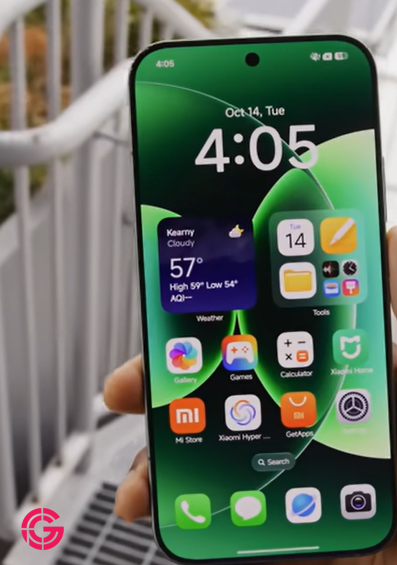
The 6.9-inch panel matches the iPhone 17 Pro Max in size and keeps slim, even bezels around the whole screen. Resolution is fractionally behind, though the difference is invisible in practice. What is visible is brightness, where the Xiaomi panel goes noticeably higher.
The most interesting decision sits at the top of the screen. There is no Face ID hardware, only a small camera cutout, because authentication moves to an ultrasonic fingerprint reader under the display. The result is a cleaner screen and a very fast unlock, a trade many users will consider a straight upgrade.
Snapdragon 8 Elite Gen 5 ends Apple's performance monopoly
For years, the safest claim in mobile technology was that Apple's silicon led in raw performance. The Xiaomi 17 Pro Max is among the first phones shipping Qualcomm's new Snapdragon 8 Elite Gen 5, and according to the supplied review material, the chip now essentially matches the A19 Pro's celebrated single-core results while pulling ahead in multi-core and GPU performance.
That would give it a credible claim to being the fastest mobile chip available, full stop. It is paired with 16GB of RAM and up to a terabyte of fast UFS 4.1 storage, a memory configuration Apple does not offer at any price.
Benchmark leadership matters most as a statement. Every modern flagship is fast in daily use, but the phone positioned as an iPhone alternative no longer concedes the performance crown, and that changes the conversation.
The battery is from a different era than the iPhone's
Battery is where the comparison stops being close.
The Xiaomi 17 Pro Max carries a 7,500mAh silicon-carbon battery. For context, even the smaller 17 Pro's 6,300mAh cell already exceeds the S25 Ultra, the OnePlus 13 and every iPhone ever made, and it does so without sacrificing the SIM tray.
Silicon-carbon chemistry is the key. Its higher energy density means all this capacity arrives without additional bulk; the phone is actually lighter than the iPhone 17 Pro Max despite carrying roughly half again as much battery.
Charging follows the same philosophy of excess:
- 100W wired charging, with the charger included in the box;
- 50W wireless charging;
- 22.5W reverse wireless charging, fast enough to use the phone as a power bank for earbuds, a watch, or a drained iPhone.
Set against Apple's traditionally conservative charging speeds and empty box, this section of the specification sheet reads less like a comparison and more like a taunt.
Three 50MP cameras that go beyond the number
The iPhone 17 Pro's triple 48MP system gets a pointed answer: three cameras at 50MP each. The one-upmanship is obvious, but the substance is real.
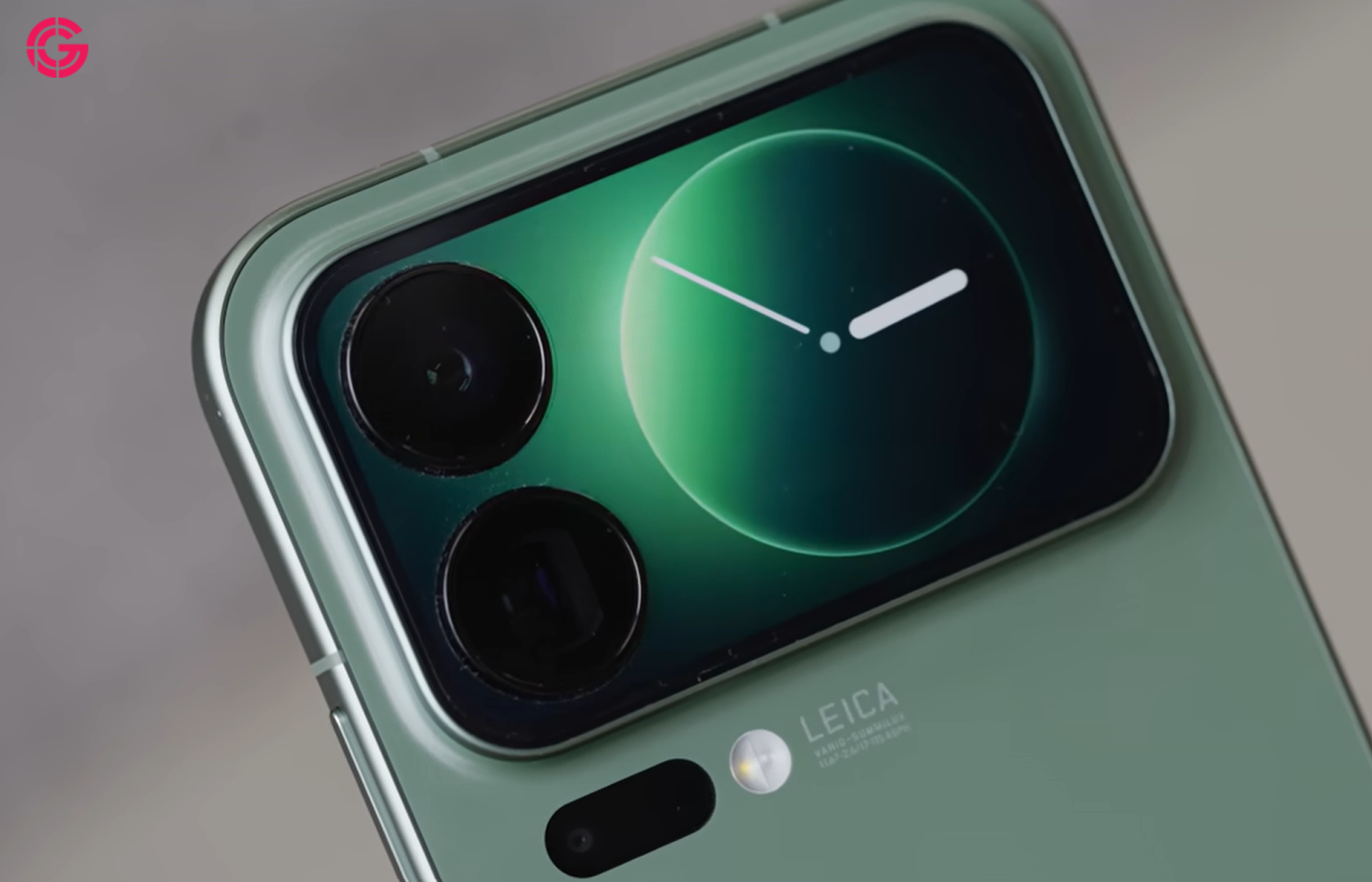
According to the supplied review material, all three cameras produce detailed, crisp images with naturally shallow depth of field and generally pleasing colour. The 5x optical telephoto stands out with natural bokeh and a strong portrait character, and these observations apply to the default 12MP output, before the full 50MP modes are even engaged.
There is one recurring caveat typical of phones from this region: a tendency to overexpose and brighten detected faces, particularly with some skin tones, while the same tones render accurately when no face detection triggers. Buyers who dislike beautification-style processing should factor this in.
The camera app itself adds practical extras: 8K video recording, an always-available exposure slider in auto mode, and a teleprompter mode that lets a presenter read text while looking into the lens.
The rear display is the feature that changes the phone
The entire rear camera plateau is not a decorative panel. It is a full corner-to-corner OLED display, 2.9 inches on the Pro Max, running at 120Hz with up to 3,000 nits of brightness, interrupted only by the camera cutouts.
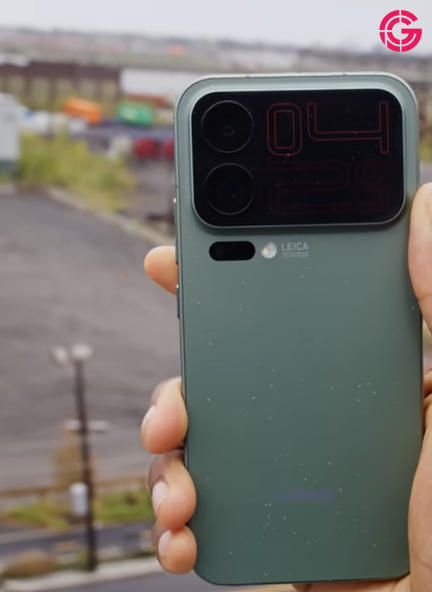
Selfies with the main cameras
The headline use is obvious and brilliant: a tap turns the rear screen into a viewfinder for the main cameras, complete with zoom, aspect ratio and video controls. Self-portraits taken with a flagship 50MP main camera and a 5x telephoto simply outclass anything a front-facing camera can do.
A tiny smartwatch glued to the phone
Beyond the viewfinder, the rear screen behaves like a customizable watch face: double-tap to wake a clock in any style, swipe down for notifications, swipe across into the camera. A dedicated personalization section and a marketplace of faces, widgets and themes cover everything from classic watch complications to fitness layouts and anime characters.
It also mirrors live activities. A running timer appears as a draining liquid animation when the phone is flipped over; calls and music playback can be seen and controlled from the back. Xiaomi even sells a retro handheld gaming case with physical buttons that turns the rear screen into a tiny game console, an accessory that exists more for delight than for practicality.
Why this attempt succeeds where others stayed gimmicks
Rear screens are not new. Xiaomi's own 11 Ultra had a small one, Nothing tried a dot-matrix panel on the Phone 3, and gaming phones have experimented for years. None crossed the line from novelty to feature.
This one arguably does, for a simple reason: it costs nothing. The display is edge to edge, does not disturb the phone's weight distribution, does not add thickness or weight, does not break the IP68 rating, and ships with pre-installed screen protectors on both faces. When a feature this unusual arrives with no measurable drawback, the calculation changes.
Xiaomi 17 Pro Max vs iPhone 17 Pro Max: specification and ownership comparison
Category Xiaomi 17 Pro Max iPhone 17 Pro Max PhonesGate advantage Market position China-market experimental flagship Globally distributed premium flagship Depends on availability needs Display approach 6.9-inch front panel, small camera cutout and ultrasonic fingerprint reader 6.9-inch display with Face ID and Dynamic Island Xiaomi for cleaner cutout; Apple for Face ID integration Processor Snapdragon 8 Elite Gen 5 A19 Pro Too workload-dependent for a universal winner Memory and storage Up to 16GB RAM and 1TB storage Lower published RAM capacity, up to 1TB storage Xiaomi for multitasking headroom Battery 7,500mAh silicon-carbon battery Smaller battery with Apple efficiency optimisation Xiaomi for capacity Charging 100W wired, 50W wireless and reverse wireless charging Slower charging and no charger included Xiaomi Rear cameras Triple 50MP Leica-branded system with 5x telephoto Triple 48MP system with mature Apple image processing Xiaomi for hardware flexibility; Apple for consistency Front-facing experience Rear display enables selfies with the main cameras Dedicated front camera integrated with Face ID Xiaomi for image quality potential; Apple for convenience Software China-market HyperOS configuration Global iOS ecosystem Apple for friction-free international use Warranty and service Limited outside China when imported Official global support and service network Apple Signature feature Full rear OLED display Apple ecosystem and cross-device continuity Depends on buyer priorities
Which one should you buy?
Buy the Xiaomi 17 Pro Max when hardware value comes first
The Xiaomi is the more exciting engineering product. Its battery, charging system, memory configuration and rear display make the iPhone look conservative. It is the better option for enthusiasts who enjoy unusual hardware and are willing to solve software, network and warranty complications themselves.
Buy the iPhone 17 Pro Max when ownership reliability comes first
The iPhone is the safer commercial product. It is easier to buy, easier to repair officially, easier to resell and more predictable across banking apps, wearables, car integration, accessories and long-term software use.
The real winner depends on where you live
Inside China, the Xiaomi 17 Pro Max is a much more practical recommendation because local software, networks, warranty and service are aligned with the device. Outside China, the iPhone 17 Pro Max gains a major advantage before the hardware comparison even begins.
PhonesGate take: Xiaomi wins the specification battle, Apple wins the ownership battle
Xiaomi’s flagship is the more aggressive product. Apple’s flagship is the more complete international purchase.
That distinction is more useful than declaring one phone universally superior. A specification sheet cannot compensate for unsupported network bands, missing local warranty or regional software friction. At the same time, global availability does not erase Xiaomi’s lead in battery capacity, charging speed and hardware experimentation.
The catch: you probably cannot buy it properly
The Xiaomi 17 Pro Max is a China-market device. There is no global version, which means importing one involves navigating Chinese firmware, app store differences, regional service limitations and network band compatibility, with no local warranty.
That single fact reframes the whole review. As a product most readers can walk into a store and buy, it does not exist. As a demonstration of what current smartphone hardware can be, it is a public challenge to every global flagship, and an uncomfortable reminder of how much specification restraint Western-market buyers have learned to accept.
Who should buy the Xiaomi 17 Pro Max?
- enthusiasts comfortable importing and living with a China-market device;
- battery-first users who want the largest cell in any mainstream flagship;
- selfie and portrait shooters who will exploit the rear-display viewfinder;
- power users who value 16GB of RAM and top-tier sustained performance;
- anyone who wants fast charging with the charger actually included.
Who should skip it?
- buyers who need official availability, warranty and local support;
- users dependent on Google services out of the box without setup work;
- anyone deeply invested in the Apple ecosystem;
- buyers sensitive to face-brightening camera processing;
- anyone who considers a rear display an answer to a question they never asked.
Frequently asked questions
Is the Xiaomi 17 Pro Max just an iPhone copy?
The design and parts of the software clearly imitate the iPhone, including the lineup naming. The hardware underneath, however, exceeds the iPhone in performance benchmarks, battery capacity, charging speed and memory.
How big is the battery?
The Pro Max uses a 7,500mAh silicon-carbon battery, far larger than any iPhone, while remaining lighter than the iPhone 17 Pro Max.
What is the rear display for?
Primarily as a viewfinder so the main 50MP cameras can take selfies, plus customizable clock faces, notifications, timers, music controls and other glanceable information.
Is it faster than the iPhone 17 Pro Max?
The supplied review material indicates the Snapdragon 8 Elite Gen 5 matches Apple's single-core performance and leads in multi-core and GPU results, though benchmark figures should be verified independently.
Can I buy it outside China?
Only as an import. It is a China-only model with no global release, which affects software, services, warranty and network compatibility.
Is it water resistant with the rear screen?
Yes, the phone retains an IP68 rating and ships with factory screen protectors on both the front and rear displays.
PhonesGate verdict
The Xiaomi 17 Pro Max is the rare phone whose most controversial trait, its shameless iPhone resemblance, is also its least interesting one.
Under the borrowed silhouette is a device that beats Apple's flagship on chip benchmarks, nearly doubles its battery capacity while weighing less, charges several times faster with the charger included, and adds a rear display that finally graduates from gimmick to genuine feature.
The China-only availability keeps it out of most buyers' hands, and Apple retains real advantages in ecosystem, software consistency and global support. But as a statement of engineering intent, the message could not be clearer: the specification gap between China-market flagships and everything else is becoming impossible to ignore, and the phone wearing the iPhone's clothes is the one setting the pace.