
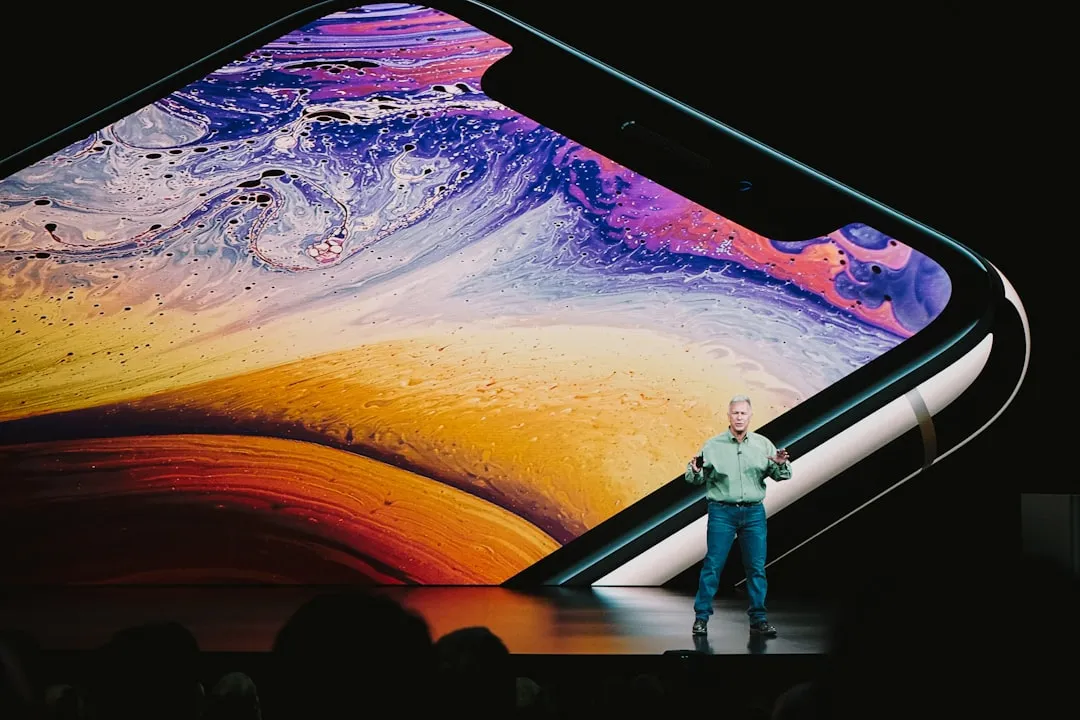
Apple’s WWDC 2026 keynote included an unusual detail: visible latency in Siri demos. The company presented pre-recorded footage and left pauses where Siri took an extra beat to respond. Observers have interpreted that choice as a sign Apple is prioritizing demonstrations of real, functioning features over perfectly smoothed promotional videos — a response to credibility questions raised by earlier AI promises that did not ship as shown.
Source and context
The keynote footage was pre-taped, meaning Apple controlled what viewers saw. Leaving short delays in those clips was a deliberate editorial choice rather than a recording artifact. Reporters who immediately tested a developer beta of the new Siri under conference conditions describe the experience as closer to an actual working feature than past presentations, though that hands-on was a limited sample and not a substitute for wide-scale user testing.
What the pauses actually proved
Visible latency in a demo can be informative: it suggests the system is performing live computation rather than playing back a scripted animation. Early hands-on coverage indicates the core Siri functionality runs as advertised in a developer beta. However, that evidence is narrow — one or a few reviewers in controlled conditions — and the tests were not adversarial or broad in scope. The demos show the product exists in a usable form, not that it will perform consistently across diverse users, networks, and edge cases.
Key takeaway
Apple's WWDC 2026 Siri demos included deliberate-looking pauses that reviewers say signal a shift toward showing working, if not perfectly polished, software.
There is also a remaining ambiguity about the underlying model architecture. Pre-release coverage described the AI differently in separate pieces: one account framed Siri AI as using Apple Foundation Models developed in collaboration with Google, while another described it as running on Gemini models directly. Apple has not publicly clarified that distinction, leaving some technical details gestured at rather than specified.
Why Apple shifted presentation style
Apple’s move to include less-polished, demonstrably working footage follows a period in which highly produced 2024 demos set expectations that were not fully met in shipped software. That gap had real consequences: Apple recently reached a $250 million settlement over a false advertising lawsuit tied to those earlier AI demonstrations. Whether that settlement prompted the change in demo strategy is unclear, but it establishes financial and reputational pressure in the background of WWDC 2026.
5 min read
Apple coverage from PhonesGATE. Published Jun 14, 2026.
A skeptical reading remains defensible: developer betas are inherently rough, and a pre-taped demo is still curated. Still, given Apple’s extensive production resources and its motivation to repair credibility, leaving visible pauses looks intentional: either the delays were real, or Apple intentionally made them appear so. The observable result is the same for viewers — Apple chose not to remove the waiting.
Who gets Siri, and when
Device compatibility and geography shape how meaningful this announcement is for individual users. Reported device eligibility splits into basic access and higher-end on-device capabilities. Basic Siri AI access reportedly covers iPhone 15 Pro and Pro Max and all iPhone 16 models and later, which means many recent upgraders won’t need brand-new hardware for entry-level features. The most capable on-device functions require newer models: iPhone Air or iPhone 17 Pro, iPads with at least an M4 chip, or Macs with an M3 chip and at least 12GB of RAM.
Language and regional availability restrict reach further. The initial launch is English-only, with Apple saying it intends to expand quickly. The feature will not be available in the EU on iOS or iPadOS at launch, and it won’t arrive in China at all due to regulatory constraints. That means a large share of potential users won’t have immediate access.
Timing also matters. iOS 27’s broader public beta is scheduled for next month, but Siri AI is on a separate track: it is presently in developer beta, will appear as a user-facing beta later in the year, and will be enabled on supported devices using English. Anyone expecting to use Siri the moment the iOS 27 public beta appears should plan to wait for the separate Siri beta rollout.
PhonesGATE quick analysis
Apple’s choice to present demonstrable, slightly imperfect demos is a notable shift toward verifiability. From a buyer and reviewer perspective, visible latency is a useful heuristic: it can indicate live work rather than a rehearsed animation. That raises the bar for future AI demos across the industry — look for tasks that are independently testable, cross-app actions, and on-screen context that can be repeated by third parties.
Nonetheless, early verification by journalists in a developer beta is limited evidence. The public beta and subsequent broad user testing are the real inflection points. If the developer-beta behavior generalizes, the change in demo style will be justified. If not, the pauses will prove to be a cosmetic fix rather than substantive progress.
What this means for buyers
Buyers should temper expectations. The WWDC 2026 presentation suggests Siri’s core functions exist in a working form, but full, reliable performance for everyday users remains unproven until the public beta and wider rollouts. If you have a supported device and rely on English-language features in a supported region, plan to test Siri when the public-facing beta becomes available later this year. If you live in the EU, China, or use other languages, availability may be delayed.
Also consider device capability: basic Siri features may work on recent phones, but the most advanced on-device features require newer hardware and higher RAM thresholds. Upgrading decisions should therefore weigh both immediate needs and whether you require the top-tier on-device performance Apple describes.
Sources and methodology
This article is based on reporting from Apple Gadget Hacks, with PhonesGATE editorial context and buyer-focused analysis.