

Most smartphone brands are racing toward the same formula. Sony is still making phones for people who value the details everyone else keeps removing. The Xperia 10 VIII does not look designed to win a spec-sheet competition: it is comparatively compact, deliberately simple and unmistakably Xperia. Its appeal lies in the combination of a 6.1-inch OLED display, lightweight construction, wired audio and expandable storage—not in an oversized camera island or a new AI badge.
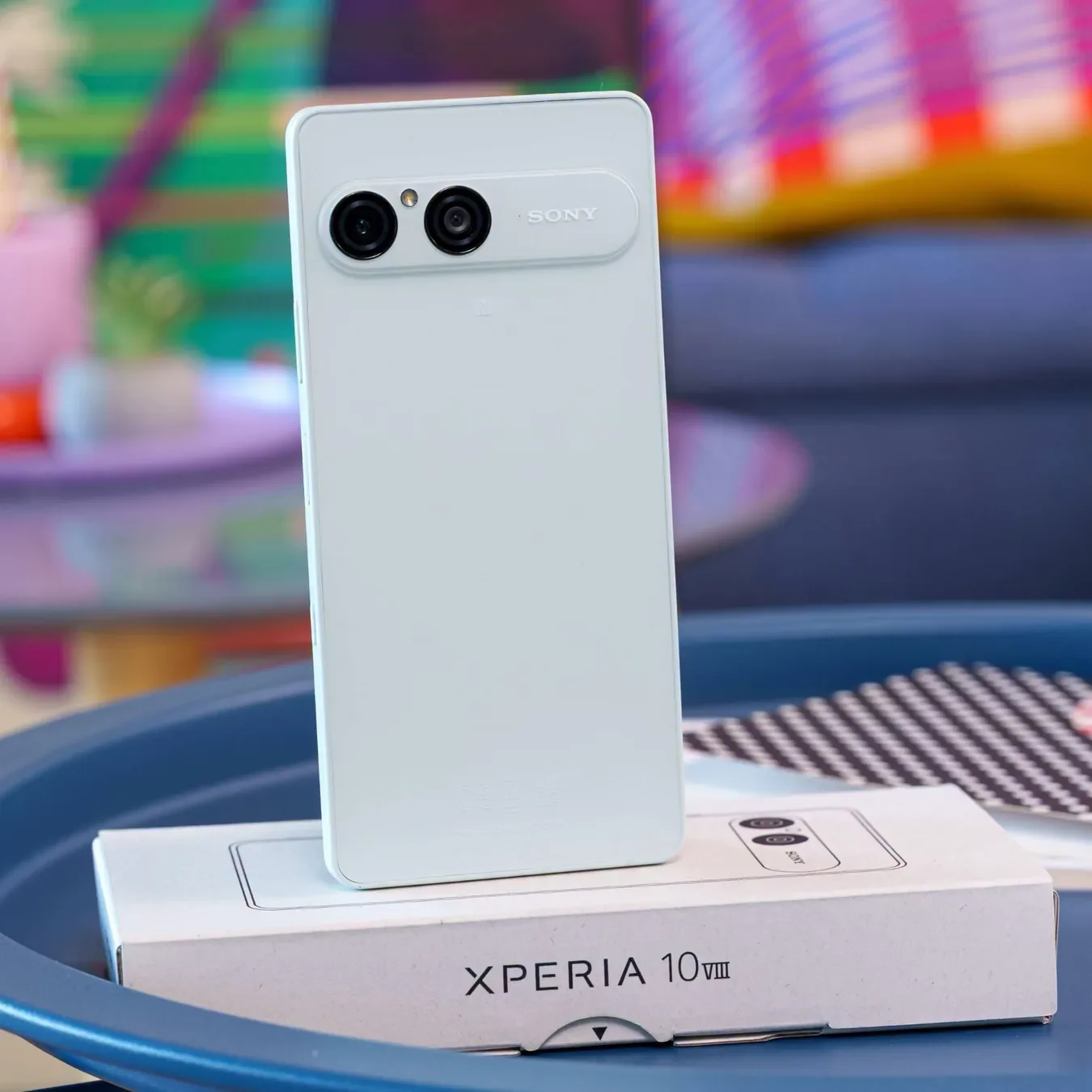
There is substance behind that restraint. The Xperia 10 VIII weighs 168g, measures 153 × 72 × 8.3mm and uses a 19.5:9 display rather than an unusually tall panel. It also arrives with Android 16 and a stated commitment of up to four major OS upgrades and six years of security updates. Sony is presenting a phone intended to be comfortable—and useful—well beyond the first week.
A cleaner kind of smartphone design
The horizontal camera strip is the first detail that catches the eye. While other brands build enormous multi-ring camera modules, Sony keeps the two rear lenses in an orderly bar across the upper back. The smooth Frozen White finish in the supplied images reinforces the effect. It looks more like a considered piece of consumer electronics than a device trying to impersonate a professional camera.
Key takeaway
The Sony Xperia 10 VIII keeps a compact 6.1-inch OLED, wired audio, microSD expansion and Sony’s understated design language. Here is why that practical approach still matters.
At 168g, this is relatively light in a market where larger batteries and increasingly elaborate camera systems often push phones well beyond 200g. The narrow 72mm body should also make reaching across the display more manageable than on many current large-screen models. Weight and width can matter more in everyday use than another fractional millimeter of thinness.
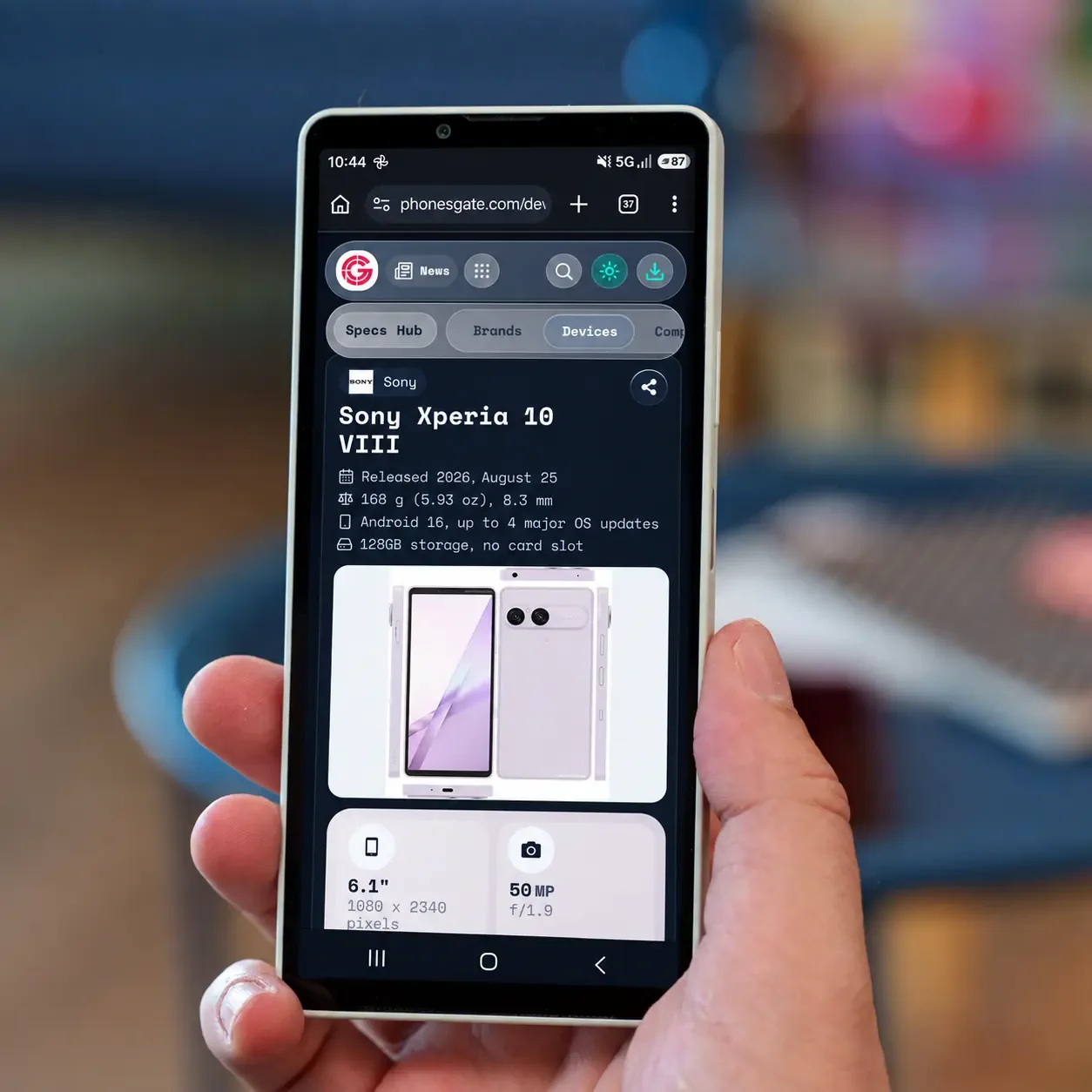
In the screen image above, the PhonesGate specifications page is displayed inside the Xperia. The composition also highlights an important point: this is a phone that looks entirely comfortable handling routine tasks such as reading articles, checking specifications and navigating the web. The screen image is an editorial composite created for this article.
7 min read
PhonesGate coverage from PhonesGate. Published Sep 23, 2026.
The 6.1-inch OLED is a deliberate alternative to giant screens
Sony chose a 6.1-inch FHD+ OLED panel with a 1080 × 2340 resolution, 120Hz refresh rate and a 19.5:9 aspect ratio. A smaller panel is not automatically the better panel, but it changes the character of a phone: it is easier to fit into a pocket, easier to handle with one hand and still large enough for streaming, messaging and reading.
Sony says the screen is approximately 50% brighter than its predecessor. That is a manufacturer comparison rather than an independent PhonesGate measurement, but it addresses a practical concern: a compact phone is most appealing when its screen remains usable outdoors.
Gorilla Glass Victus 2 and water- and dust-resistance ratings of IPX5, IPX8 and IP6X add to the everyday-use story. These ratings cover specified test conditions; they do not make a phone immune to every kind of water damage.
Two cameras and a more restrained approach to photography
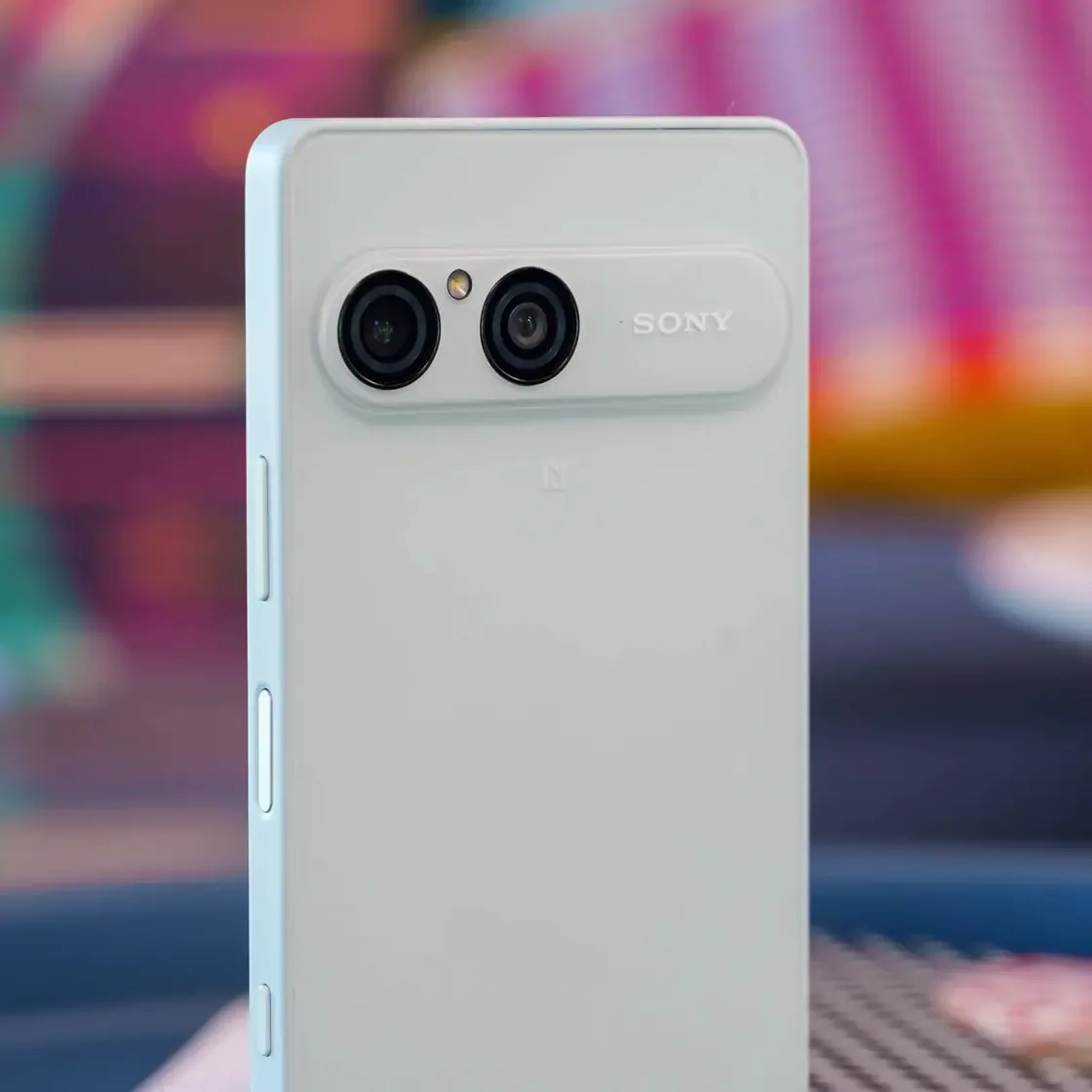
The rear setup centers on a 50MP main camera with an f/1.9 aperture. Sony also includes a second rear camera rather than padding the design with decorative circles. The primary camera is what matters most for daily photographs, especially in a device marketed around practical use.
Design alone cannot tell us whether this phone outperforms its rivals in difficult light, how well autofocus handles moving subjects or whether its video stabilization stays consistent. This is a specification-led editorial review rather than a claim of independent laboratory testing. The interesting question for buyers is whether Sony's image processing produces the natural-looking photos they prefer over more aggressively processed alternatives.
The microSD slot is a feature worth keeping
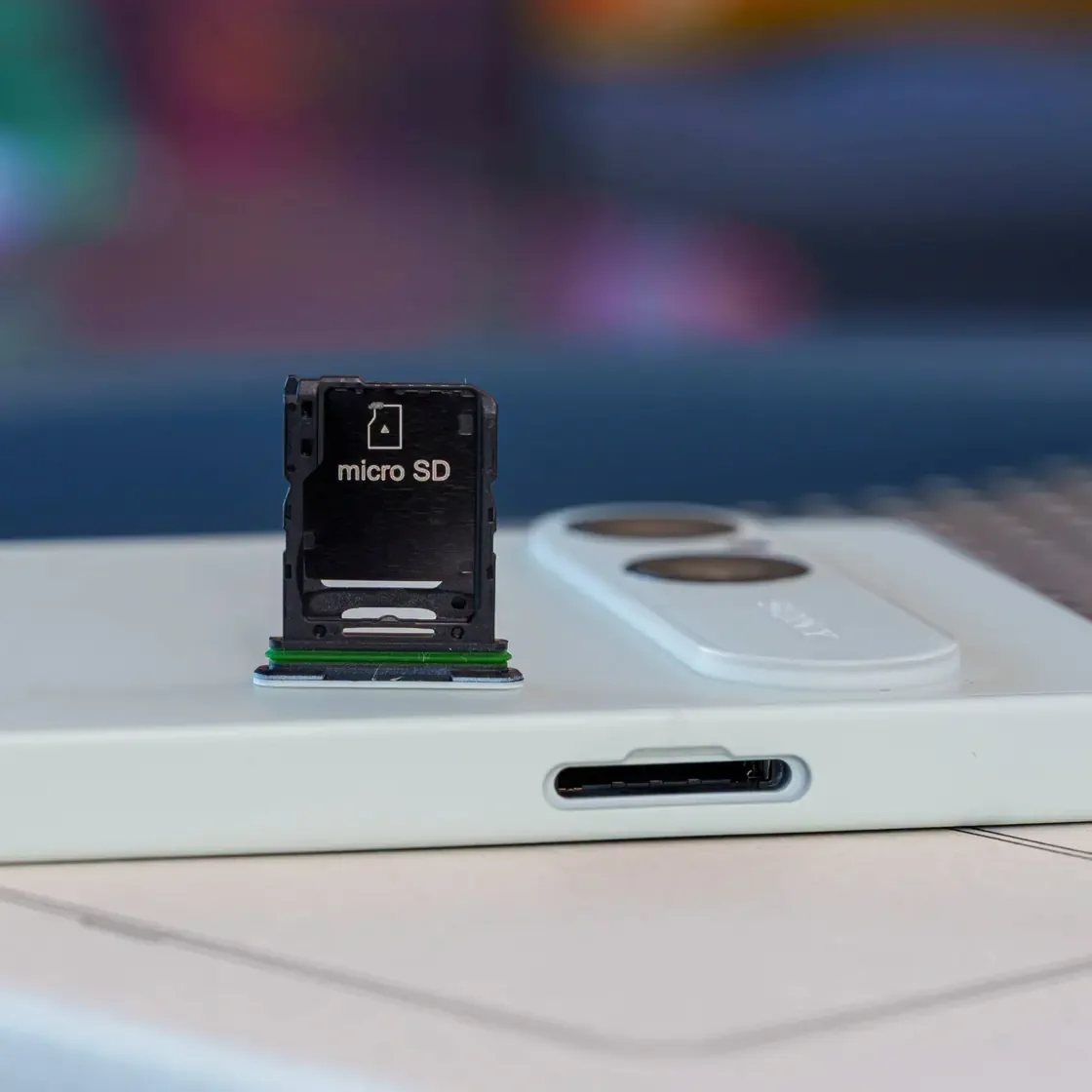
Expandable storage has become rare enough that it deserves its own section. The Xperia 10 VIII has 128GB of internal storage and supports microSDXC cards up to 2TB. That can be useful for offline music libraries, long trips, archived photos and people who simply prefer not to rely on cloud subscriptions for every file.
There is one important distinction: extra microSD space is ideal for media and files, but it does not necessarily behave like faster built-in storage for every application. Still, the ability to add space later is a welcome choice, particularly on a device meant to stay in service for years.
And yes, it still has a 3.5mm headphone jack
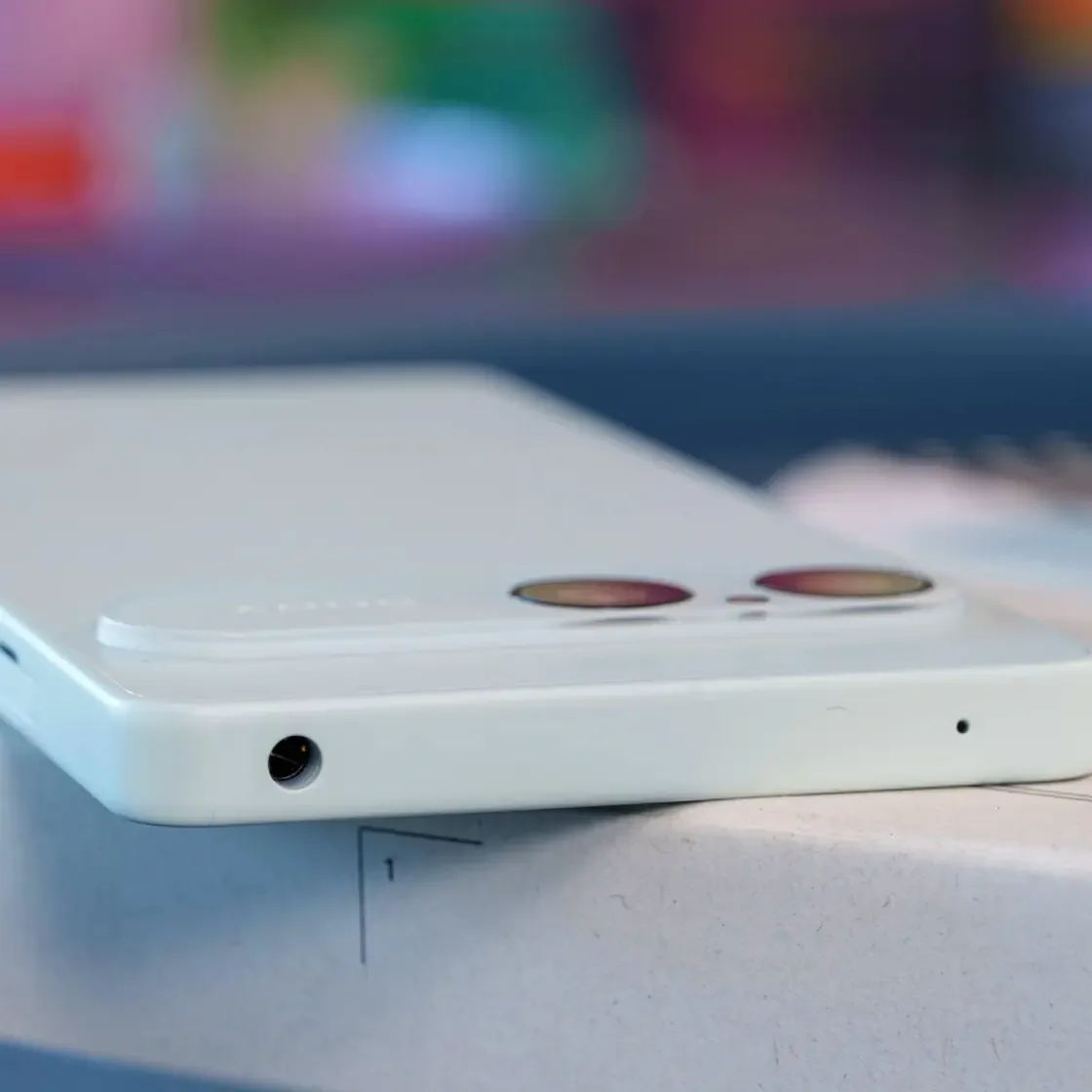
Wireless earbuds dominate phone marketing, but wired audio has not lost its usefulness. The Xperia 10 VIII retains a 3.5mm jack, offers front-facing stereo speakers and supports Hi-Res Audio, LDAC, DSEE Ultimate and aptX Adaptive. That makes it particularly appealing to listeners who already own wired headphones or keep extensive high-quality local music collections.
The front stereo speakers are another small but meaningful distinction. For podcasts, gaming and video, the placement can make a handset more satisfying to use without headphones. Sony also says the updated speakers improve overall volume, clarity and bass relative to the previous model; the exact difference will depend on listening conditions.
Battery life and performance: a focus on balance
Sony markets up to two days of battery life under its testing conditions. That is a useful claim for a lightweight phone, but actual endurance will vary with signal strength, brightness, camera use and app activity. Buyers should not treat a manufacturer endurance estimate as the result of a PhonesGate battery test.
Under the hood, the Snapdragon 6 Gen 3 and 8GB of RAM aim at the everyday mid-range experience rather than flagship benchmark records. For browsing, maps, music and messaging, stability and thermal behavior can be more important than peak performance. Demanding gaming and heavy video workloads are the areas where independent sustained-performance testing would be needed before drawing stronger conclusions.
The long-term ownership argument
Starting with Android 16, the Xperia 10 VIII is slated for up to four major OS upgrades and six years of security updates. That matters alongside the expandable storage, wired audio and repair-or-keep mindset suggested by its practical hardware. A phone that retains useful features and receives updates for years can have a more compelling ownership story than one that briefly wins a launch-week benchmark contest.
Sony has also added a Rewards & Pay shortcut that can surface frequently used payment or rewards applications through a quick double-press of the power button. It is not the headline feature of a conventional review, but it illustrates the same philosophy: small improvements to things people actually do.
Who should consider the Xperia 10 VIII?
The Xperia 10 VIII makes sense for people who prefer a phone that is easy to hold, want a smaller OLED screen, value wired audio and need flexible local storage. It also appeals to buyers who appreciate understated industrial design and are content with balanced mid-range performance rather than maximal specifications.
The trade-offs are just as important. A 6.1-inch screen may feel cramped to someone who watches hours of video or edits documents on their phone. The processor is mid-range, the camera system is intentionally modest and the European launch price of €599 or UK price of £549 places the device in competition with discounted high-end models. The right decision depends on whether Sony's practical features match the buyer's priorities.
PhonesGate perspective
The Xperia 10 VIII is a reminder that useful features do not have to be fashionable. A headphone jack, microSD expansion, front-facing stereo speakers, a compact body and long software support are not spectacular individually. Together they give Sony's mid-ranger an unusually coherent identity.
It is not trying to be every buyer's phone. That may be precisely why its design stands out among devices built around bigger displays and bigger camera modules. For users who value restrained design and ownership flexibility, the Xperia 10 VIII is worth a closer look.
Explore the Sony Xperia 10 VIII specification page and other Sony devices on PhonesGate.
Editorial note: This is a specifications-led feature review, not an account of hands-on testing. Images were supplied for this article; the PhonesGate screen image is an edited composite.