
Source and context
A recent industry report highlights shifting market shares in the global smartwatch market and outlines Samsung’s strategic response. The data shows Apple remains the market leader, while Huawei and Xiaomi have made notable gains, with Samsung’s share falling compared with prior years.
What the report says
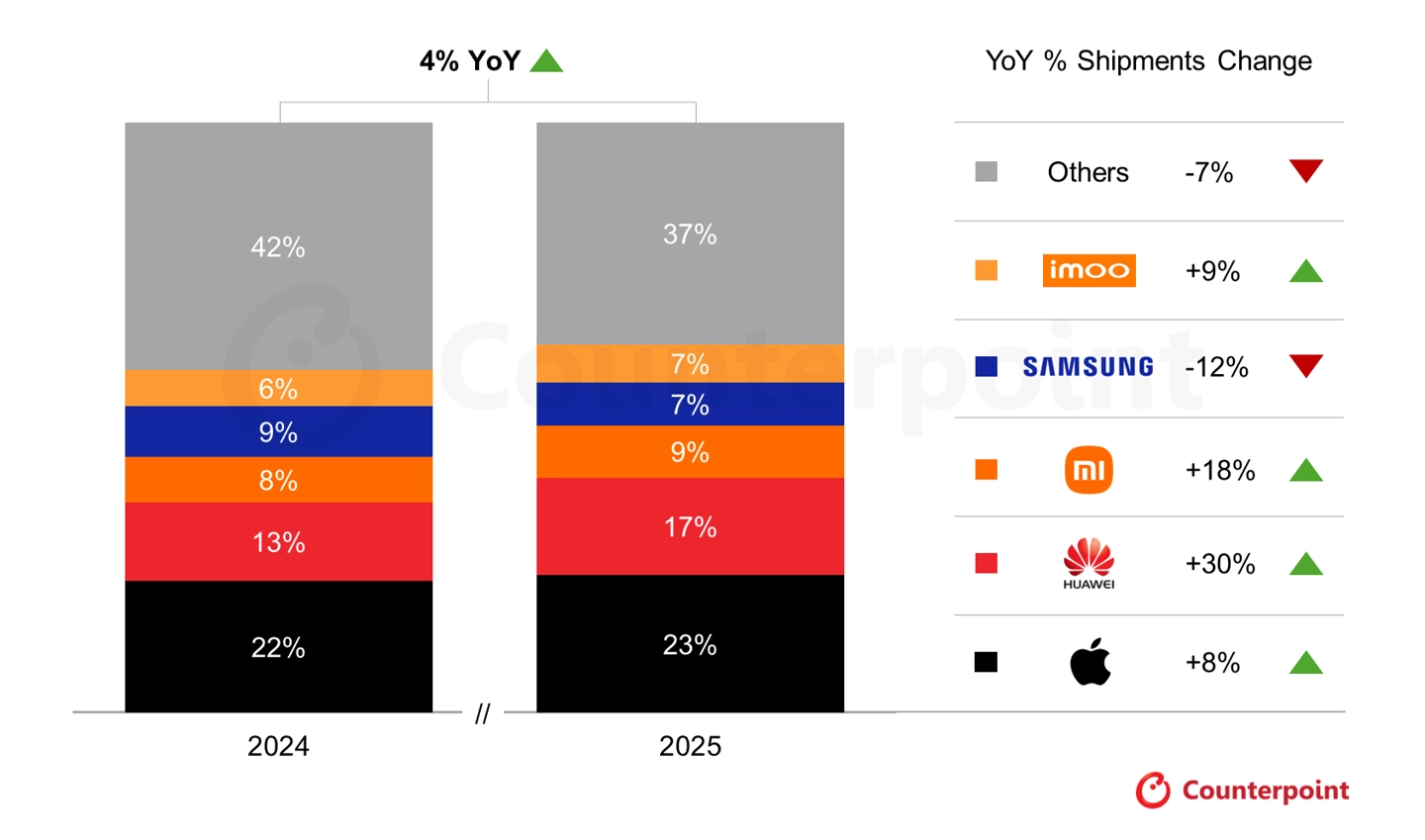
Counterpoint Research figures cited in the report indicate Samsung’s smartwatch market share dropped to roughly 7% in 2025, behind Huawei (17%) and Xiaomi (9%), and well below Apple (23%). The report attributes Huawei’s rise to strong growth in China and Xiaomi’s gains to aggressive pricing and deeper ecosystem links across phones, tablets and smart home devices.
Samsung’s planned response
To push back, Samsung is prioritizing two areas: advanced AI-powered health monitoring and a more tightly knit Galaxy ecosystem. The report details plans for an AI-based running coach that uses a 12-minute running analysis to classify fitness levels and produce personalized training programs. Samsung Health metrics are already substantial, with the platform reportedly having tens of millions of active users and a notable increase in fitness-tracking usage.
Key takeaway
New market data shows Samsung slipping to fourth place in smartwatches as Huawei and Xiaomi expand. Samsung plans to push AI-driven health features and tighter Galaxy integration to stem losses and differentiate its wearables.
Health features moving toward medical focus
The company is reportedly expanding health capabilities across sleep, exercise, diet and mental health, while enhancing medical-style features such as ECG, irregular rhythm alerts, heart rate variability analysis and early detection of vasovagal syncope risks. The report describes how sensor data combined with algorithms are being used to provide earlier warnings for certain conditions.
Why it matters
Samsung’s pivot underscores the shifting battleground in wearables: hardware alone is no longer enough. Ecosystem convenience and software-led health differentiation are becoming decisive, particularly against competitors that leverage low-cost devices and deep integration with other smart products.
3 min read
Samsung coverage from PhonesGATE. Published Jun 26, 2026.
PhonesGATE quick analysis
Focusing on AI-driven coaching and medical-grade health features is a logical play for Samsung; it can leverage existing Galaxy users and Samsung Health scale. However, ecosystem competition from Xiaomi — which ties wearables closely to phones, tablets and smart home gear — and Huawei’s rebound in key markets will make recapturing share challenging without competitive pricing and continued software advantages.

What this means for buyers
If Samsung executes these plans, buyers should see more sophisticated health insights and deeper fitness coaching in upcoming Galaxy Watch models. Buyers prioritizing tight integration with low-cost devices may still find better value in Xiaomi’s ecosystem, while those wanting polished medical-style monitoring and a premium Galaxy experience may prefer Samsung’s direction.
Related devices
Potential readers may want to compare current Galaxy Watch models and Xiaomi Watch series options to weigh ecosystem benefits, health feature depth and price.
Sources and methodology
This article is based on reporting from XiaomiTime, with PhonesGATE editorial context and buyer-focused analysis.