

Most smartphone camera innovation follows a familiar pattern. Bigger sensors. More megapixels. Longer zoom claims. Smarter AI processing. The RugOne Xsnap 7 Pro takes a completely different route. Instead of keeping every camera fixed to the back of the phone, RugOne has built what it calls the world’s first rugged phone with a detachable action camera.
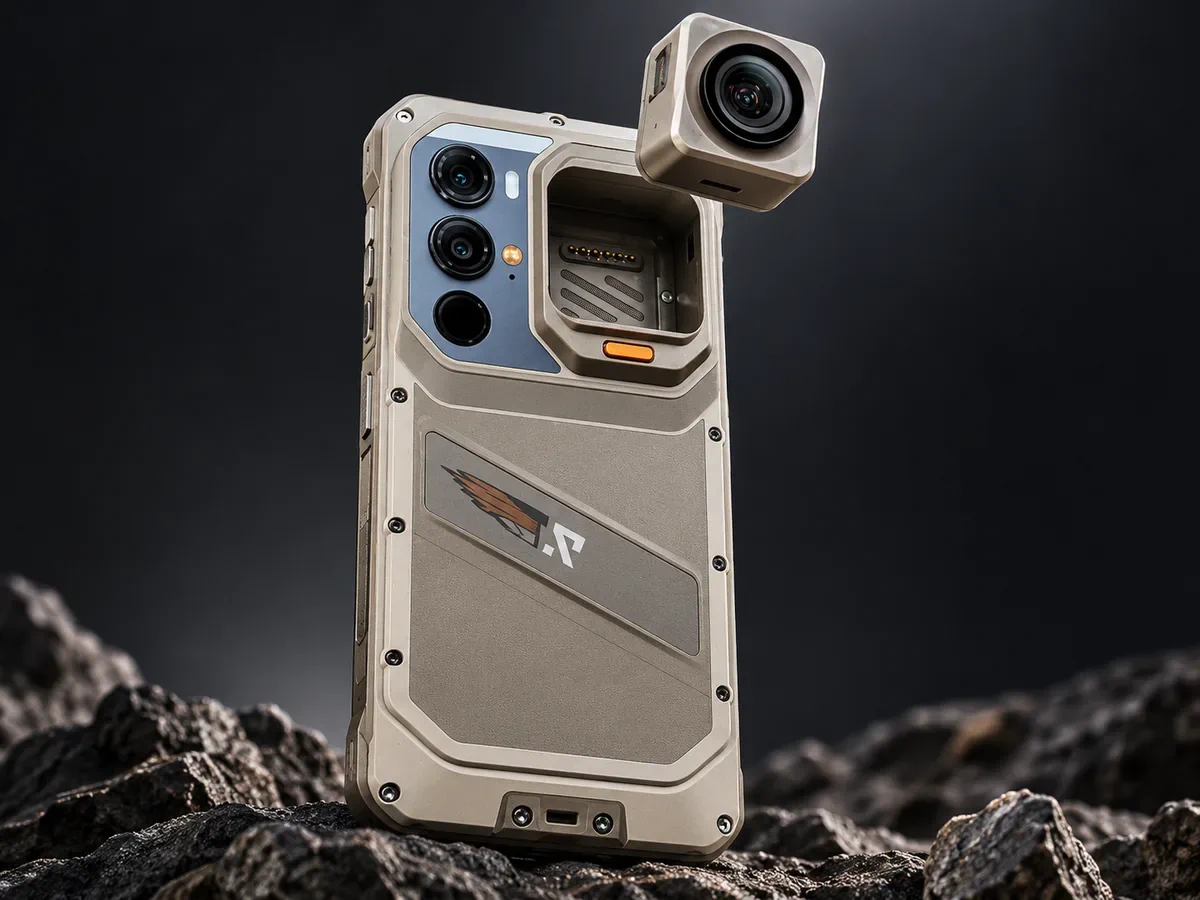
That sounds gimmicky until you look at the actual use case. Phones are excellent for shooting photos and video, but they are awkward for first-person capture. They are too large to clip onto a helmet, too vulnerable to expose in rough terrain, and too inconvenient for quick action-cam angles. RugOne’s answer is simple: build a lightweight action camera directly into the phone, let it detach in seconds, and let the phone act as charger, controller and storage hub.
The result is a device that feels less like a standard rugged smartphone and more like a small content-creation system designed for hiking, cycling, camping and outdoor work. This article is not a hands-on review. It is a PhonesGate analysis based on RugOne’s official launch information and IFA Berlin event details, focusing on why the idea matters and where the real compromises may appear.
Key takeaway
RugOne’s Xsnap 7 Pro combines a 9,300mAh rugged smartphone with a built-in 39g detachable action camera. It records 2.7K/30fps video, docks magnetically back into the phone and turns the handset into a wearable outdoor camera system instead of just another rugged slab.
The detachable action camera is the reason this phone exists
RugOne says the Xsnap 7 Pro contains a 39g magnetic detachable action camera built directly into the rear of the phone. When removed, the module can be mounted to helmets, handlebars, straps or worn as a pendant. That changes the camera conversation immediately because this is not just another rear sensor with an “action mode.” It is a physically separate camera that can record away from the handset.
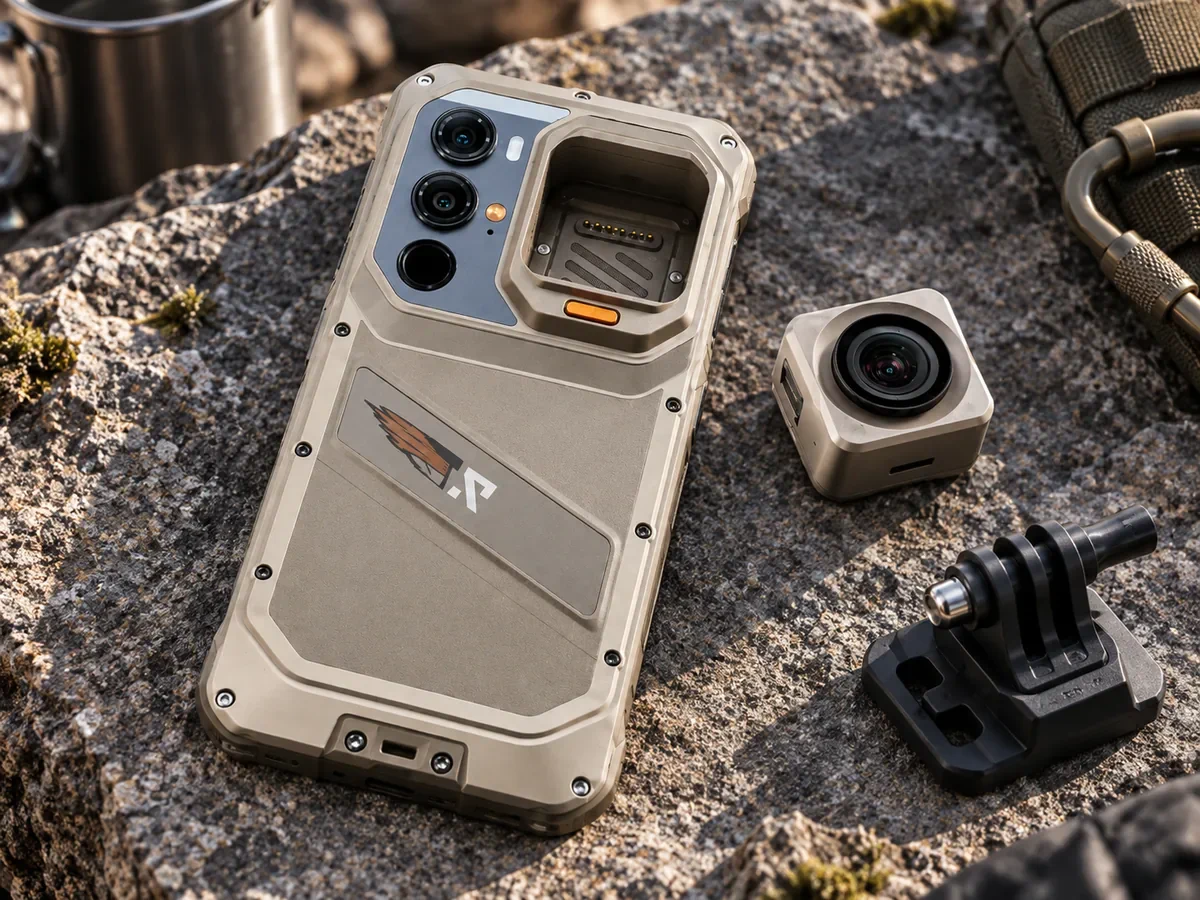
Officially, the action camera records up to 2.7K at 30fps and uses a 133-degree ultra-wide field of view with intelligent distortion correction. RugOne also lists FreeFrame video, time-lapse, slow motion, pre-recording, loop recording and HDR photos. In other words, the camera is not being positioned as a novelty button. RugOne is trying to give it enough functionality to behave like a real compact action cam.
10 min read
PhonesGate coverage from PhonesGate. Published Sep 10, 2026.
That is what makes the Xsnap 7 Pro genuinely interesting. Traditional rugged phones often add night vision or thermal tools for niche buyers, but they still remain normal phone cameras attached to a rugged body. Here, RugOne is solving a different problem: how to make wearable video capture convenient without forcing the user to buy and carry a second device.
RugOne is betting on convenience over absolute image quality
The action camera’s ceiling of 2.7K/30fps tells us a lot about product strategy. RugOne is not trying to beat premium standalone action cameras in pure spec terms. The focus is convenience, integration and readiness. The module lives inside the phone, charges from the phone, and can be removed whenever needed.
That may matter more in real life than a higher resolution number. A separate action camera can easily be forgotten at home, left uncharged or buried in a bag. A camera that already lives inside the phone is always with the user. For hikers, cyclists, anglers, climbers or field workers, that could be the difference between capturing a moment and missing it completely.
This is where the Xsnap 7 Pro has its strongest argument. It does not need to replace a GoPro-style dedicated action camera for every creator. It only needs to be good enough that people actually use it because it is already there.
Stabilization and waterproofing make the idea practical
RugOne says the detachable module uses SteadyX stabilization together with 360° Horizon Lock. Those are important claims because a wearable camera is valuable only if the footage stays usable while the user moves. Action capture adds constant shake, vibration and tilt, especially on bikes, trails or helmets.
The module is also rated for bare-metal 5-meter waterproofing. That is a particularly strong detail because it means the camera itself is designed as a serious outdoor accessory rather than merely a detachable gadget. RugOne also mentions an Underwater Camera Mode for the phone experience, reinforcing the idea that water use is part of the intended product story.
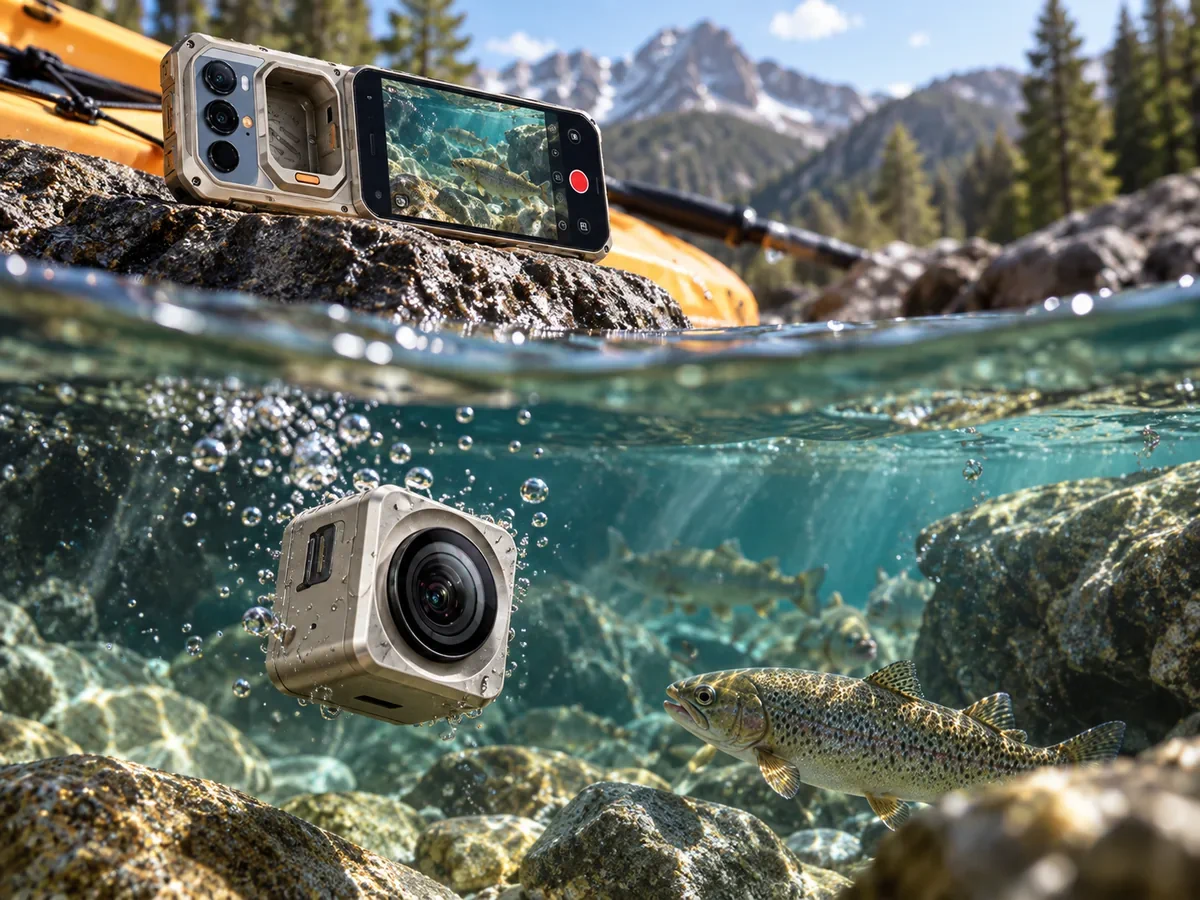
Of course, waterproof ratings are always measured under controlled conditions, and real-world use is more unpredictable. Salt water, pressure, impact and long-term wear all matter. But the concept is clear: RugOne wants the action camera to be used in places where a normal smartphone camera would feel awkward or risky.
The 9,300mAh phone battery turns the handset into a camera dock
The Xsnap 7 Pro uses a 9,300mAh battery, and that capacity does more than just extend phone uptime. RugOne says the detachable camera records for up to 40 minutes on its own and includes 64GB of onboard memory, enough for up to eight hours of 1080p footage. When re-docked, the phone can automatically recharge the camera, with RugOne claiming the phone’s battery can provide up to 20 full recharges for the module.
This is one of the smartest aspects of the design. Many modular products fail because they add a second device with its own charging headache. RugOne solves that by turning the smartphone into the charging station. The module is not just stored in the phone; it depends on the phone and benefits from its massive battery.
That relationship gives the Xsnap 7 Pro a coherence many experimental devices lack. The phone is not merely hosting the module. It is the module’s storage case, power bank and control center.
The phone itself still has a strong flagship-style spec sheet
Just as important, RugOne has not built the Xsnap 7 Pro around weak core hardware. The phone uses the MediaTek Dimensity 8400 5G processor, paired with 12GB LPDDR5X RAM and 512GB UFS 4.0 storage. RugOne also lists a 6.67-inch 1.5K AMOLED display with a 120Hz refresh rate and peak brightness of up to 1,700 nits.
That matters because the Xsnap concept would be far less convincing if the smartphone part felt mediocre. Instead, the specification suggests RugOne is trying to build a legitimate upper-tier rugged phone that happens to include a detachable camera system.
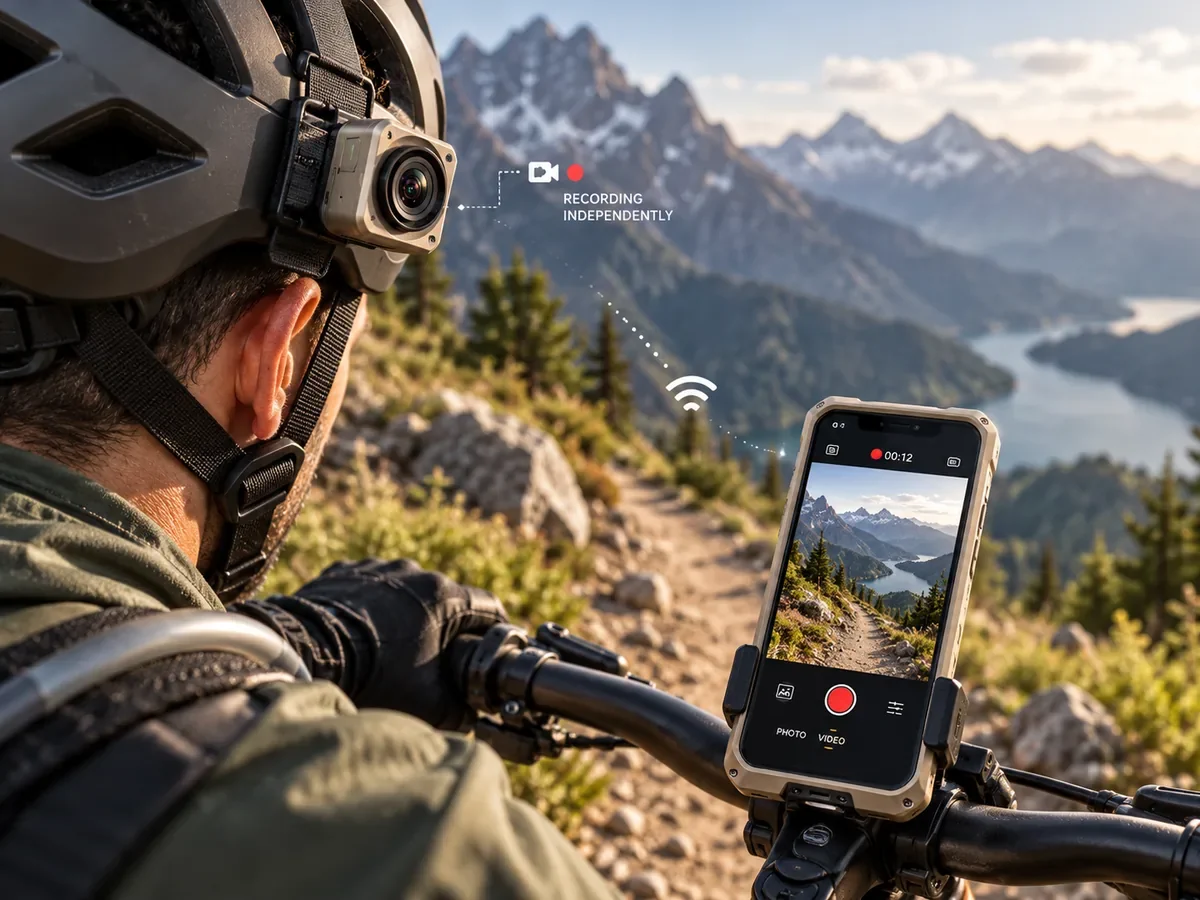
The AMOLED panel is especially relevant because the phone will likely be used as the live control screen, playback display and editing surface for footage recorded on the detachable camera. A bright 120Hz display makes more sense here than it would on a basic field phone.
It is still a rugged phone, not just a camera experiment
RugOne also loads the Xsnap 7 Pro with the durability features expected from the category. Officially, the phone carries IP68 and IP69K ingress ratings and a MIL-STD-810H certification. RugOne says the phone can survive immersion up to 2 meters for 30 minutes and is resistant to high-pressure, high-temperature water jets. It also claims 1.5-meter drop resistance onto concrete and uses Corning Gorilla Glass Victus.
Those are more than checklist features. If RugOne expects people to clip the module to helmets, carry the phone on bikes or use it around water, both parts of the system need to tolerate a rough life. The modular idea becomes much less persuasive if users are too afraid to take the hardware outdoors.
The device also includes smaller practical touches: eSIM support, an in-display fingerprint sensor, customizable shortcut keys and an Aura Pulse dynamic rear light. None of those defines the product, but together they reinforce the feeling that RugOne is not treating the phone half of the package as secondary.
The standard cameras are better than expected for a rugged phone
The action camera may get the headlines, but the fixed cameras are respectable as well. RugOne lists a 50MP Samsung GN9 main camera with OIS + EIS dual stabilization and 4K video recording. There is also a 64MP infrared night vision camera with a dedicated IR LED light, plus a 32MP selfie camera.
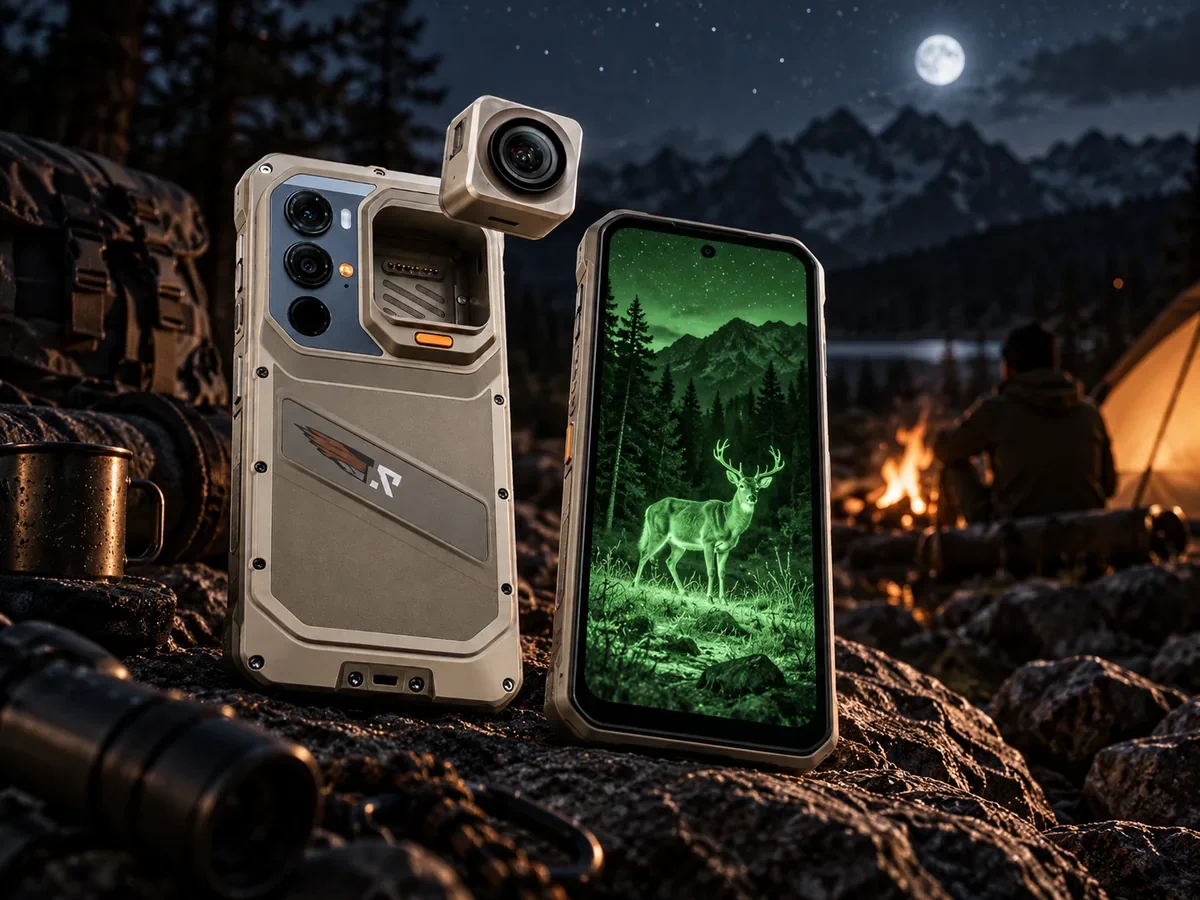
For rugged-phone buyers, the night-vision camera is not just a novelty. It can be genuinely useful for camping, wildlife observation, rural property inspection and low-light field use. In that sense, the Xsnap 7 Pro combines two typical rugged-phone ideas — durability and niche imaging tools — then adds a third layer with the detachable module.
Software support looks better than expected
RugOne says the Xsnap 7 Pro ships with Android 16 and is planned to be upgradable through Android 20. The company also highlights Google Gemini integration, support across the ChatGPT/Grok ecosystem and AI features such as Circle to Search, Live Translation, Call Summary, Writing Assistant and Math Recognition.
That update promise is notable because rugged-phone brands often lag behind mainstream flagship makers in software support. Whether RugOne delivers on the full promise will take time to verify, but the commitment itself is more ambitious than many buyers might expect from this segment.
Price positioning is surprisingly bold
RugOne has positioned the Xsnap 7 Pro above the usual “interesting rugged phone” tier. The company lists a Kickstarter Super Early Bird price of €799, a U.S. retail price of $999 and an EU retail price of €1,099.99, with global retail release scheduled for October 2026. The official crowdfunding campaign launched on September 7, 2026.
That is premium territory, but it also reflects the fact that buyers are not just getting a rugged phone. They are getting a rugged phone plus a detachable action camera integrated into the package. The real market question is whether the convenience of that integration justifies the price over buying a separate phone and compact camera.
What RugOne still needs to prove
The idea is strong, but several questions remain. How stable is 2.7K footage when mounted on a bike or helmet over rough terrain? How reliable is the magnetic docking system after months of dust, mud and repeated removal? How fast can footage be transferred and managed between the action camera and the phone? And most importantly, how often will users actually use the detachable module after the novelty wears off?
There is also the image-quality question. A tiny detachable action module has physical limitations compared with a larger dedicated action camera. RugOne does not need to beat every specialist product on the market, but it does need to make the footage good enough that convenience becomes a meaningful advantage rather than an excuse.
PhonesGate take
The best part of the Xsnap 7 Pro is that it solves a real problem instead of inventing a fake one. Standard smartphones are excellent general-purpose cameras, but they are still clumsy for first-person capture. RugOne’s answer — build a lightweight action camera directly into the phone and let the phone become its dock, charger and controller — is unusual, but not irrational.
The Xsnap 7 Pro may not replace premium standalone action cameras for serious creators. It probably does not need to. If RugOne has built something that is easy enough, durable enough and good enough to be used far more often than a separate camera would be, then this could be one of the most original smartphone ideas of 2026.
For PhonesGate, that is what makes the story worth publishing. In a market full of predictable slab phones, the Xsnap 7 Pro is trying something materially different — and unlike many experiments, it actually has a clear reason to exist.
Sources
Image note: visuals in this article are original PhonesGate editorial illustrations inspired by the RugOne Xsnap 7 Pro concept and official product information. They are not official RugOne press photos.