

The Rise, Death and Return of Pop-Up Cameras: From Vivo NEX to HONOR Robot Phone
For a brief period, the moving smartphone camera looked like the future. Pop-up modules gave us uninterrupted displays, rotating systems turned rear cameras into selfie cameras, and then the industry almost abandoned the idea. In 2026, HONOR has brought physical camera movement back for a very different reason: AI-powered tracking, stabilization and robotic interaction.
Watch: 10 seconds of moving-camera evolution
PhonesGate visual: from motorized pop-up cameras to a new generation of robotic camera hardware.
Key takeaway
From Vivo NEX and Redmi K20 Pro to HONOR Robot Phone, PhonesGate traces how moving smartphone cameras evolved from a solution for bezel-free displays into AI-controlled robotic camera systems.
The idea started with a simple problem: where do you put the selfie camera?
As smartphone makers pushed toward edge-to-edge displays, the front camera became an obstacle. Notches solved the engineering problem but interrupted the screen. The more ambitious alternative was mechanical: hide the camera inside the chassis and raise it only when the user needed it.
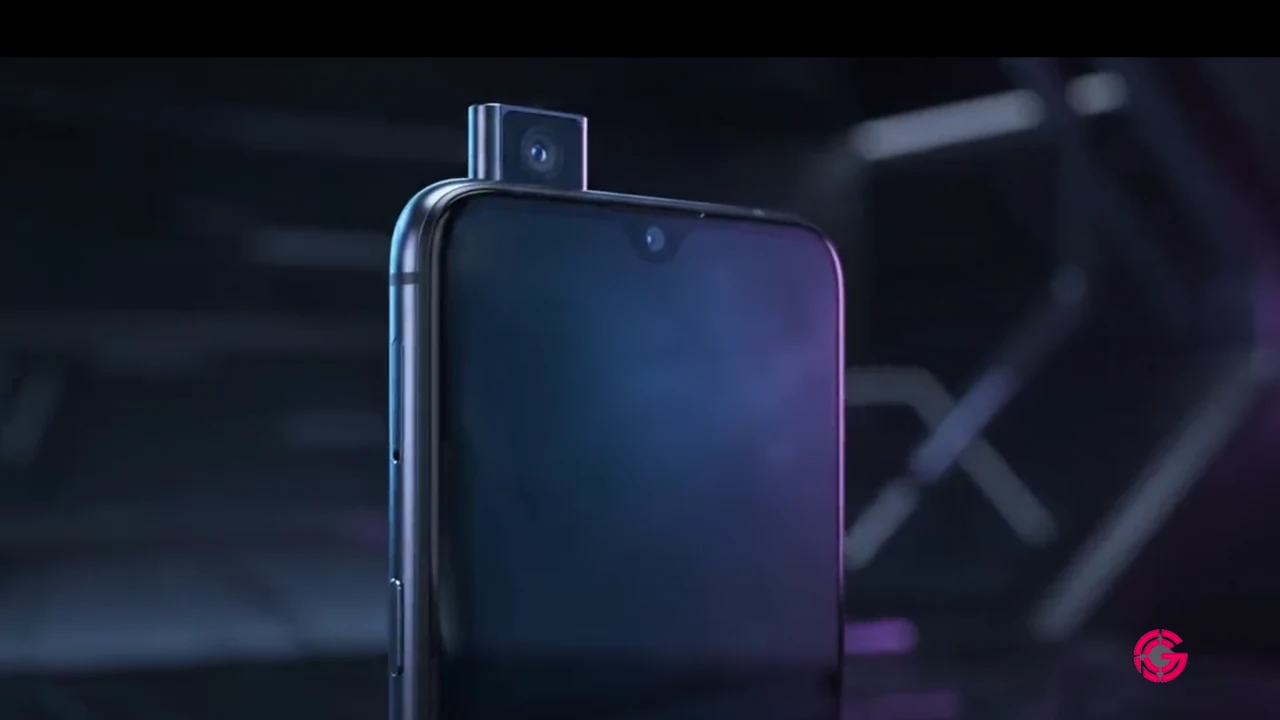
Vivo became one of the defining names in this transition. The APEX concept previewed the idea, and the commercial Vivo NEX in 2018 turned the pop-up selfie camera into one of the most recognizable experiments of the bezel-less era. Vivo itself describes the NEX as a 2018 launch with a pop-up selfie camera and a major step toward a truly bezel-less phone.
7 min read
PhonesGate coverage from PhonesGate. Published Aug 12, 2026.
\n
2018: Vivo NEX and OPPO Find X made moving cameras feel futuristic
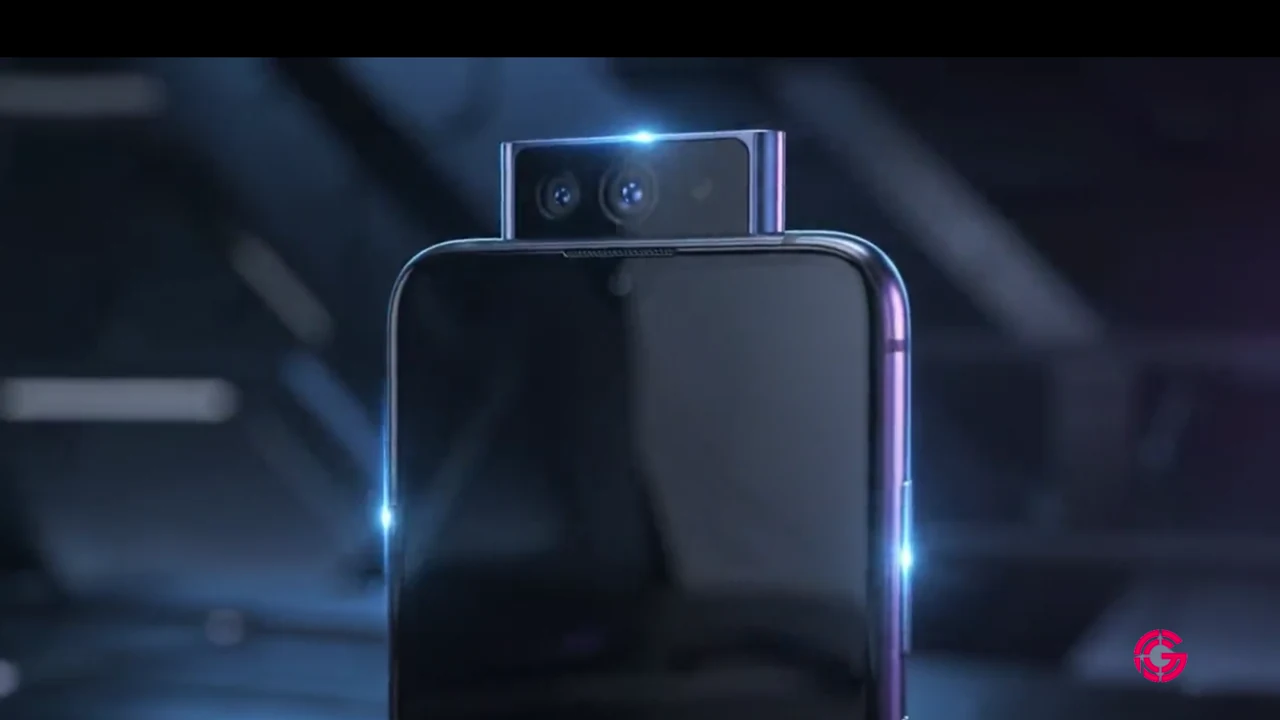
The Vivo NEX used a relatively straightforward solution: the selfie camera physically rose from the top of the phone. OPPO's Find X explored an even more theatrical approach, moving a larger camera section rather than exposing a conventional permanent notch.
The attraction was obvious. When the camera was closed, the front of the device could be almost entirely screen. At a time when display cutouts were controversial, that uninterrupted panel had enormous visual appeal.
\n
2019: the golden age of pop-up cameras
By 2019 the idea was no longer just an experimental flagship trick. Multiple manufacturers explored their own interpretation. The OnePlus 7 Pro helped bring the motorized selfie camera into a highly visible premium Android flagship, while Redmi made the concept dramatically more accessible.
Redmi K20 Pro: the pop-up camera goes mainstream
The Redmi K20 Pro paired a 6.39-inch full-screen OLED design with a 20MP motorized selfie camera. Contemporary launch coverage reported that Redmi claimed the mechanism could rise in roughly 0.8 seconds. More importantly, the K20 Pro helped prove that a dramatic full-screen design did not have to be restricted to ultra-expensive concept-like phones.
For many enthusiasts, this remains the emotional high point of the pop-up era: no notch, no punch hole and no camera permanently occupying part of the display.
ASUS and Samsung asked a different question: why have separate selfie cameras?
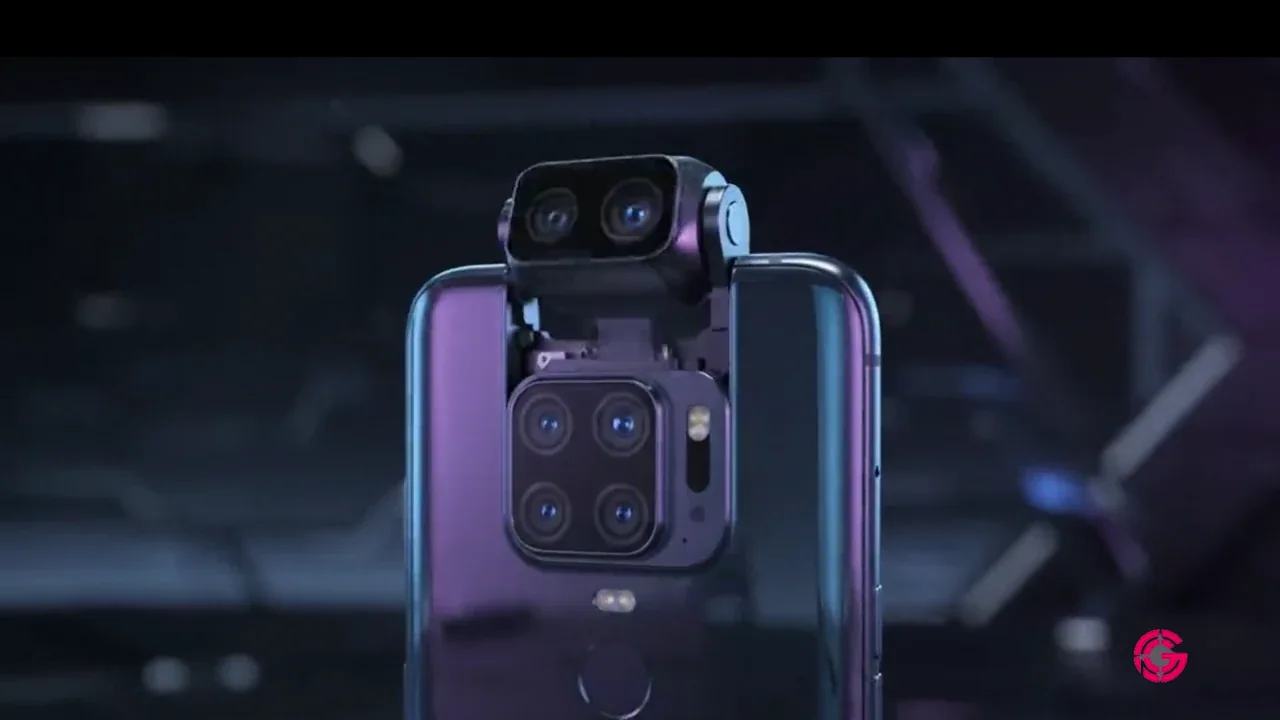
Other manufacturers became even more creative. ASUS used a flip-camera concept that allowed the rear camera system to rotate toward the user, while Samsung's Galaxy A80 combined sliding and rotating movement. Instead of merely hiding a dedicated selfie camera, these designs attempted to reuse higher-quality rear-camera hardware for front-facing photography.
Mechanically, these phones were more complicated. Conceptually, however, they demonstrated how much freedom smartphone designers had once they stopped assuming every camera had to remain fixed in one position.
\n
2020: Redmi K30 Pro became one of the last major pop-up flagships
The Redmi K30 Pro kept the concept alive with a 20MP pop-up selfie camera and a notch-free AMOLED front. But by then, the market was already moving in another direction. Punch-hole cameras were becoming smaller, cheaper and easier to integrate into increasingly complex 5G phones.
Why did pop-up cameras disappear?
The answer was not that users suddenly stopped appreciating uninterrupted screens. The engineering trade-offs simply became harder to justify.
- Internal space: motors and moving assemblies compete with batteries, antennas, cooling systems and other components.
- Mechanical complexity: every moving component introduces additional engineering and long-term reliability considerations.
- Water and dust resistance: sealing a phone becomes more challenging when a physical module repeatedly exits the chassis.
- Cost: a tiny punch-hole camera is simpler to manufacture at enormous scale.
- 5G-era packaging: manufacturers needed more internal room for radio hardware, batteries and thermal systems.
In 2020, Redmi management publicly discussed the internal-space pressure created by the growing number of 5G components when explaining why pop-up cameras were becoming less common. The punch hole ultimately won not because it was more exciting, but because it was a practical compromise.
2021–2025: the camera stopped moving
For several generations, mainstream smartphone design settled around fixed cameras. Punch holes became smaller and less distracting, while some manufacturers experimented with under-display cameras. The industry's attention shifted toward larger sensors, computational photography, periscope zoom and AI processing.
The pop-up era appeared to have become a fascinating evolutionary dead end.
\n
2026: HONOR Robot Phone changes the purpose of a moving camera
Then HONOR brought mechanical movement back — but not simply to hide a selfie sensor.
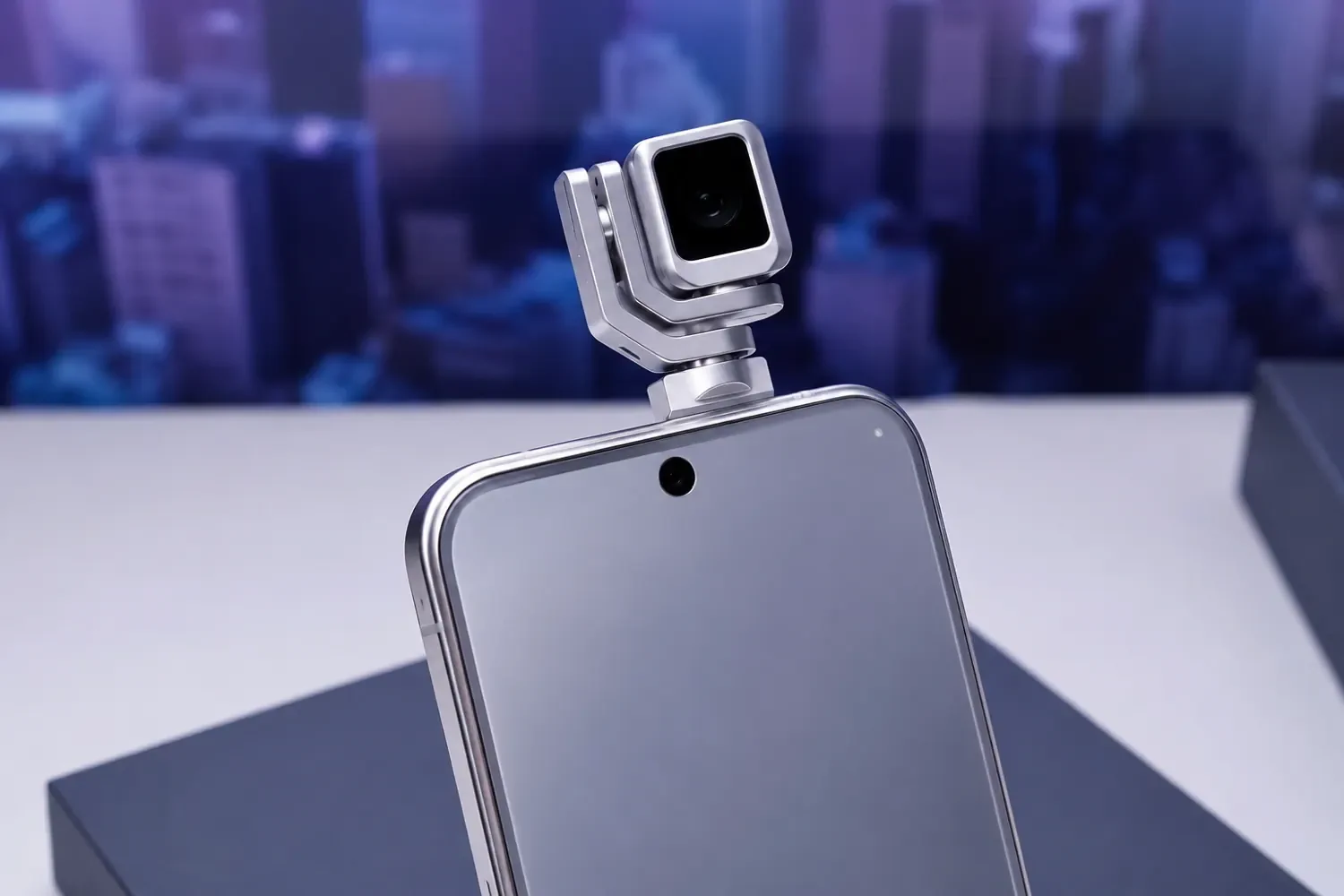
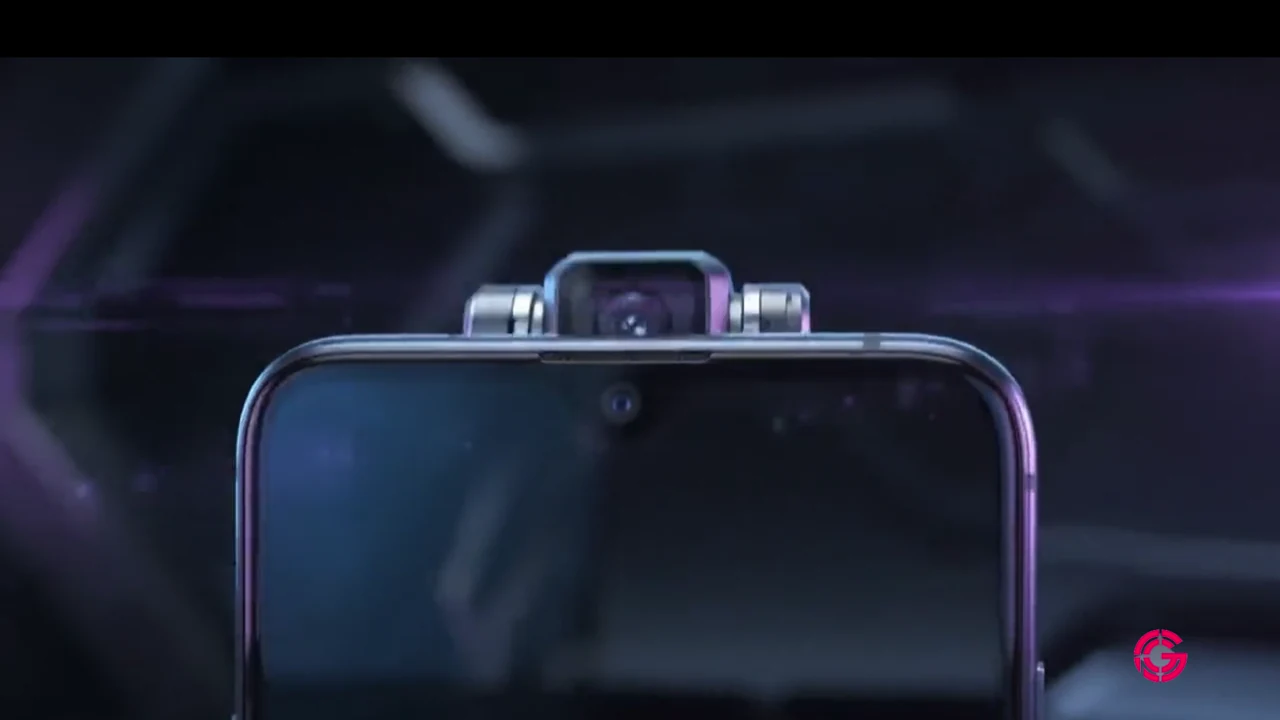
The HONOR Robot Phone represents a fundamentally different idea. HONOR says its system combines a 200MP sensor with an ultra-compact 4DoF gimbal, three-axis stabilization, AI Object Tracking and intelligent rotational movement. A self-developed micro motor allows the camera assembly to physically move while remaining compact enough to integrate with the phone.
That distinction matters. The Vivo NEX moved its camera because designers wanted the sensor to disappear. The HONOR concept moves its camera because movement itself has become a feature.
From motorized camera to embodied AI
HONOR describes the Robot Phone as part of its approach to embodied AI. Instead of AI existing only as software behind the display, the intelligence can influence physical motion. The camera can track a subject, stabilize movement and change its viewing direction through the gimbal mechanism.
HONOR also describes all-angle AI video calling that can follow a user, plus expressive physical movements such as nodding and turning. Whether this exact form becomes mainstream remains an open question, but it gives moving smartphone cameras a new reason to exist.
Pop-up vs punch-hole vs robotic camera
Feature Classic Pop-Up Punch-Hole Robotic/Gimbal Camera Main purpose Hide selfie camera Simple fixed selfie camera Physical tracking and stabilization Full-screen experience Excellent Very good Potentially excellent Moving parts Yes No Yes, significantly more advanced Internal complexity Higher Low Very high AI-controlled motion No No Yes Wow factor High Low Extremely high
Why enthusiasts still miss the K20 Pro era
There is a reason phones such as the K20 Pro still appear in discussions about smartphone design years later. Their solution was mechanically unnecessary by today's standards, but emotionally satisfying. Press the selfie button, hear the motor and watch a physical component emerge from an otherwise uninterrupted device.
It made the hardware feel alive. More importantly, users who rarely took selfies did not have to stare at a front-camera cutout every minute they used their phone.
PhonesGate Take: moving cameras were not a dead end — they were early
The first pop-up generation solved a display problem. The next generation may solve a completely different camera problem.
A motorized selfie camera only needed two states: hidden and raised. A robotic gimbal camera can potentially understand where a subject is, physically follow that subject, stabilize footage and create camera movements that would normally require the user to reposition the entire phone.
That does not mean every future flagship will grow a robotic camera arm. Moving hardware still carries obvious penalties in thickness, cost, durability, power consumption and water resistance. But HONOR's approach demonstrates that the basic idea behind the Vivo NEX and Redmi K20 Pro can evolve rather than simply return.
The most interesting change is philosophical: in 2018, manufacturers asked, “How can we make the camera disappear?” In 2026, the question is becoming, “What if the camera could move intelligently on its own?”
Verdict
The pop-up camera era was short, but it produced some of the most memorable smartphone designs of the last decade. Vivo NEX demonstrated the concept at commercial scale, devices such as the OnePlus 7 Pro and Redmi K20 Pro pushed it toward the mainstream, ASUS and Samsung experimented with rotation, and the Redmi K30 Pro helped close the first chapter.
HONOR Robot Phone may now be opening the second. This time, mechanical movement is not about achieving a cleaner display. It is about giving smartphone cameras a new physical dimension — one where software intelligence can control real-world motion.
For PhonesGate, that makes the Robot Phone less a revival of the old pop-up camera and more its evolutionary descendant.