

The POCO F9 Pro arrives earlier than expected, but the phone itself does not feel rushed. This generation pushes the series further into premium territory with a 185Hz AMOLED display, Snapdragon 8 Elite Gen 5 V Series performance, a 200MP main camera, a dedicated 50MP floating telephoto, a 6,330mAh silicon-carbon battery, 100W wired charging, 50W wireless charging and stereo speakers tuned under Sound by Bose.
This is a research-based review built around the real product photos provided for this article, official POCO specifications and published independent review findings. PhonesGate has not physically tested this exact unit, so battery endurance, sustained gaming behavior and camera quality are discussed as researched findings rather than first-hand lab measurements.
Design: POCO is finally moving beyond the “gaming phone” look
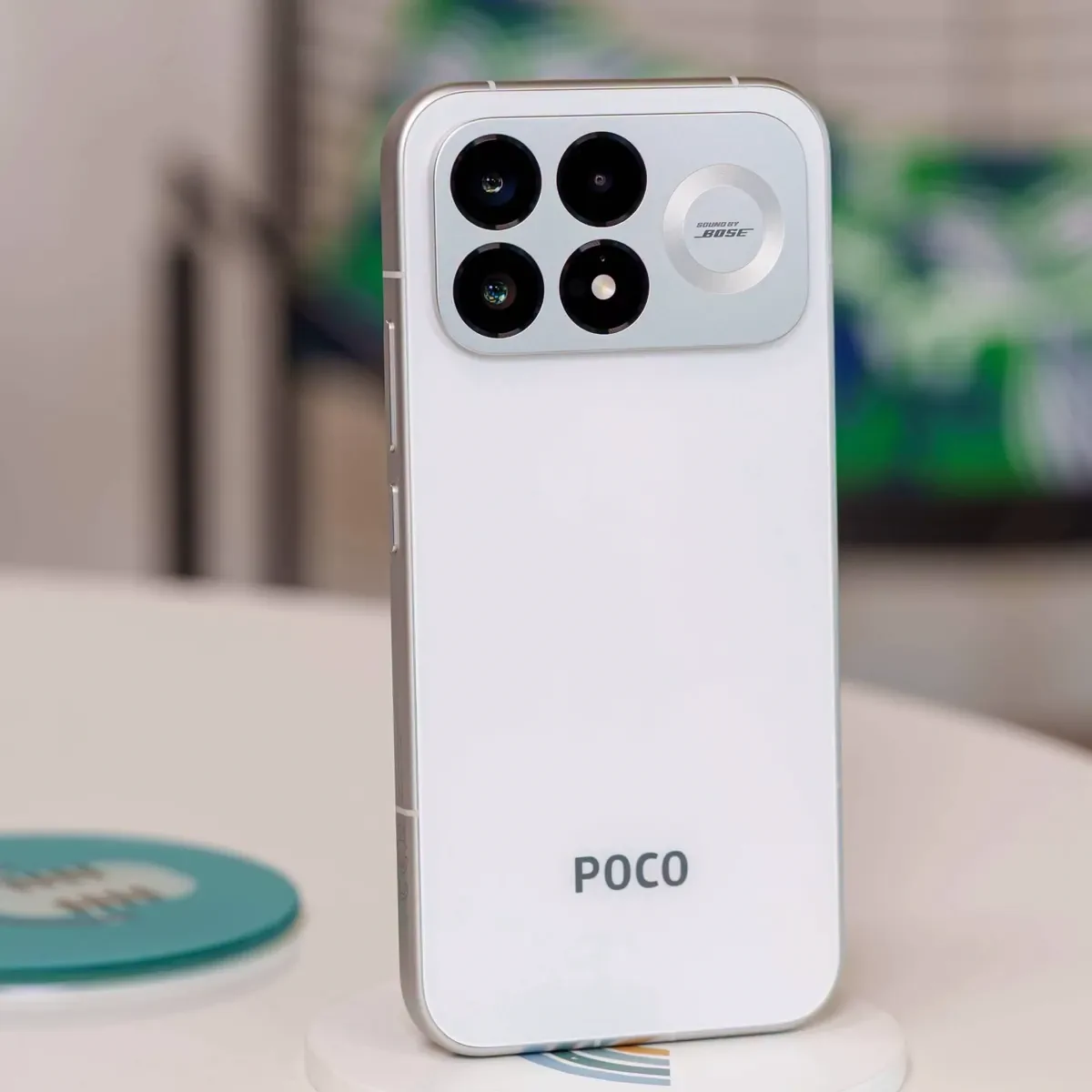
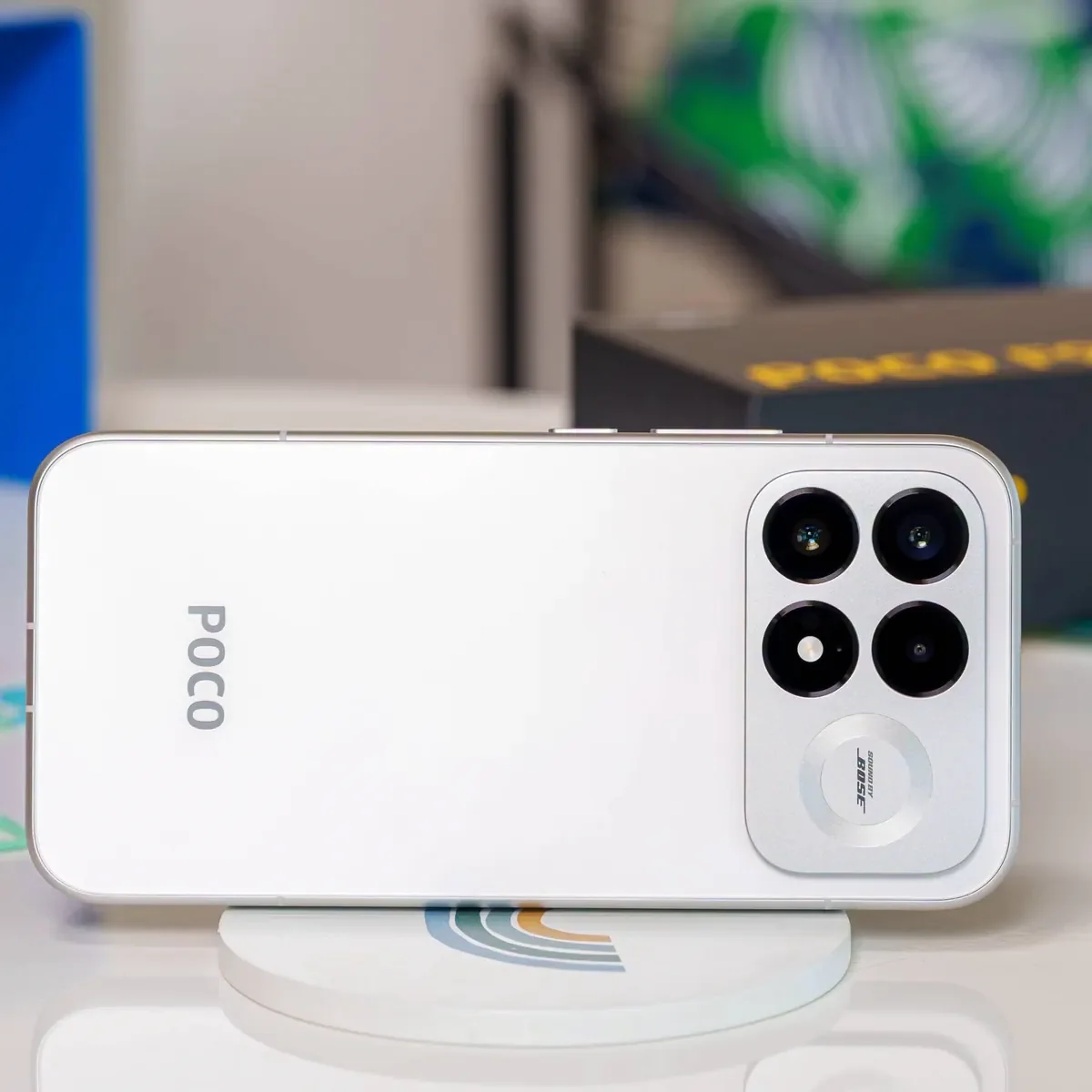
The F9 Pro still looks unmistakably performance-focused, but it no longer feels like a device designed only for spec-sheet enthusiasts. The white model shown here has a cleaner rear panel, a flat metallic frame and a large camera island that looks more deliberate than the scattered-camera designs used by older POCO models.
Key takeaway
POCO F9 Pro combines Snapdragon 8 Elite Gen 5 V Series performance, a 185Hz AMOLED display, 200MP main camera, 50MP telephoto, 6,330mAh battery, 100W wired and 50W wireless charging. It is one of the most complete POCO flagships yet, though the ultra-wide camera and weight remain clear compromises.
At around 206 grams and 8.79mm thick, this is not a compact phone. But the size makes sense once you consider the large battery, high-end cooling requirements and the camera hardware packed into the chassis.

The industrial design is one of the first signs that POCO is trying to move the F-series upward. The phone still prioritizes performance, but it now looks closer to a mainstream flagship than a niche gaming handset.
9 min read
PhonesGate coverage from PhonesGate. Published Sep 16, 2026.
Display: 185Hz is excessive — and that is exactly the point
The POCO F9 Pro uses a 6.59-inch AMOLED display with up to 185Hz refresh, a 2510 × 1156 resolution and HDR support. POCO also quotes very high peak brightness figures under limited test conditions, while the display can drop to very low brightness for night use.
For ordinary apps, 185Hz is more than most people need. But POCO is clearly targeting gamers here. The phone combines a high native refresh rate with its VisionBoost D8 graphics chip, which can use frame interpolation and image enhancement in supported games.
The bigger benefit is not the headline 185Hz number by itself. It is the way the display, chipset and graphics-processing hardware are designed to work together. That makes the F9 Pro feel more purpose-built than phones that simply advertise a fast panel without enough performance behind it.
Performance: Snapdragon 8 Elite Gen 5 V Series gives it real flagship power
At the center of the F9 Pro is Qualcomm's Snapdragon 8 Elite Gen 5 V Series, built on a 3nm process with third-generation Oryon CPU cores. POCO pairs it with 12GB of LPDDR5X memory and UFS 4.1 storage.
That puts the phone in true flagship-performance territory. Independent reviews collected by Notebookcheck consistently praise the F9 Pro's raw speed, and several reviewers describe it as unusually competitive against more expensive phones.
The question is not whether the phone is fast. It is whether it can maintain that speed under long gaming sessions. POCO has built the phone around sustained performance, but like every high-end Android device, thermal behavior matters more than a single benchmark score.
Camera: 200MP gets the headline, but the 50MP telephoto makes the system useful
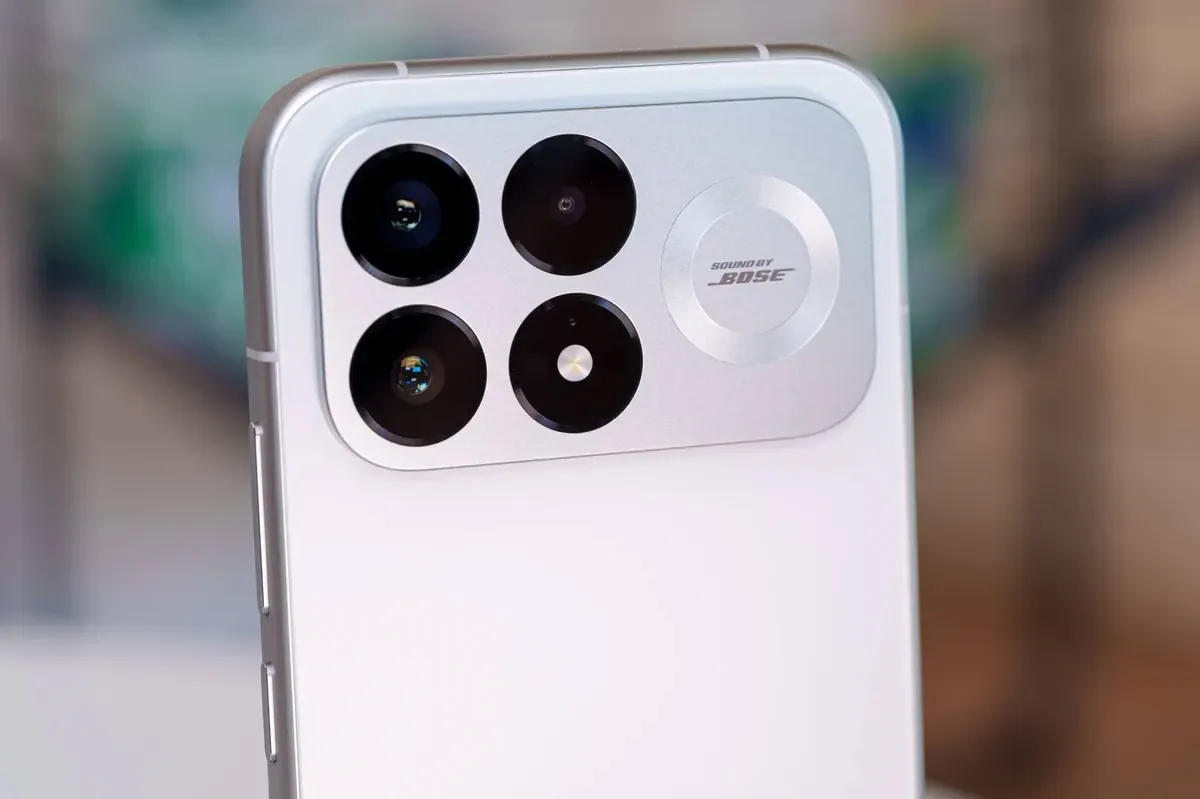
The main camera is a 200MP sensor with OIS, and this is the first time POCO is pushing resolution this aggressively in the F-series. The large resolution gives users more freedom to crop and reframe, but megapixels alone do not make a camera system good.
The more interesting addition is the 50MP floating telephoto camera with 2.5x optical zoom, OIS and telemacro focusing at around 10cm. It can also provide lossless-style crops around 5x in the right conditions.
This is important because older performance-focused POCO phones often treated cameras as secondary. The F9 Pro feels different. It still will not replace a camera-first Ultra flagship, but the telephoto means the phone can handle portraits, details and close-up subjects without relying entirely on the main sensor.
The 8MP ultra-wide is the obvious weak point. It is functional, but it is not in the same class as the 200MP main or 50MP telephoto. Independent reviews also tend to highlight the ultra-wide as the compromise in an otherwise much more complete camera package.
The rear camera design is bold, but there is a practical reason for the size
The camera island dominates the back of the phone, and the close-up photos make that obvious. The module is not subtle, but it also communicates that POCO is treating the camera hardware more seriously this generation.
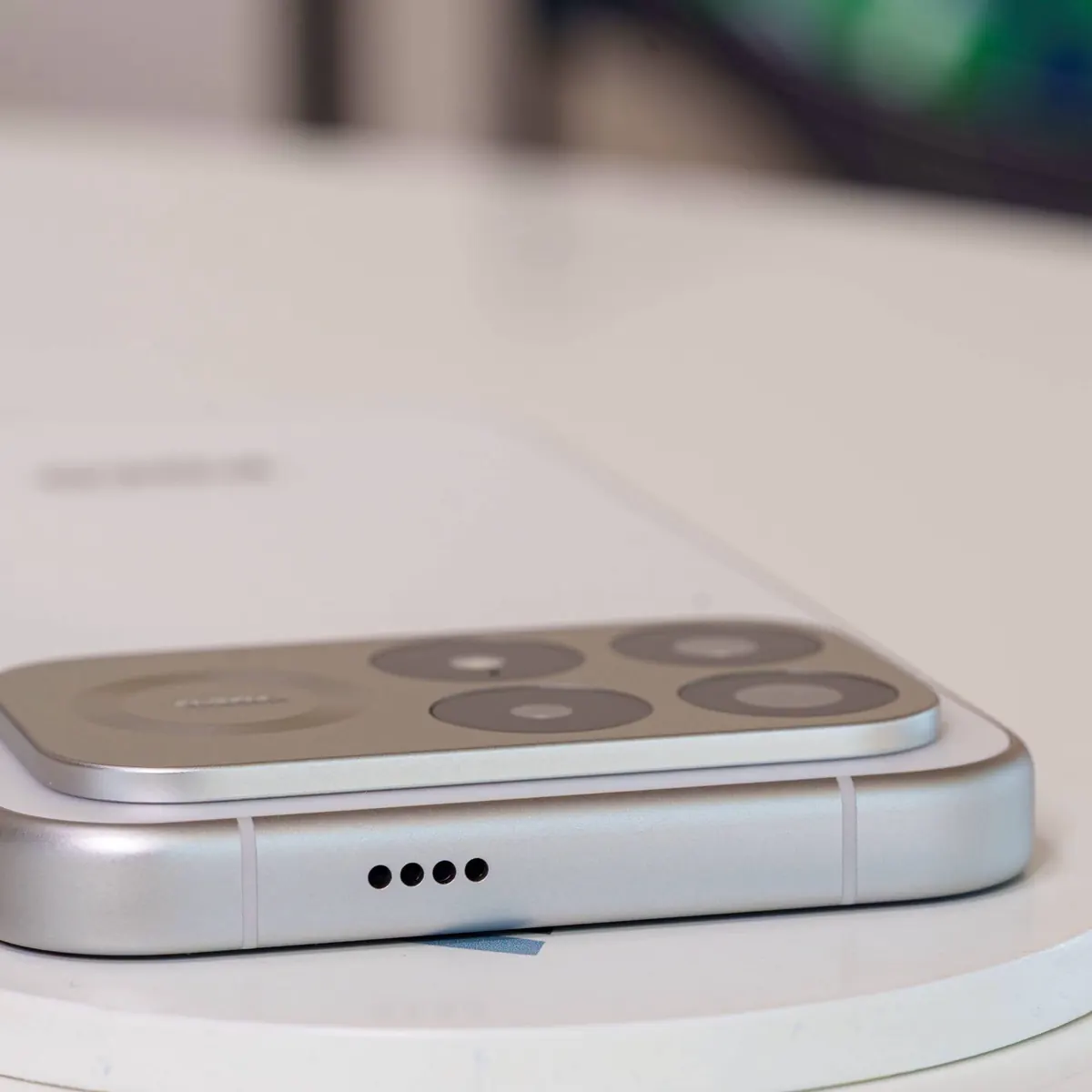
The Bose branding on the rear module is unusual visually, but it ties into another major upgrade: POCO's symmetric stereo speakers are tuned under the Sound by Bose branding. That makes audio a more deliberate part of the phone's identity rather than an afterthought.
Sound by Bose: finally a POCO that treats audio like a flagship feature
POCO is using symmetric stereo speakers with Bose tuning, and this is exactly the kind of feature that can make a performance phone feel more complete. Gaming, video and music all benefit from better speaker balance and stronger separation.
Audio quality is difficult to judge without direct testing, so PhonesGate is not making claims about loudness or tonal accuracy here. The important point is that POCO is investing in speaker hardware and tuning at the same time it is pushing the display and performance story.
Battery: 6,330mAh is large enough to change how the phone is used
The F9 Pro carries a 6,330mAh silicon-carbon battery. That is a meaningful capacity for a device running a 185Hz display and flagship processor.
High-performance phones traditionally force users to choose between speed and endurance. Silicon-carbon battery technology is helping reduce that compromise by allowing larger capacities without making phones dramatically thicker.
Published reviews generally list battery life as one of the F9 Pro's strengths. That makes sense given the raw capacity, although actual endurance will depend heavily on refresh rate, gaming load, 5G use and brightness.
100W wired + 50W wireless makes the power setup feel genuinely premium
The phone supports 100W wired HyperCharge and 50W wireless HyperCharge. Wireless charging is particularly important because it is still missing from many performance-focused phones in this price category.
POCO also supports reverse charging, which makes the large internal battery useful for topping up accessories or another compatible device.
The charging system is one of the clearest signs that the F9 Pro is no longer just a “cheap flagship chipset” phone. The surrounding hardware is finally starting to match the processor.
Accessories and retail package: practical rather than flashy
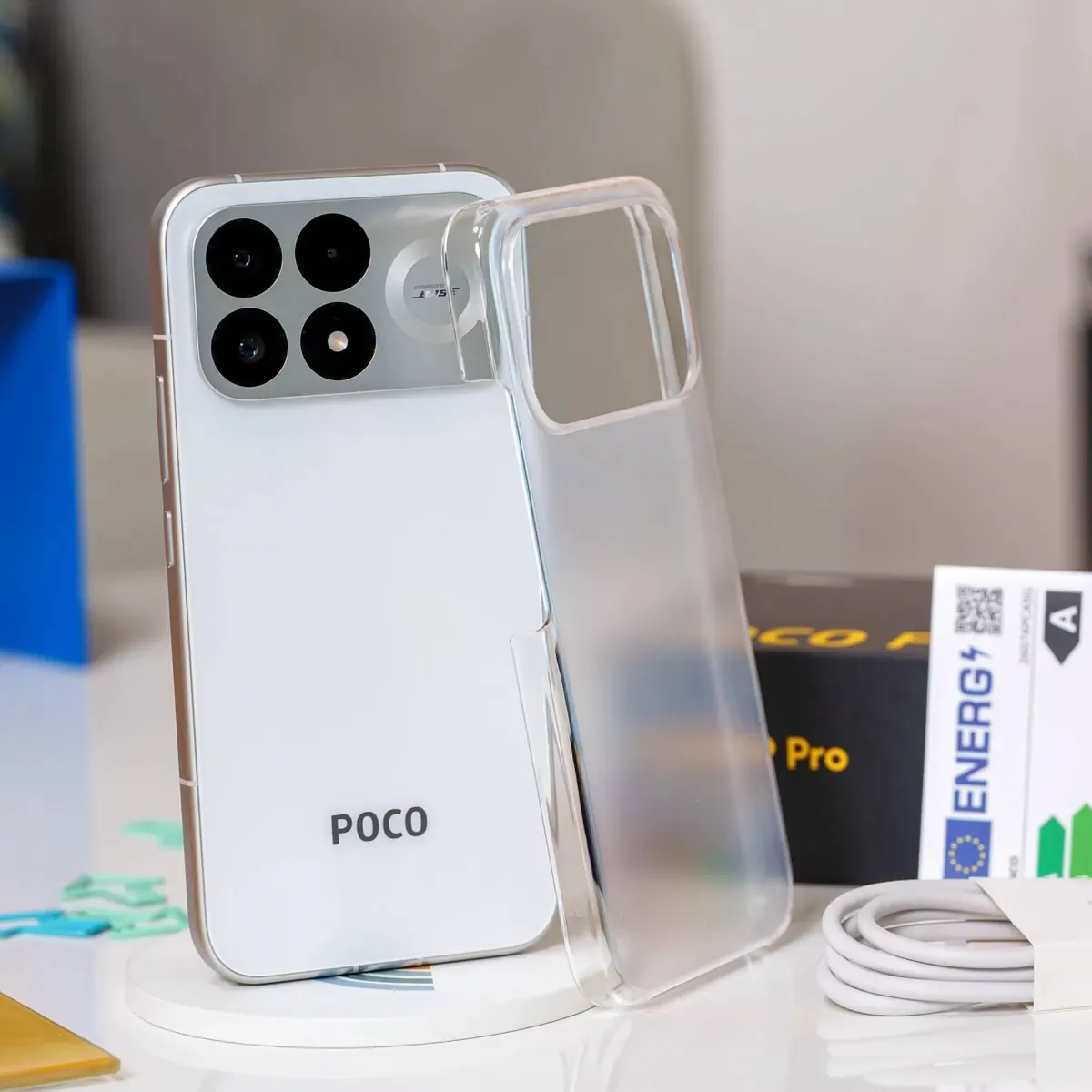
The photos also show the protective case and charging cable alongside the phone. Package contents can vary by country, but the case is useful given the large camera island and flat body.
The camera cut-out is particularly large, so a properly fitted case matters more than usual. It protects the surrounding frame without interfering with the camera module.
Software: HyperOS 3 has to prove it can match the hardware
The F9 Pro ships with Xiaomi HyperOS 3. The software includes gaming tools, performance controls, camera features and Xiaomi's wider ecosystem integration.
HyperOS remains one of the more subjective parts of the experience. Some users like the customization and feature density; others prefer a cleaner Android interface. For a phone this powerful, software optimization will be crucial because performance hardware alone does not guarantee a premium experience.
Where POCO still compromises
The F9 Pro is much more complete than earlier generations, but it still has clear compromises.
- The 8MP ultra-wide camera looks weak next to the main and telephoto sensors.
- 206 grams makes the phone noticeably heavy.
- The 185Hz display will not be fully used by most apps.
- HyperOS remains a matter of personal preference.
- High-end gaming performance still depends on sustained cooling, not headline chipset power.
Who should buy the POCO F9 Pro?
The F9 Pro makes the most sense for users who want flagship performance without paying the highest flagship prices. Gamers benefit from the chipset, fast display and dedicated graphics hardware. Heavy users benefit from the large battery and fast charging. Camera users finally get a real telephoto lens instead of a token secondary sensor.
It is also a strong option for users who want one phone to do almost everything reasonably well rather than one device optimized for a single category.
Who should skip it?
If photography is your absolute top priority, especially ultra-wide and low-light consistency across every lens, a camera-first flagship may still be a better choice. Buyers looking for a lighter or smaller phone should also look elsewhere.
And if you dislike Xiaomi's software style, raw hardware value alone may not be enough to change your mind.
PhonesGate verdict
The POCO F9 Pro feels like the generation where the “flagship killer” label finally becomes more believable again.
Previous POCO phones often offered one obvious reason to buy: flagship-level performance at a lower price. The F9 Pro goes further. The 200MP main camera, real telephoto, 6,330mAh battery, 100W wired and 50W wireless charging, Bose-tuned stereo speakers and 185Hz AMOLED display create a package that feels far more complete.
The phone still has compromises, especially the ultra-wide camera and its weight. But those compromises no longer define the entire device.
For buyers who care about performance, battery life, gaming and a more useful camera setup, the POCO F9 Pro looks like one of the strongest all-round value flagships of 2026.
Browse the latest devices and specifications in the PhonesGate device database.
Editorial disclosure: PhonesGate has not physically tested this exact POCO F9 Pro unit. The photographs used in this article were supplied for editorial use in this article. Review conclusions combine official product specifications with independent published testing.