

Huawei’s next tri-fold phone may end up being important for a very simple reason: it appears to address the most expensive weakness of the first generation. Early tri-fold hardware looked futuristic, but it also asked users to live with a compromise that was hard to ignore. Part of the flexible display could remain exposed depending on how the device was folded, which made the form factor feel exciting, but also fragile.
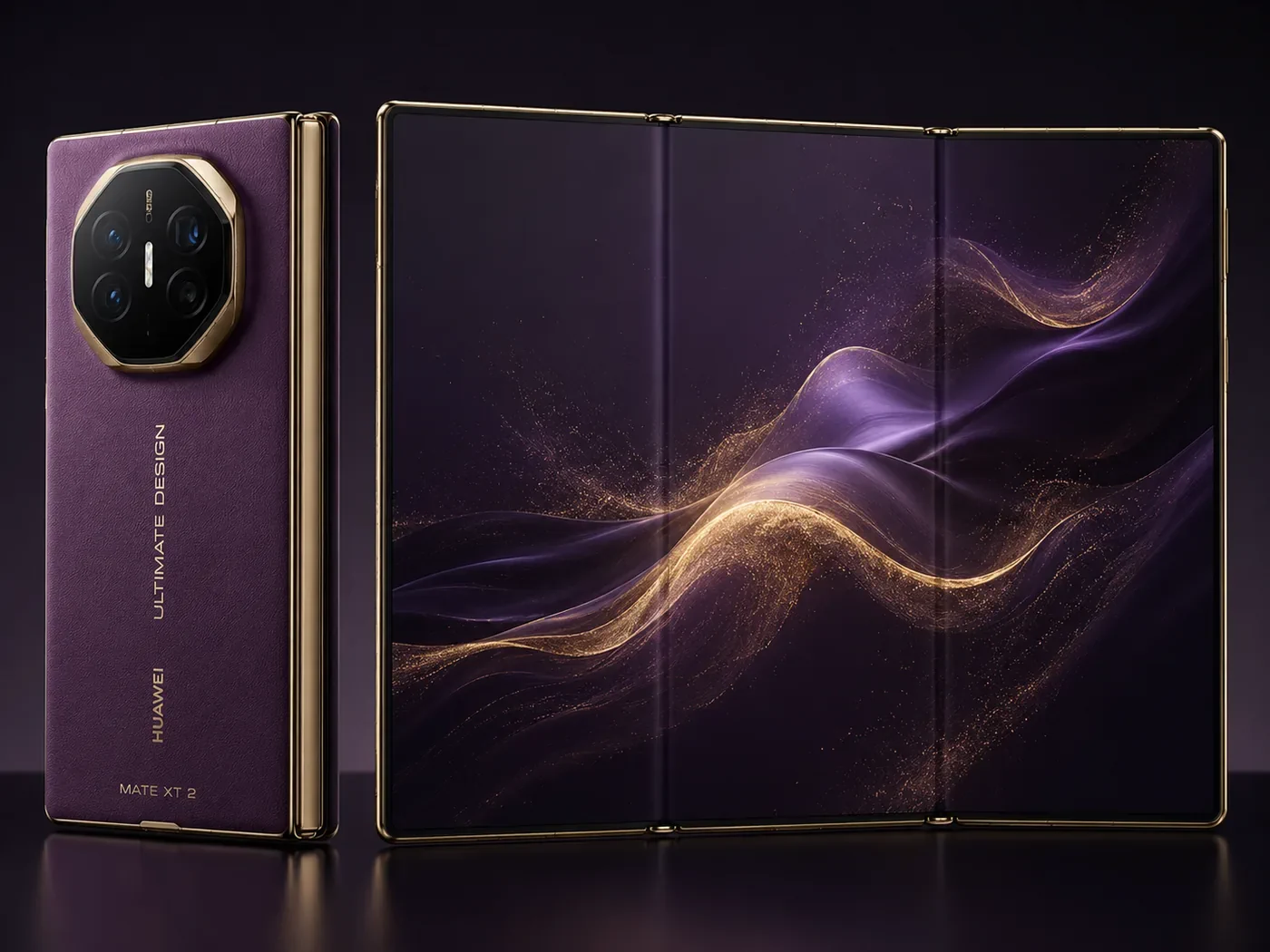
That is why the rumored redesign of the Huawei Mate XT 2 matters so much. Based on recent previews and multiple reports ahead of Huawei’s September 7, 2026 announcement, the company is expected to switch to a more practical inward-folding tri-fold architecture. In simple terms, the flexible main screen appears to fold inward so it can stay protected when the device is closed, while a separate cover display handles normal one-screen usage.
If that design arrives as expected, Huawei will not just be launching a second-generation tri-fold. It will be showing that the category is already moving beyond “look what we can build” and into “here is how this can become more usable every day.” For premium foldables, that is the real step that matters.
Key takeaway
Huawei’s Mate XT 2 appears ready to solve the biggest weakness of early tri-fold phones: an exposed flexible screen. Recent previews point to a new inward-folding design, a cover display and an ultra-thin 3.5 mm profile when unfolded.
Why the first tri-fold idea had a built-in weakness
The original tri-fold concept immediately impressed because it offered something ordinary foldables could not: a phone-sized device that could open into a much larger tablet-like canvas with three sections. For reading, multitasking, video and productivity, that idea is undeniably compelling. But it also came with a structural challenge.
When part of a flexible OLED display remains exposed on the outside, it is more vulnerable to scratches, impact damage and general wear. Even if a company improves materials and hinge design, the simple fact remains that a soft, expensive flexible panel is happiest when it is protected rather than constantly facing the outside world. That weakness becomes even more important on a tri-fold because the screen area is larger, the mechanism is more complex and repair costs can be painful.
8 min read
PhonesGate coverage from PhonesGate. Published Aug 30, 2026.
In other words, the first generation proved that a tri-fold could exist. The second generation now has to prove that the form factor can become practical, not just impressive.
What Huawei appears to be changing with Mate XT 2
The central story around the Mate XT 2 is the reported shift from the earlier visible-screen approach to a new inward-folding U-shaped or G-shaped tri-fold structure. Instead of leaving part of the flexible panel exposed when the phone is closed, the device appears designed so that the main display folds safely inside the body. A separate cover display on the outside allows the phone to function like a regular premium smartphone for quick tasks, notifications and one-handed use.
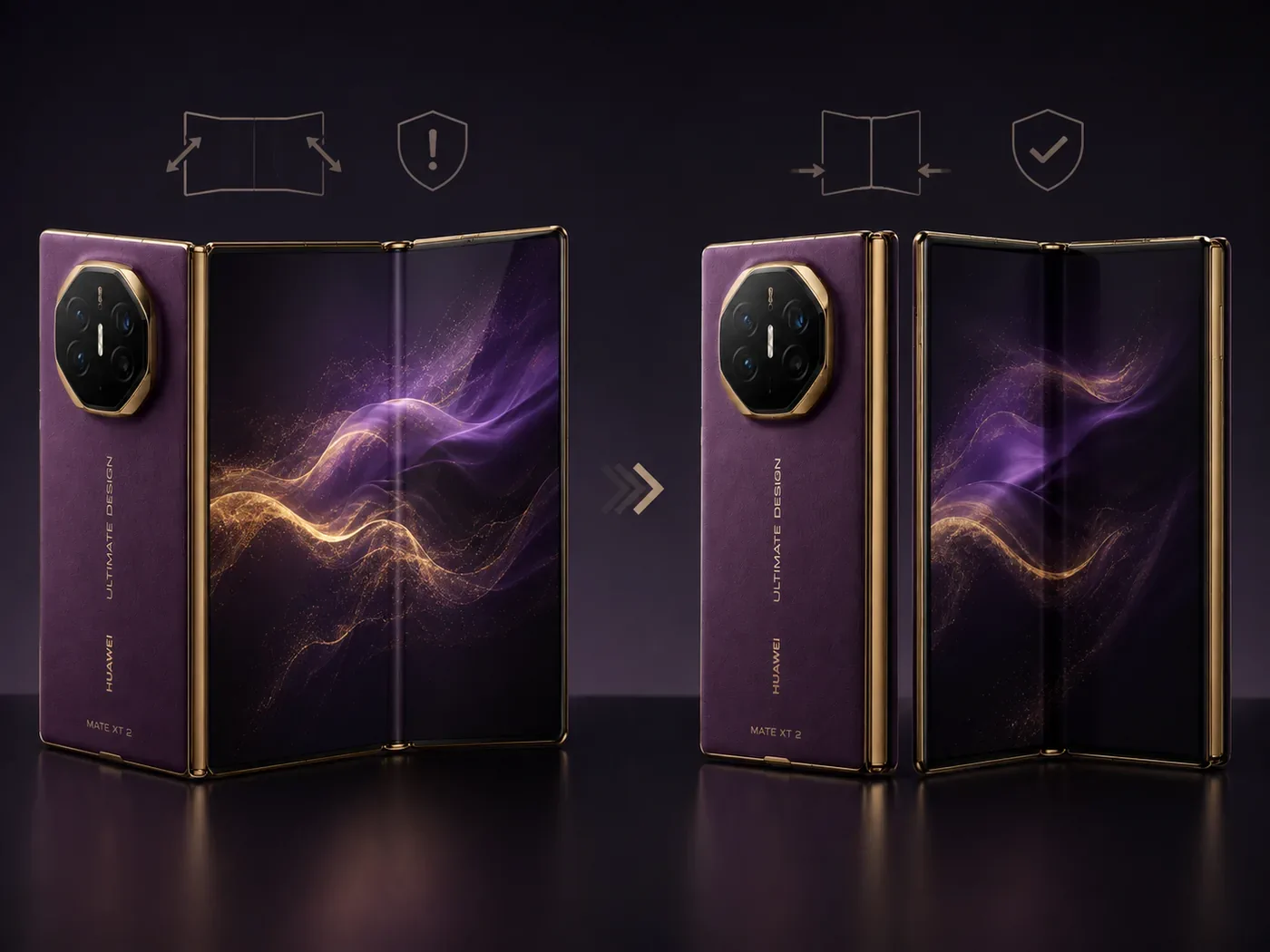
This change may sound subtle, but it has major implications. First, it improves durability because the most delicate screen no longer needs to face the outside environment when the device is shut. Second, it improves everyday convenience because users would not need to partially unfold the device for every simple interaction. Third, it helps the entire tri-fold concept feel more mature, because it starts behaving more like a normal smartphone when closed and a productivity device when opened.
Some reports also point to better weight balance and improved hinge symmetry. That matters because tri-fold phones are mechanically more demanding than standard book-style foldables. Two hinges, three sections and a large flexible display have to work together without making the device feel awkward or unstable. If Huawei has refined the internal structure successfully, the Mate XT 2 could feel less like a concept product and more like a serious flagship.
The 3.5 mm claim is a huge headline — if it holds up
One of the most striking reported details is that the Mate XT 2 could measure only around 3.5 mm when unfolded. If accurate, that would be a remarkable engineering result for a device with a tri-fold mechanism, multiple panels and a cover screen. Ultra-thin measurements have become part of the premium foldable arms race, but hitting that kind of figure on a tri-fold is especially ambitious.
Thinness is not just a vanity metric. In foldables, every millimetre matters because the entire product is defined by how it feels in the hand. A tri-fold that looks revolutionary but feels too bulky to carry every day will remain a niche curiosity. A tri-fold that becomes thinner, better balanced and easier to use has a far better chance of being taken seriously.
That said, there is always an important caveat with early previews. Measurement methods can differ, and companies often quote their most flattering dimensions under specific conditions. PhonesGate will treat the 3.5 mm figure as a reported headline specification until Huawei publishes the final product sheet and measurement notes.
Why a cover display changes the entire experience
Adding a proper external screen may be the smartest part of the redesign. It means the Mate XT 2 would not need to rely on the giant flexible panel for every interaction. That lowers friction in day-to-day use. Checking messages, replying quickly, navigating, calling a ride or opening the camera should all feel more natural if the phone behaves normally while closed.
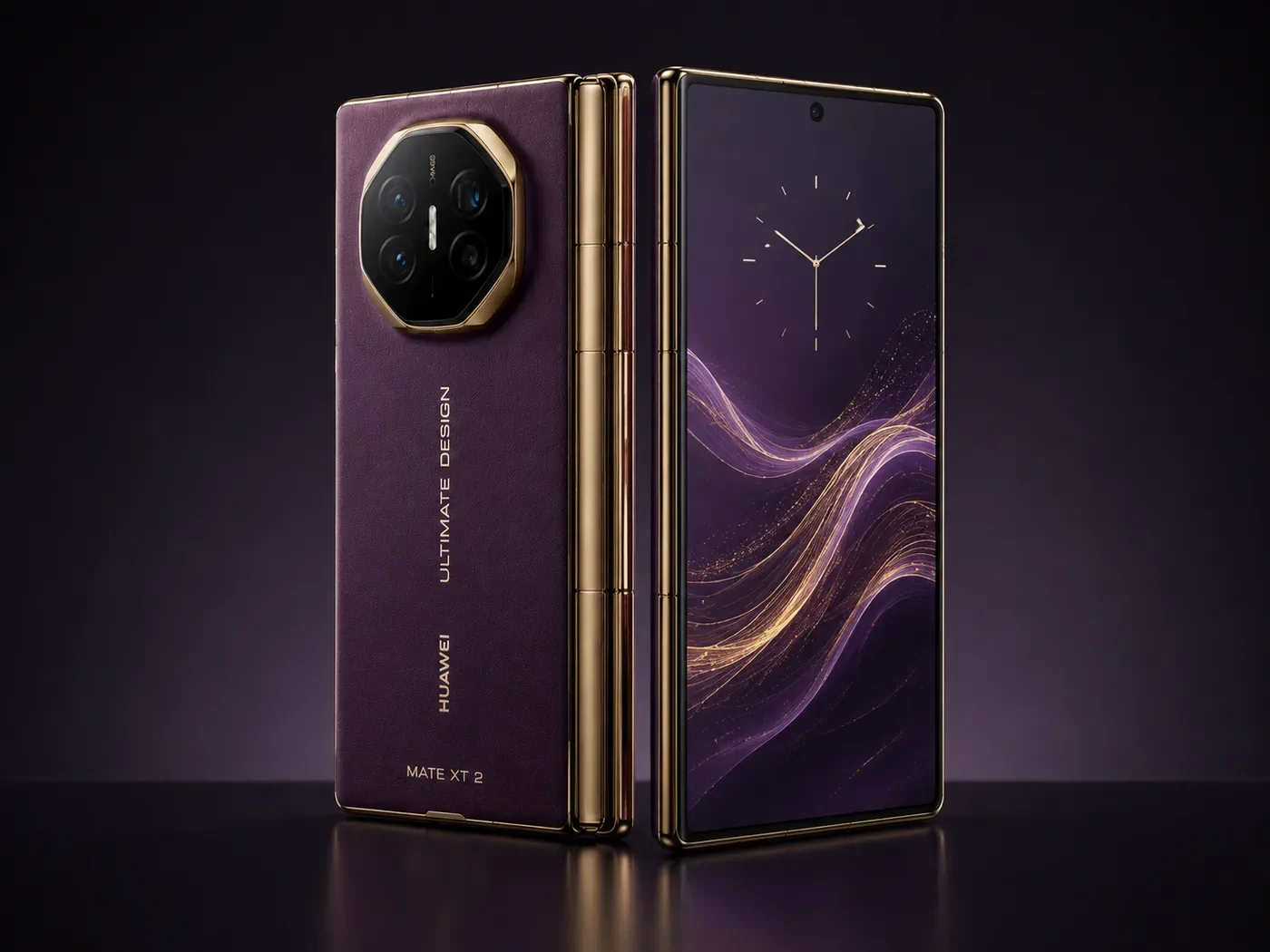
This is the same lesson that helped more traditional foldables evolve. The best foldable phone is not just the one with the most dramatic open mode. It is the one that creates the least friction in all the moments between those dramatic reveals. If Huawei gets the closed-state usability right, the Mate XT 2 may feel much more complete than first-generation experimental hardware.
What remains unknown
While the design story is already strong, several important details still need official confirmation. At the time of writing, Huawei has not publicly published the complete retail specification sheet for the Mate XT 2. That means we still need final confirmation on the chipset, RAM and storage options, battery capacity, camera breakdown, charging speeds, weight, exact dimensions when folded, software features and regional availability.
Pricing is another big question. Tri-fold hardware sits at the far premium end of the market, and even standard foldables are expensive enough. A refined second-generation tri-fold will almost certainly remain a halo product. The real question is whether Huawei can price it in a way that makes it feel like a prestige flagship rather than an unreachable showcase.
Durability and repairability are also key. A better-protected main display would certainly help, but the Mate XT 2 will still be a very complex device. Two hinges and three sections create more moving parts, and long-term reliability will matter just as much as first-impression design.
Why this matters beyond Huawei
The Mate XT 2 matters because it could influence the direction of the entire foldable market. Samsung is widely expected to keep exploring larger and more advanced foldable formats, and Apple is moving toward its own foldable era. If Huawei demonstrates that a tri-fold can be both visually spectacular and meaningfully more practical, other manufacturers will pay close attention.
That is how categories mature. The first wave proves that a product is possible. The second wave proves which design decisions are worth keeping. If Huawei has truly found a better answer to the exposed-screen problem, it will have contributed more than a flashy new device. It will have identified a better blueprint for the future of tri-fold hardware.
PhonesGate take
Mate XT 2 looks exciting not because it adds another hinge, but because it may finally add common sense to the tri-fold formula. Protecting the flexible display inside the body and pairing it with a normal cover screen is exactly the kind of decision that can turn a futuristic idea into a more believable everyday product.
The promise of a 3.5 mm unfolded profile only adds to the intrigue, because it suggests Huawei is not making that durability improvement by simply building a thicker, clumsier device. If the final product delivers strong balance, a refined hinge system and good closed-state usability, Huawei could make tri-fold phones feel far more mature in a single generation.
That is why this is one of the most interesting foldable launches of the moment. The Mate XT 2 may not just show where tri-fold phones are going next. It may show which compromises the category no longer has to accept.
Sources
This article is based on recent launch previews and design reports discussing Huawei’s expected September 7, 2026 Mate XT 2 announcement, the reported inward-folding redesign, the addition of a cover display and the quoted ultra-thin profile claim. PhonesGate has clearly separated reported details from information still awaiting full official confirmation.
Image note: the visuals in this article are original PhonesGate concept illustrations created for editorial use. They are not official Huawei product photos and should not be treated as final retail images.