

Google and Apple are approaching the premium smartphone in two very different ways. The Pixel 11 Pro XL puts Google's newest AI-first ideas at the center of the experience, while the iPhone 17 Pro Max continues Apple's focus on sustained performance, video, ecosystem integration and long-term polish.
Design and display: two mature flagship identities
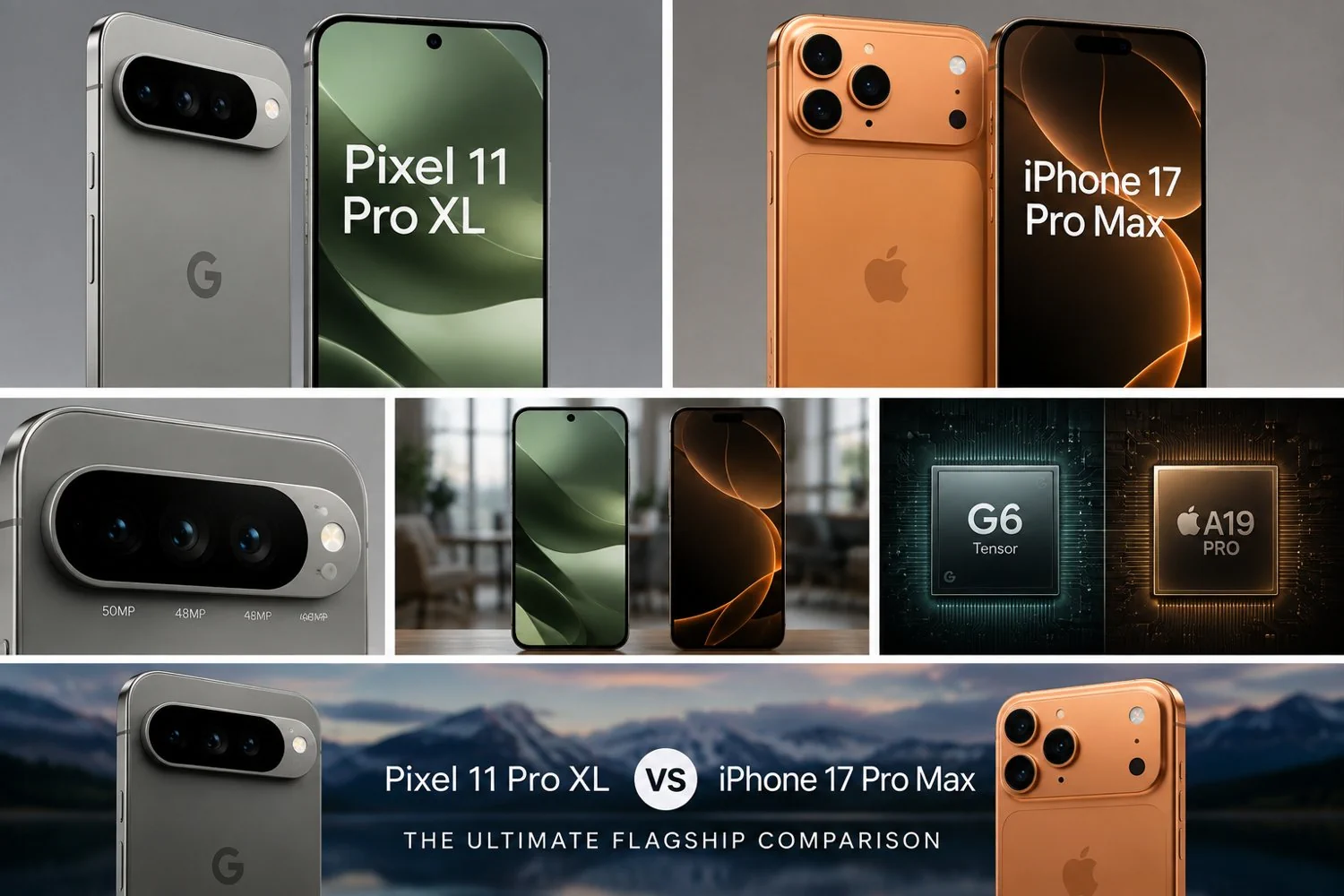
Both phones now look unmistakably like products from their respective ecosystems. The Pixel keeps Google's distinctive camera-bar language, while the iPhone 17 Pro Max uses Apple's redesigned Pro body and camera plateau. In daily use, the more important question is not which one looks newer, but which combination of size, weight, brightness and ergonomics works better for you.
Performance: AI-first Pixel versus A19 Pro muscle
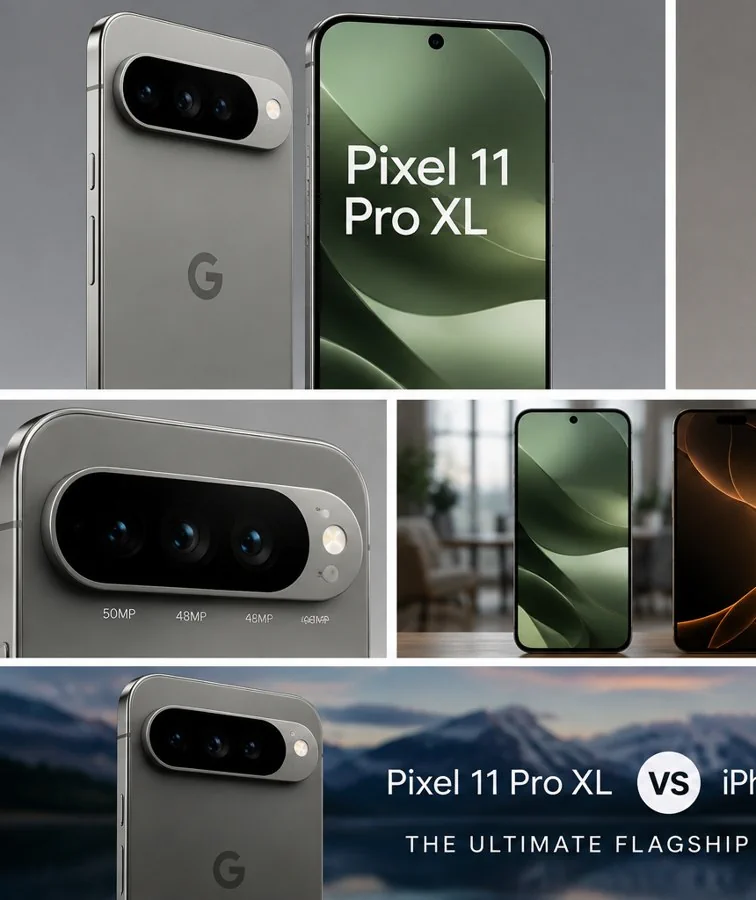
The philosophical split is clearest in performance. Google increasingly treats its custom silicon as a platform for on-device intelligence, photography and Gemini experiences. Apple, meanwhile, pairs the A19 Pro with a vapor-cooled Pro design aimed at high sustained performance. Apple's official specifications list a six-core CPU, six-core GPU with Neural Accelerators and a 16-core Neural Engine.
Key takeaway
Google Pixel 11 Pro XL and iPhone 17 Pro Max take very different approaches to AI, cameras, performance and ecosystem. Here is the PhonesGate comparison.
For users who edit video, play demanding games or depend on tightly optimized creative apps, the iPhone remains the safer performance-oriented choice. The Pixel's advantage is how deeply Google can weave AI into Android and first-party services.
Camera battle: computational photography versus pro video
This is the category where a simple megapixel comparison is least useful. Pixel phones have traditionally leaned heavily on computational photography, fast point-and-shoot processing and Google's image intelligence. The iPhone 17 Pro Max, by contrast, combines three 48MP Fusion rear cameras with Apple's established strength in video workflows.
4 min read
Apple coverage from PhonesGate. Published Aug 15, 2026.
Apple specifies a 48MP main camera, 48MP ultrawide and 48MP telephoto system, including 4x telephoto capture and an 8x optical-quality option. That makes the iPhone particularly compelling for creators who switch frequently between stills and video.
Software and AI: this may decide the winner
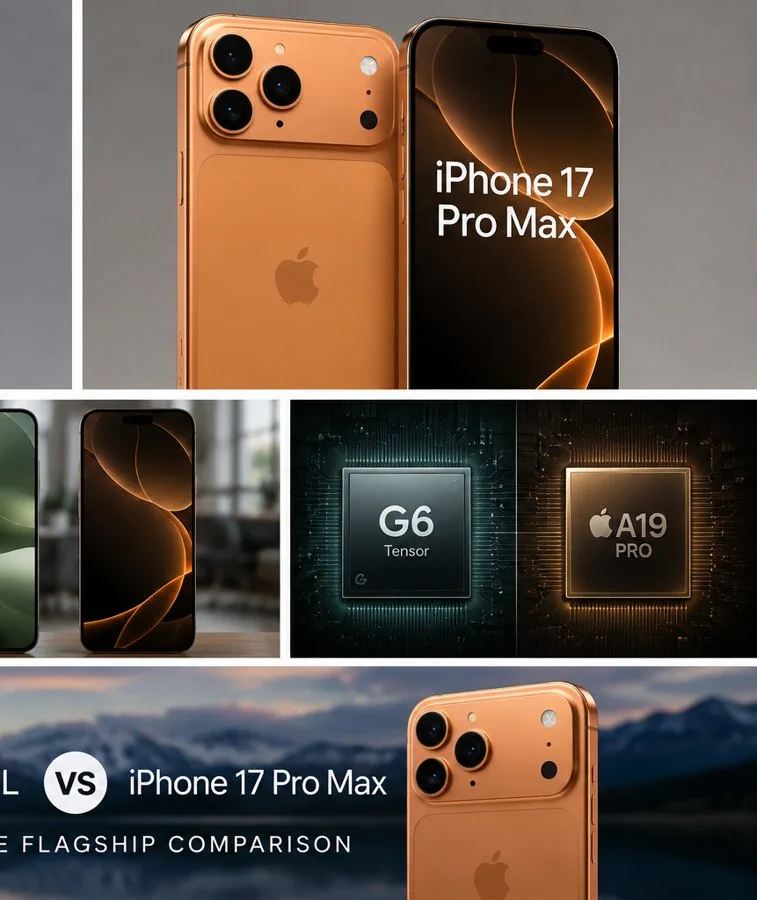
The biggest difference is no longer hardware. Pixel buyers are effectively choosing Google's vision of an AI-native Android phone, with Gemini integrated across more of the experience. iPhone buyers get iOS, Apple Intelligence and exceptionally deep integration with Mac, Apple Watch, AirPods and the rest of Apple's ecosystem.
If your phone is already part of a larger Apple workflow, switching purely for a camera or AI feature may not make sense. If you live in Google's services and want the newest Gemini experiences first, the Pixel is much more compelling.
Battery, charging and everyday reliability
Apple does not market the iPhone 17 Pro Max around a public mAh figure on its technical-specification page. Instead, it rates the phone for up to 39 hours of video playback and says it can reach up to 50% charge in about 20 minutes with a compatible 40W-or-higher USB-C adapter. MagSafe and Qi2 charging are supported up to 25W.
For the Pixel, the more meaningful evaluation is real-world endurance after Google's AI features, display behavior and modem are all active. A large battery number alone does not determine which flagship lasts longer in mixed daily use.
Which one should you buy?
Choose the Pixel 11 Pro XL if you prioritize Google's AI ecosystem, Gemini integration, computational photography, Android flexibility and the Pixel-specific software experience.
Choose the iPhone 17 Pro Max if you prioritize sustained performance, excellent video capture, Apple ecosystem integration, accessory support and a mature Pro workflow.
PhonesGate verdict
There is no universal winner here. The iPhone 17 Pro Max is the stronger recommendation for buyers who want a predictable, high-performance flagship with excellent video and ecosystem depth. The Pixel 11 Pro XL is the more interesting choice for users who believe AI will define the next phase of the smartphone and want Google's latest software ideas closest to the hardware.
The deciding factor in 2026 is increasingly not which phone has the longest specification sheet, but which ecosystem makes the hardware more useful every day.