

The Google Pixel 10 Pro Fold is one of the smartest foldable phones available, but it is not the most advanced piece of foldable hardware. That contradiction defines the entire product.
Google's Pixel philosophy has traditionally focused on clever software, computational photography, useful AI features and a clean Android experience. Pixel phones have rarely been the fastest, thinnest or most aggressively specified devices in their class. They succeed by making everyday tasks feel easier.
A book-style foldable represents almost the opposite philosophy. It is expensive, mechanically complex and aimed at users willing to pay a premium for cutting-edge hardware. At close to the top of the smartphone price range, buyers expect the best displays, the strongest processor, excellent cameras, fast charging, refined ergonomics and uncompromised durability.
Key takeaway
The Pixel 10 Pro Fold combines Google's excellent software, improved hinge, bright displays, Qi2 magnets and strong battery life, but its weight, performance and cameras make it difficult to recommend universally.
The Pixel 10 Pro Fold tries to combine those two ideas. It is a Pixel first and a hardware showcase second. That makes it enjoyable to use, but difficult to recommend broadly.
PhonesGate verdict at a glance
Category Assessment Software and AI Excellent Pixel experience with useful system intelligence Hinge and durability Major improvement, smoother design and stronger protection Displays Bright and practical, but crease and bezels remain noticeable Battery life Surprisingly strong, especially when used mostly closed Performance Smooth for daily use, behind the strongest flagship chips Cameras Very good, but below the best Pixel flagships and premium rivals Ergonomics Thick and heavy compared with newer foldables Value Best suited to committed Pixel users who specifically want a foldable
11 min read
Google coverage from PhonesGATE. Published Jul 21, 2026.
The Pixel philosophy does not naturally fit a $2,000 foldable
Pixel phones are usually defined by software intelligence rather than raw hardware leadership. Features such as call assistance, Now Playing, transcription, computational photography and contextual AI improve ordinary use without requiring the strongest processor in the market.
That approach works well when the phone is competitively priced. A buyer can accept that a Pixel is not the benchmark champion because the software experience provides a different kind of value.
The calculation changes in the ultra-premium foldable category. Buyers paying close to $2,000 compare every physical detail. Weight, thickness, hinge feel, charging speed, crease visibility and camera hardware become much harder to excuse.
The Pixel 10 Pro Fold therefore enters the market with a structural disadvantage: Google's greatest strengths are software-based, while foldable buyers often expect hardware leadership.
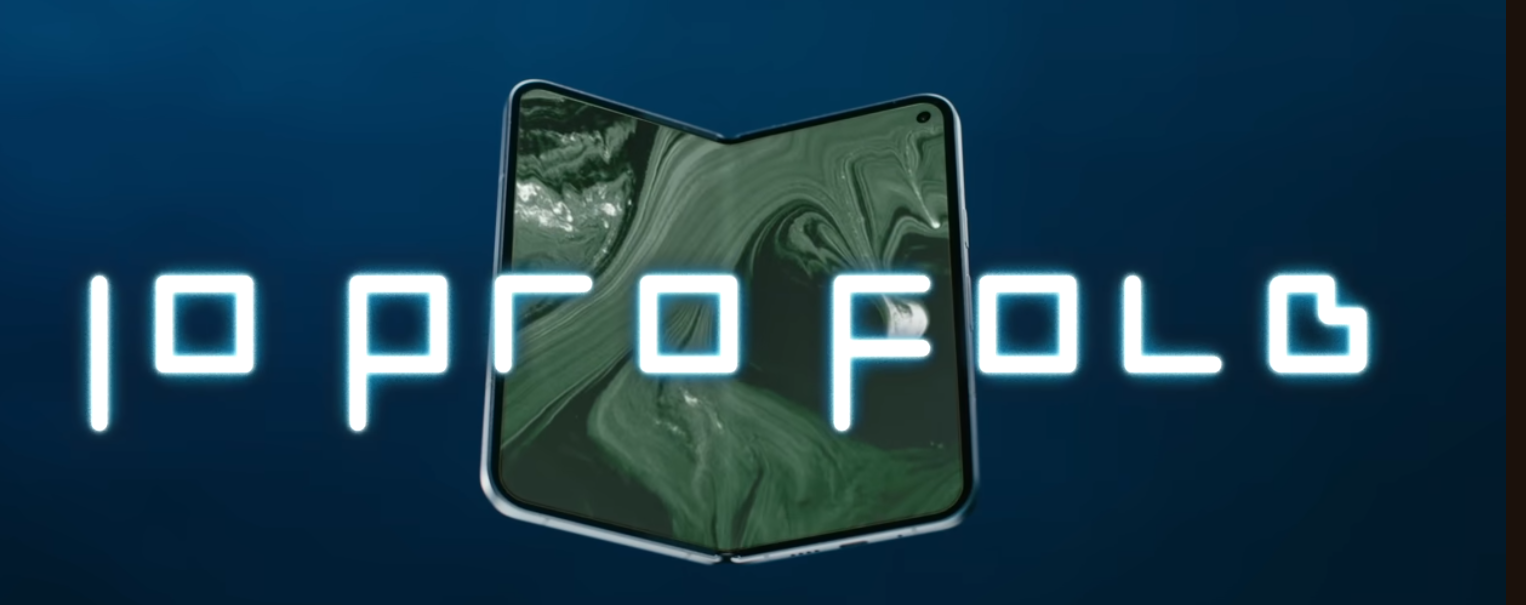
The redesigned hinge is the most important upgrade
The hinge is the foundation of every foldable phone. It affects durability, screen shape, thickness, weight distribution, bezel size and how confident the device feels when opening and closing.
Google has redesigned the Pixel 10 Pro Fold hinge to be smaller and gearless. The reduction in hinge size allows the cover display to sit closer to the edge and helps make the left bezel more consistent with the rest of the phone.
The motion is deliberate rather than loose. It has smooth resistance that makes the mechanism feel controlled and substantial.
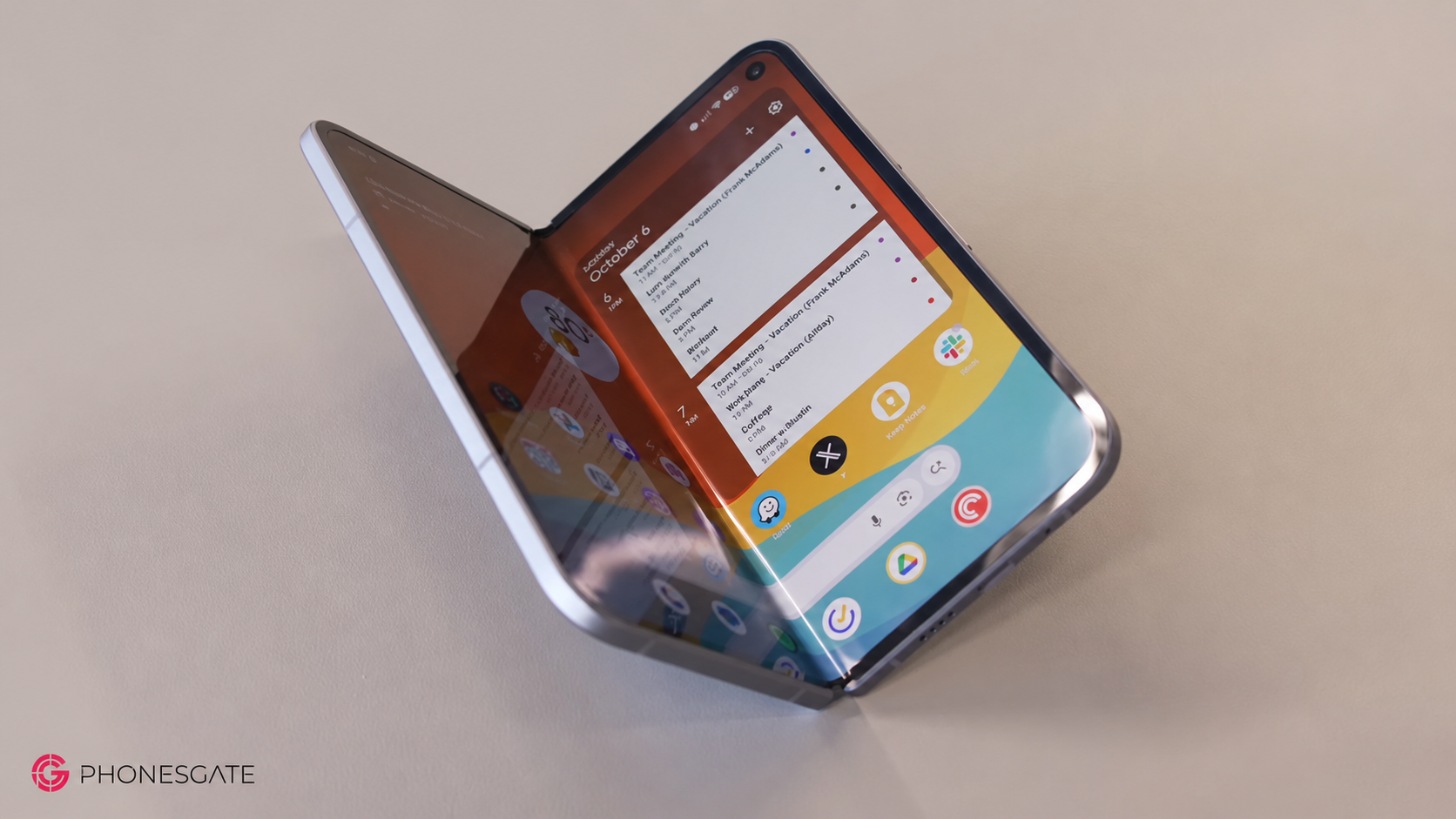
Why the hinge matters beyond appearance
The hinge redesign creates internal space that Google can use for other components. In this generation, that appears to contribute directly to a larger battery and stronger resistance to water and dust.
Foldables are especially vulnerable to particles because their hinges and flexible displays contain moving parts and small gaps. Stronger environmental protection therefore matters more here than on a conventional slab phone.
According to the supplied review material, the Pixel 10 Pro Fold reaches full IP68 water and dust resistance. That would represent a major durability achievement for the category, but this specification should be verified against final official documentation before publication.
The cover display feels more like a normal phone
The outer display measures approximately 6.4 inches and is brighter than the previous generation. That size is important because most foldable users still spend a large amount of time with the device closed.
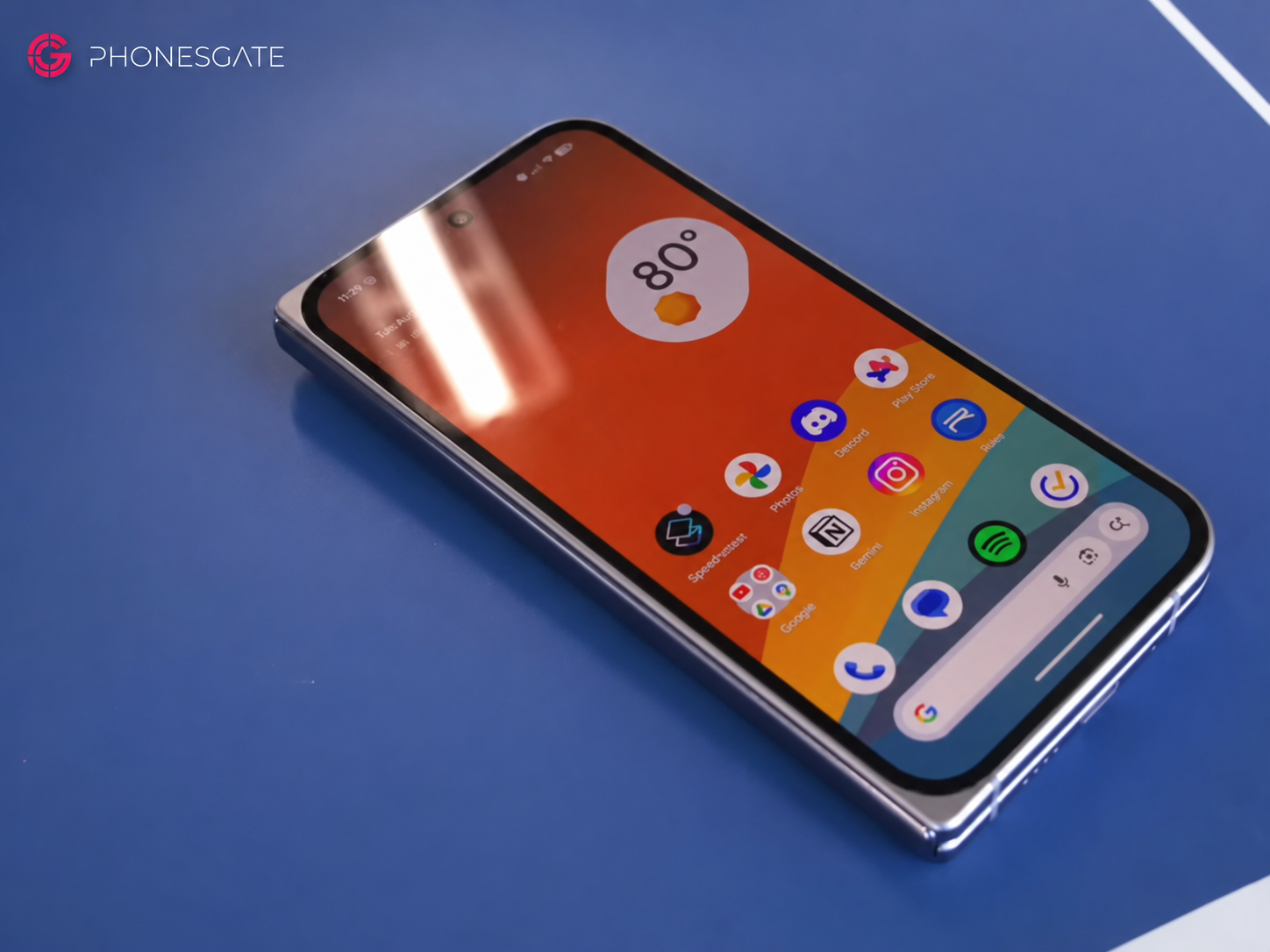
A usable cover screen reduces the need to unfold the device for simple tasks such as replying to messages, checking notifications, navigating, taking photos or paying at a terminal.
The high peak brightness also improves outdoor visibility. The supplied review cites a maximum around 3,000 nits, although peak brightness figures often apply only under specific conditions and should not be treated as sustained full-screen brightness.
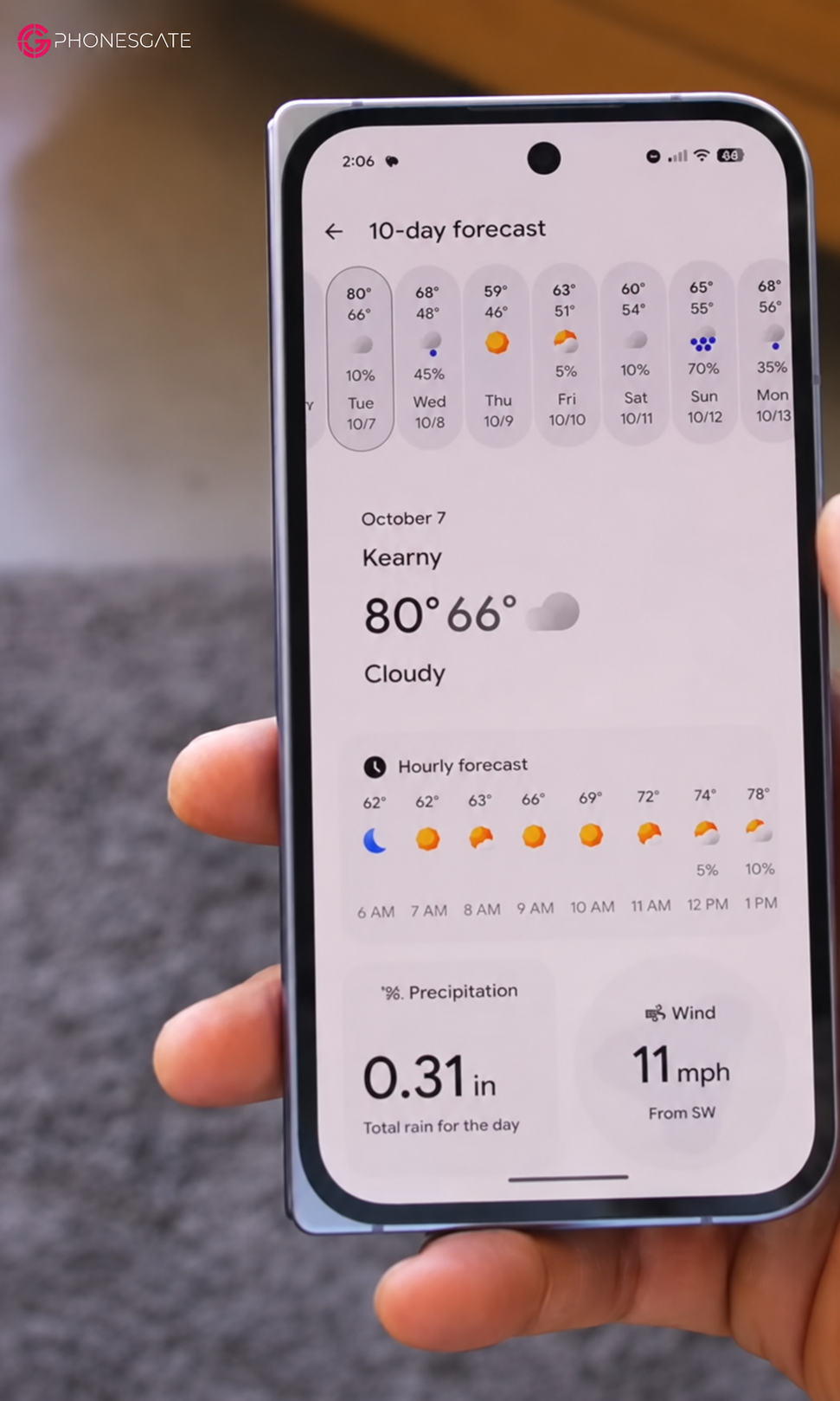
The inner eight-inch display is productive, but not class-leading
Opening the phone reveals an approximately eight-inch display that creates a compact tablet-like workspace.
The additional space encourages tasks that feel cramped on a traditional phone:
- organizing travel;
- booking tickets;
- reviewing email beside a calendar;
- editing documents;
- comparing products;
- watching video while using another app.
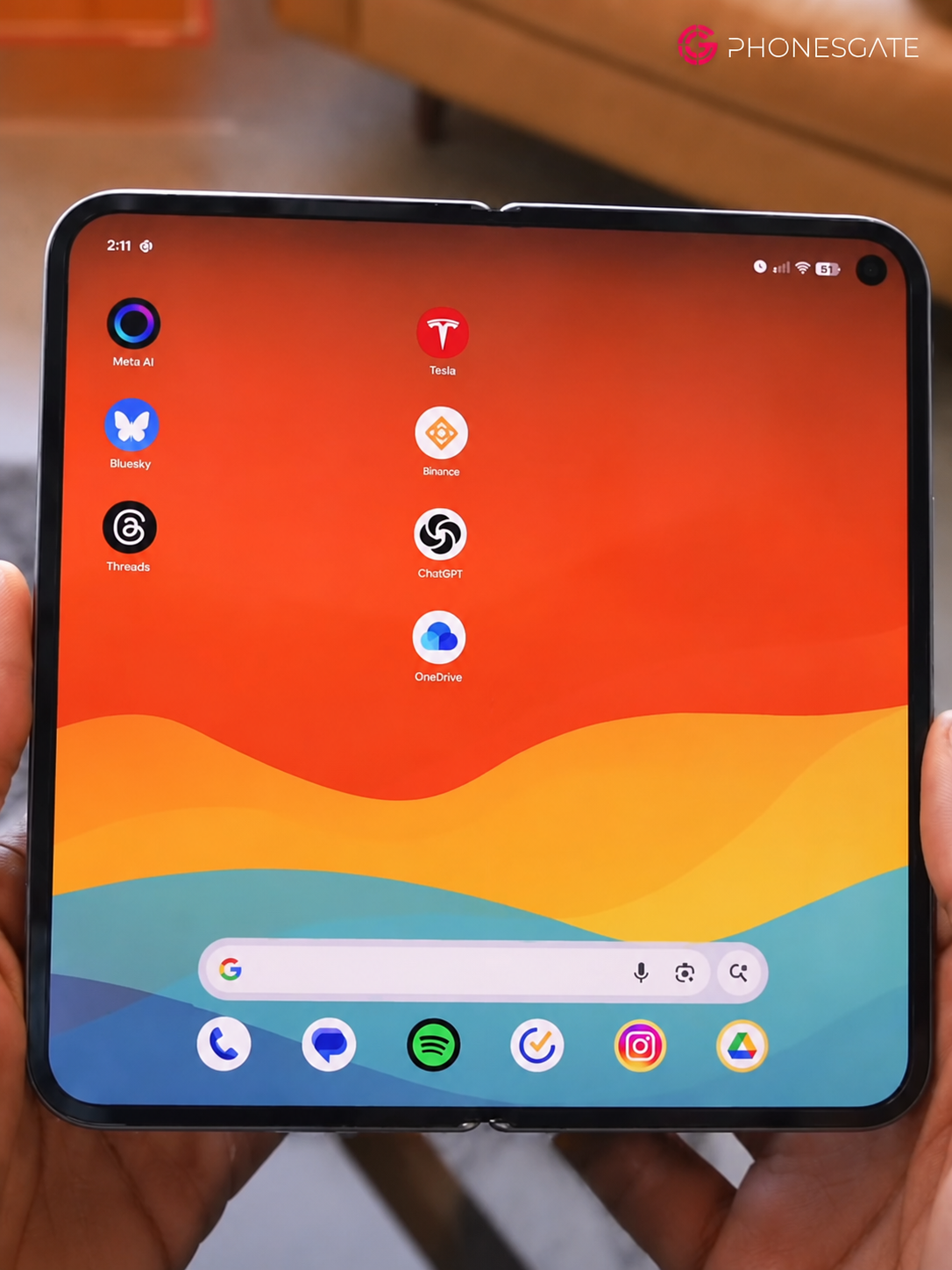
Android provides split-screen applications, a taskbar and large-screen layouts. Google does not add a radically new foldable interface here. The experience is flexible, but its value depends on how well the user builds workflows around the extra screen space.
The crease remains visible
The central crease can still be seen and felt. Users often stop noticing it during normal use, particularly when viewing bright content directly, but it remains more obvious than on some newer competitors.
The bezels are still not especially thin
The inner display has functional bezels around the perimeter. They provide room to hold the device safely, but visually they make the phone feel less advanced than ultra-thin competitors with tighter display borders.
PixelSnap and Qi2 are major practical upgrades
PixelSnap adds magnets to the rear of the phone and supports Qi2 wireless charging. The feature also allows the device to attach to a wide range of MagSafe-compatible accessories.
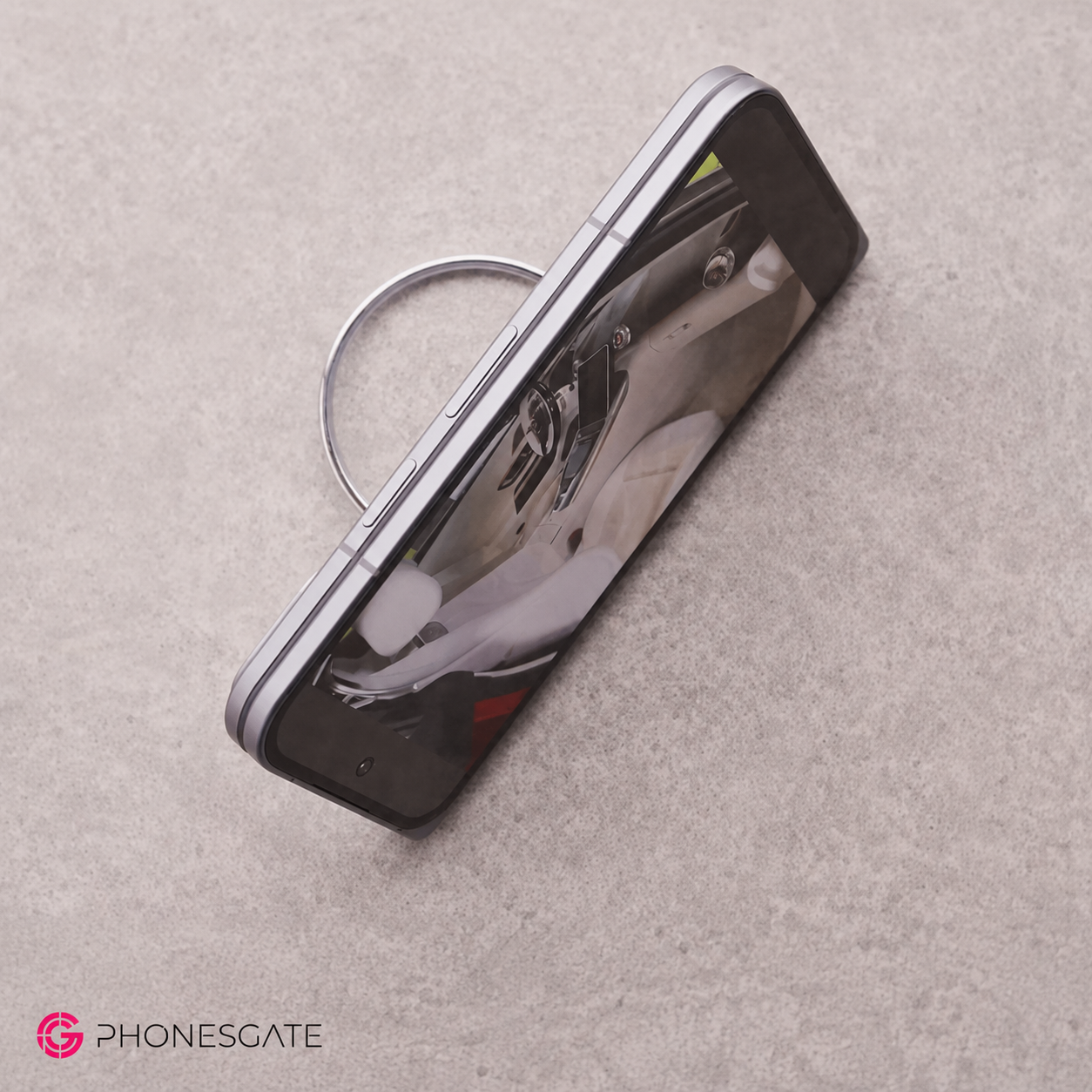
This creates immediate compatibility with an established accessory market:
- car mounts;
- desk stands;
- magnetic power banks;
- charging docks;
- wallet attachments;
- tripods and grips.
The foldable is heavier than a conventional phone, so magnetic strength matters. The supplied review indicates that the phone can remain attached to a vehicle mount without falling, which addresses an important practical concern.
Tensor G5 is efficient, but not a flagship performance leader
The Tensor G5 processor is designed around Google's software, AI and imaging priorities. It is paired with 16GB of RAM, which is appropriate for a foldable expected to run multiple applications side by side.
For normal use, the phone feels smooth. Messaging, browsing, photography, multitasking and system animations do not require the fastest processor available.
The problem appears during demanding workloads. High-end Snapdragon-based rivals offer stronger peak CPU and GPU performance, making them better suited to intensive gaming, emulation, video export and sustained heavy processing.
Performance matters more at this price
A mid-priced Pixel can justify lower benchmark performance by offering strong value. A nearly $2,000 foldable has less room for compromise.
Buyers at this level reasonably expect the processor to remain competitive for several years, especially when the device is positioned as a productivity tool.
Battery life is the surprise strength
The Pixel 10 Pro Fold reportedly uses a 5,015mAh battery. That capacity is substantial for a foldable and appears to benefit from the internal space created by the smaller hinge.
When used mainly with the cover display, the phone behaves like a thick 6.4-inch device with a large battery. The supplied experience reports approximately six hours of screen-on time under regular daily use.
Battery consumption rises when the larger inner display is used for long periods. That is expected because the device must power a much larger panel.
The important conclusion is that battery life is no longer an obvious weakness. It may be one of the strongest reasons to choose this model.
Charging speed remains conservative
The battery is not described as using the latest high-density silicon-carbon technology, and charging is not positioned as class-leading.
Some competing foldables offer much faster wired and wireless charging. For users who frequently need a rapid top-up, Google's conservative charging approach may feel outdated.
PixelSnap improves convenience, but convenience and charging speed are different advantages.
Pixel software remains the main reason to buy it
When closed, the device delivers the familiar Pixel experience: clean Android visuals, fluid Material design, Call Screening, Now Playing and Google's AI-assisted features.
These tools are often more meaningful than benchmark scores because they solve common problems:
- reducing unwanted calls;
- identifying music automatically;
- transcribing speech;
- editing photos;
- summarizing or organizing information;
- providing contextual assistance.
The Pixel 10 Pro Fold is therefore easiest to appreciate as a smart Pixel that happens to unfold, rather than as the most technically advanced foldable available.
Ergonomics are the biggest weakness
Foldable phones are used closed more often than marketing images suggest. That makes thickness and weight critical.
The Pixel 10 Pro Fold remains chunky compared with newer ultra-thin models. It is also noticeably heavy.
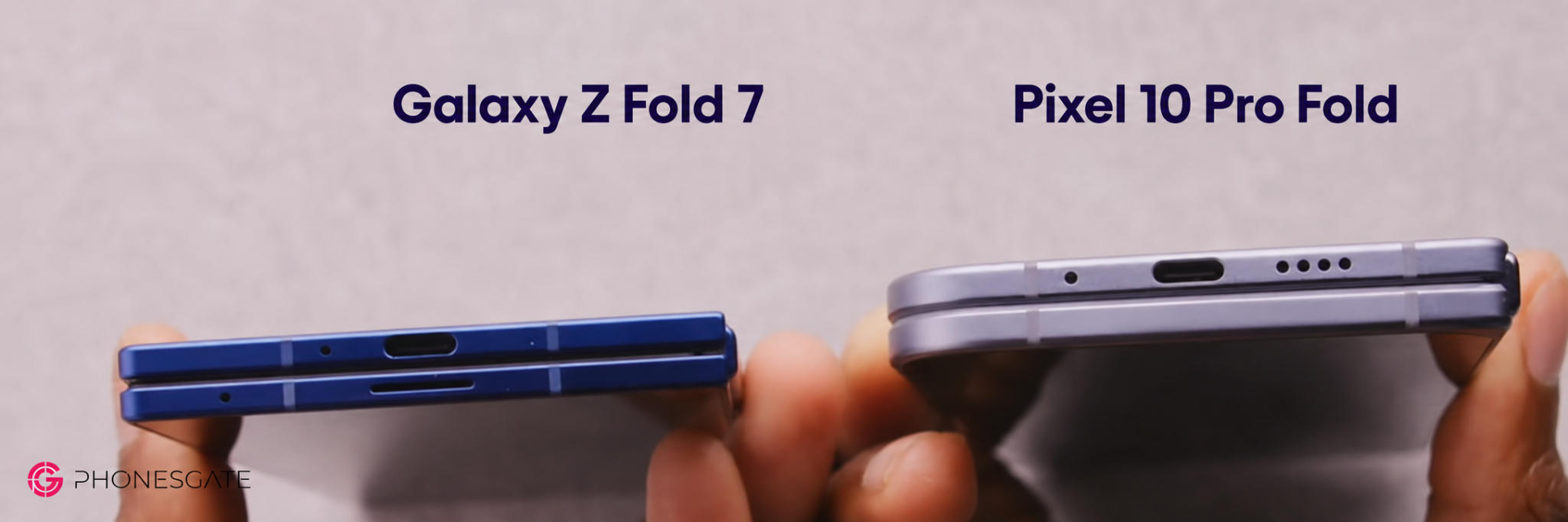
A thicker phone affects:
- one-handed use;
- pocket comfort;
- long reading sessions;
- camera handling;
- typing while closed;
- overall fatigue.
Google can argue that the additional volume helps battery life and durability. That is a valid trade-off, but it does not remove the ergonomic disadvantage.
The cameras are good, not truly ultra-premium
The rear camera system is close to flagship quality, but described as a step below Google's best conventional Pixel phones.
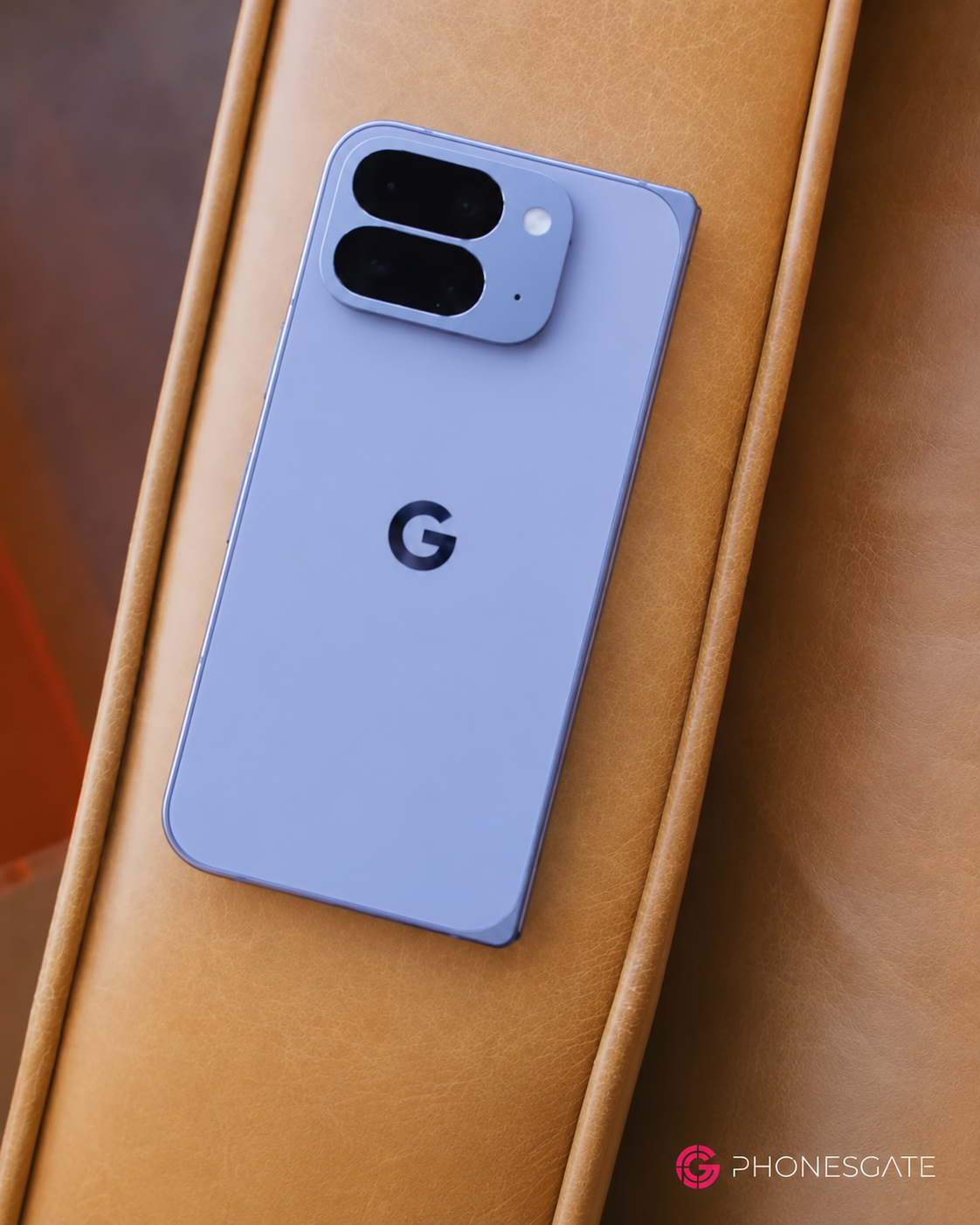
Expected weaknesses include:
- slightly lower detail;
- more image noise;
- reduced low-light capability;
- weaker selfie cameras;
- less hardware headroom than the top Pixel camera system.
The 10-megapixel cameras on the cover and inner displays are particularly unremarkable. Users can often use the rear cameras for higher-quality selfies by taking advantage of the foldable design, but the dedicated front cameras should still be better at this price.
Pixel 10 Pro Fold vs Galaxy Z Fold 7
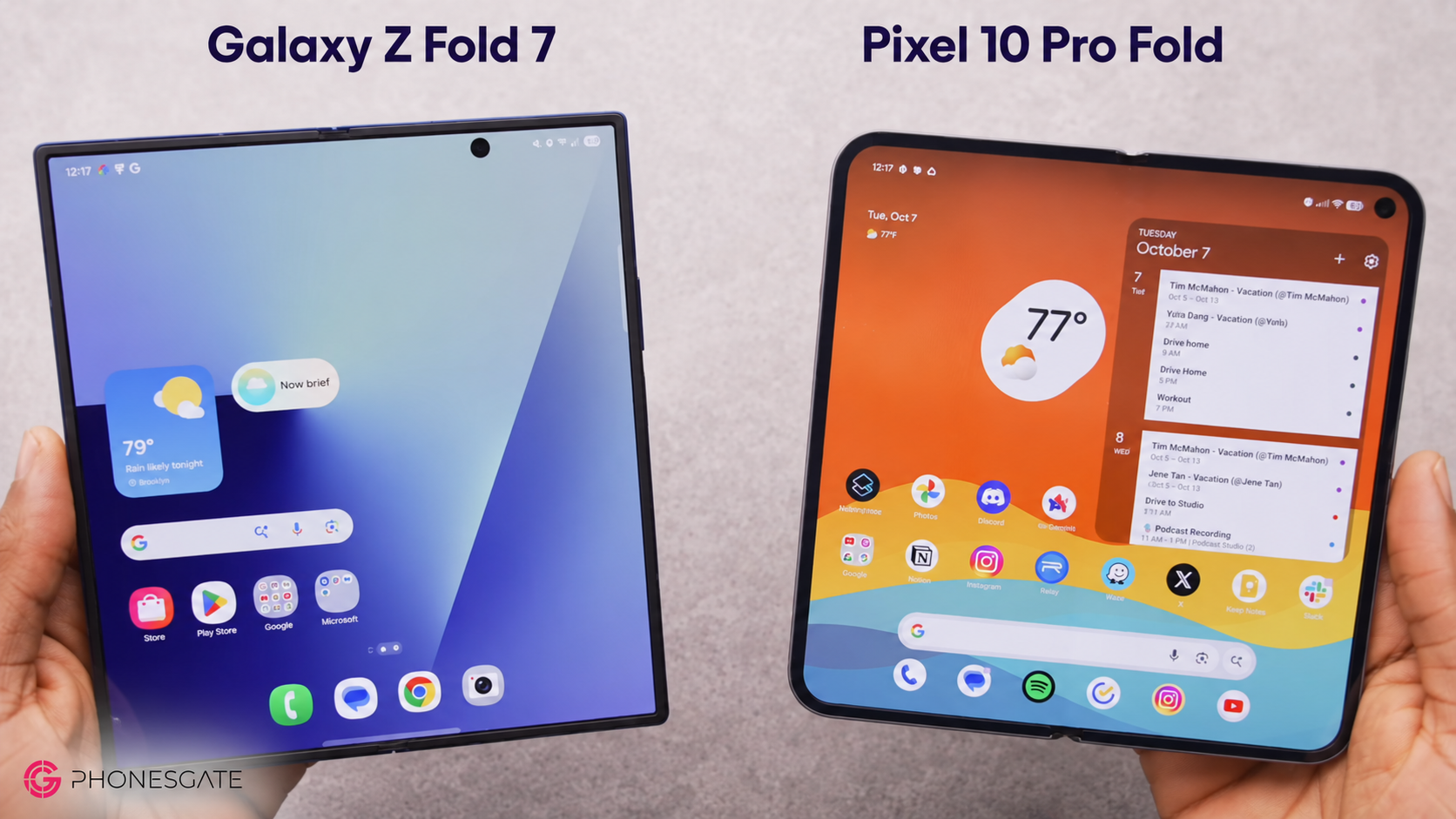
Area Pixel 10 Pro Fold Galaxy Z Fold 7 Software identity Clean Pixel Android and Google AI Feature-rich One UI and mature multitasking Thickness and weight Heavier and thicker More refined physical design Performance Tensor focused on AI and efficiency Stronger peak flagship performance Battery Strong capacity and endurance Depends more heavily on efficiency and usage Accessories PixelSnap and Qi2 magnetic compatibility Large Samsung ecosystem Best for Pixel enthusiasts who want a foldable Power users prioritizing foldable hardware and features
Who should buy the Pixel 10 Pro Fold?
The phone makes the most sense for a narrow audience.
- Pixel users who value Google's software and AI features;
- buyers who want strong battery life in a book-style foldable;
- users who depend on split-screen productivity;
- buyers who want built-in Qi2 and magnetic accessories;
- users willing to accept extra weight for durability and battery capacity.
Who should skip it?
- buyers seeking the thinnest and lightest foldable;
- serious mobile gamers;
- users demanding the fastest charging;
- camera-first buyers expecting Google's best sensor system;
- value-focused buyers who do not need the inner display;
- anyone uncomfortable with a visible crease or heavy device.
PhonesGate analysis: a great phone does not exist in a vacuum
In isolation, the Pixel 10 Pro Fold is an impressive device. It has a better hinge, bright displays, useful magnetic accessories, strong battery life and excellent software.
The problem is the competitive environment.
Other manufacturers are making foldables thinner, lighter and more comfortable. Some offer faster chips, smaller creases, better cameras or much faster charging.
At a mainstream price, Google could rely on software differentiation. At the top of the market, physical compromises become central to the buying decision.
Frequently asked questions
Is the Pixel 10 Pro Fold worth buying?
It is worth considering for Pixel enthusiasts who specifically want a foldable, but buyers should compare its weight, performance, cameras and charging with competing models.
Does the Pixel 10 Pro Fold support magnetic accessories?
Yes, PixelSnap and Qi2 support allow compatibility with many magnetic charging and mounting accessories.
Is the Pixel 10 Pro Fold waterproof?
The supplied review material describes IP68 water and dust resistance. This should be confirmed against final official specifications before publication.
How large are the displays?
The cover display is approximately 6.4 inches, while the inner display is approximately eight inches.
Is Tensor G5 good for gaming?
It is adequate for ordinary gaming, but competing flagship Snapdragon processors provide stronger peak graphics performance.
How good is the battery life?
Battery life is a major strength, particularly when much of the day is spent using the cover display.
Are the cameras flagship quality?
The cameras are very good, but they are described as slightly below Google's best conventional Pixel flagships.
Is it better than the Galaxy Z Fold 7?
The answer depends on priorities. Pixel offers Google's software and magnetic accessories, while Samsung has advantages in hardware refinement and mature foldable features.
PhonesGate verdict
The Google Pixel 10 Pro Fold is the smartest version of Google's foldable idea so far.
The new hinge improves the phone in several ways at once. It reduces bezel imbalance, frees internal space, supports a larger battery and contributes to stronger durability. The brighter displays are practical, PixelSnap adds genuine everyday convenience, and battery life is better than expected.
Google's software remains the main attraction. The device feels intelligent, helpful and coherent in a way that specification tables cannot fully capture.
But ultra-premium foldables are judged by hardware, and this is where the Pixel remains vulnerable. It is thick, heavy, not especially fast to charge, not the strongest gaming phone and not equipped with Google's best camera system.
PhonesGate's conclusion is that the Pixel 10 Pro Fold is a very good phone for a very specific buyer. Pixel fans who value software, battery life and the large inner display may love it. Buyers looking for the absolute maximum hardware for their money should compare the alternatives carefully.