
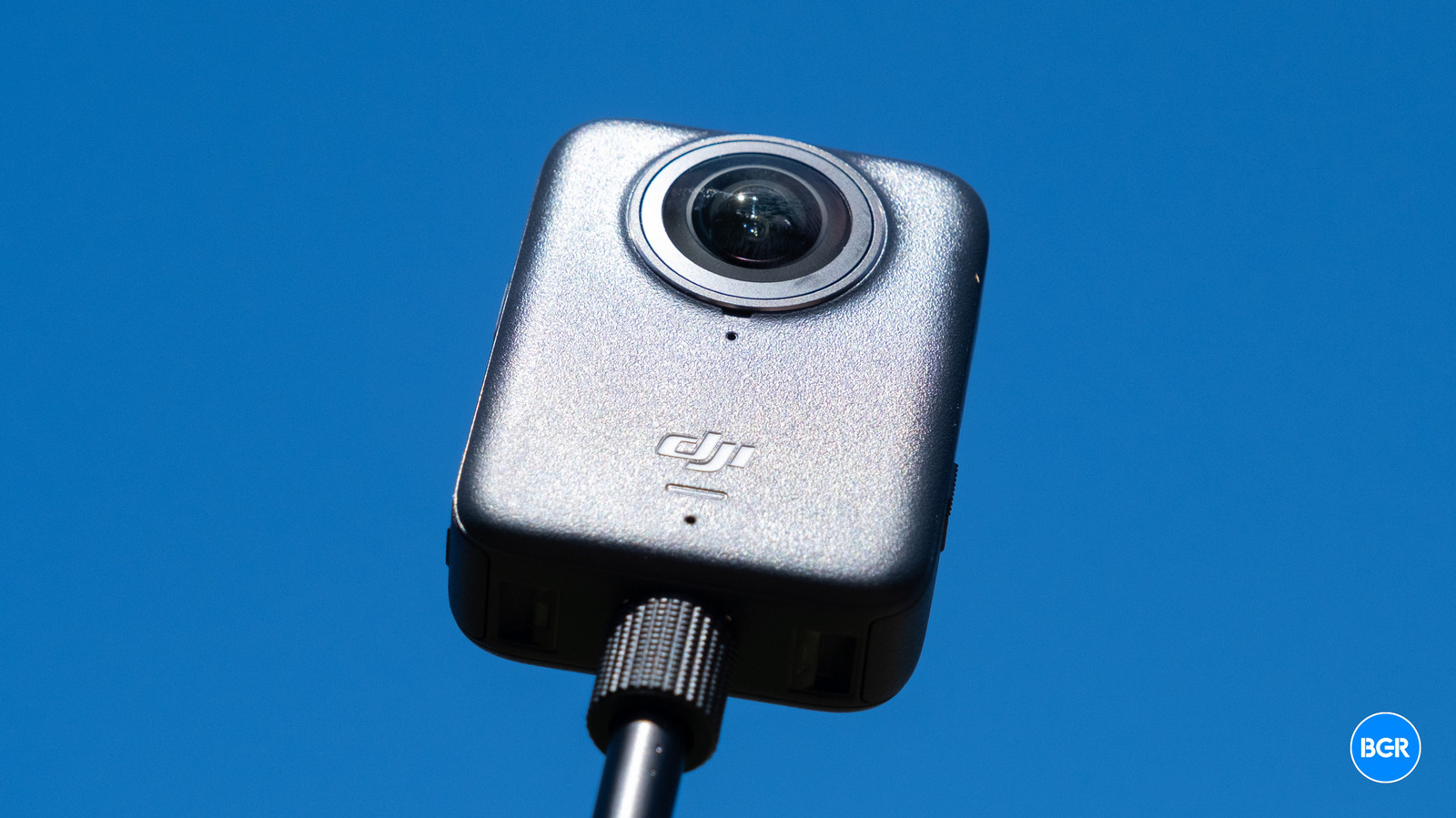
Verdict
The DJI Osmo 360 is a capable and ambitious first effort from DJI in the dedicated consumer 360 market: high-resolution 8K capture, a responsive landscape OLED touchscreen, solid build and IP68 water resistance, and extensive software tools for reframing and editing. That package competes directly with established rivals such as the Insta360 X5 and GoPro Max2. Early hardware choices — notably non‑replaceable lenses and some first‑generation quirks — mean it’s a strong option for experienced creators who value image quality and editing flexibility, but buyers who prioritize rugged field repairability should consider that limitation.
Pros
High-resolution 8K spherical capture from two 1/1.1-inch CMOS sensors enabling 4K per lens vertical resolution.
Built-in 128GB internal storage with over 100GB usable — useful if you don’t always carry a microSD card.
Key takeaway
The DJI Osmo 360 is DJI’s first consumer-focused dedicated 360 camera, combining 8K spherical capture, a landscape OLED touchscreen, and action‑camera robustness.
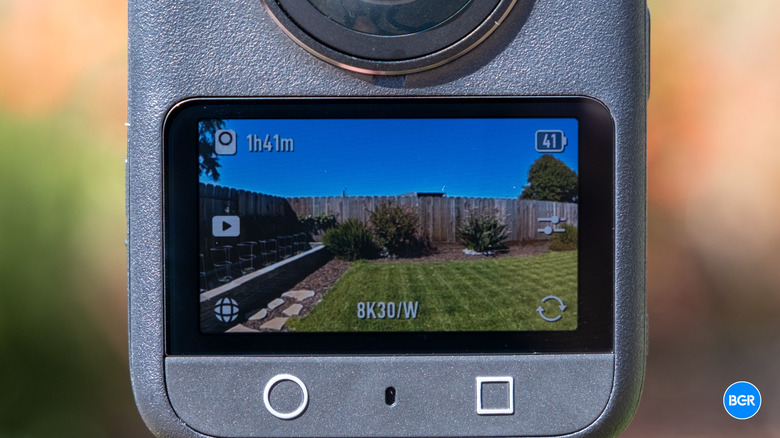
Landscape-oriented, high-brightness OLED touchscreen that’s fast and easy to navigate.
IP68 water and dust protection (up to 10 meters when ports are sealed), plus solid action‑cam build quality.
4 min read
PhonesGATE Reviews coverage from PhonesGATE Reviews. Published Jul 11, 2026.
Strong software ecosystem: DJI Mimo for mobile reframing and an editing assistant, plus DJI Studio desktop app for advanced keyframing, LUTs and 8K spherical exports.
Cons
Lenses are not user‑replaceable — a damaged lens requires service from DJI rather than a field swap.
First‑generation hardware can carry quirks that may surface in real‑world use compared with more mature models from competitors.
Accessory ecosystem and familiarity remain behind longer‑established 360 players despite the included Adventure Combo accessories.
Buying advice
Choose the Osmo 360 if you want one of the most capable consumer 360 cameras in terms of resolution and integrated workflow: the internal 128GB storage reduces dependency on microSD, and DJI’s software covers both quick mobile reframing and deeper desktop edits. If you frequently use an action camera in conditions likely to scratch lenses, factor in the lack of user‑replaceable lenses — repairs will be handled by DJI rather than fixed on the spot.
Who should buy it?
Content creators who want high-resolution 360 footage with a modern handheld interface and a cohesive editing pipeline. The Osmo 360 is particularly attractive to users who plan to reframe 360 captures into flat video for social platforms or produce 8K spherical exports for VR and YouTube 360.
Experienced videographers who value image quality, internal storage and advanced desktop controls will appreciate the DJI Studio workflow and D‑Log support mentioned for color grading.
Alternatives
Insta360 X5 — a direct competitor with a more established 360 camera lineage and different tradeoffs in handling and accessories.
GoPro Max2 — another comparable option from an action‑camera incumbent, with its own ecosystem strengths and user expectations.
Further notes on design, software and performance
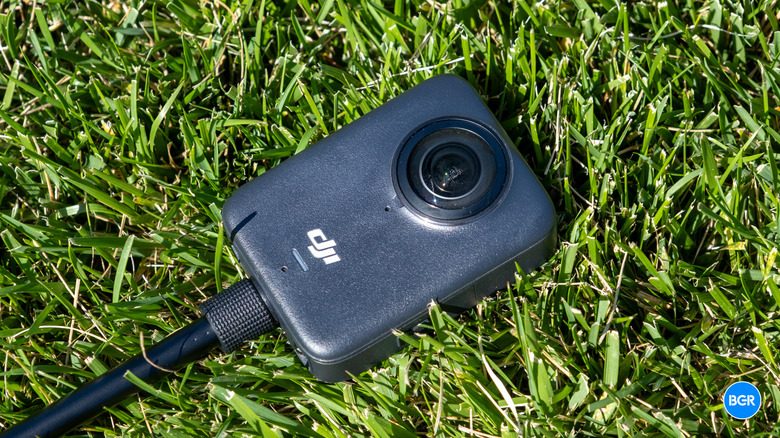
DJI departs from the tall, stick‑style form factor used by some rivals, opting instead for a shorter, wider brick‑like body with a larger landscape screen that feels more camera‑like in the hand. At roughly 183 grams and dimensions of 61 × 36.3 × 81mm, it’s slightly lighter than some competitors while offering a wider viewing surface for menus and framing.
The touchscreen interface is responsive, with quick access to shooting modes, motion blur settings and status indicators. Hands‑free features include voice and gesture controls plus a Twist Shot for starting recording remotely by twisting a selfie stick, which is helpful for pole‑mounted use. On the mobile side, DJI Mimo connects over Wi‑Fi 6 for live view, remote control, mobile reframing and an AI‑assisted Editing Assistant that suggests reframed edits with subject tracking. For heavier work, DJI Studio provides a multi‑panel desktop environment with timeline editing, virtual camera keyframing, projection adjustments and LUT support, and it can export full 8K spherical video for VR and YouTube 360.
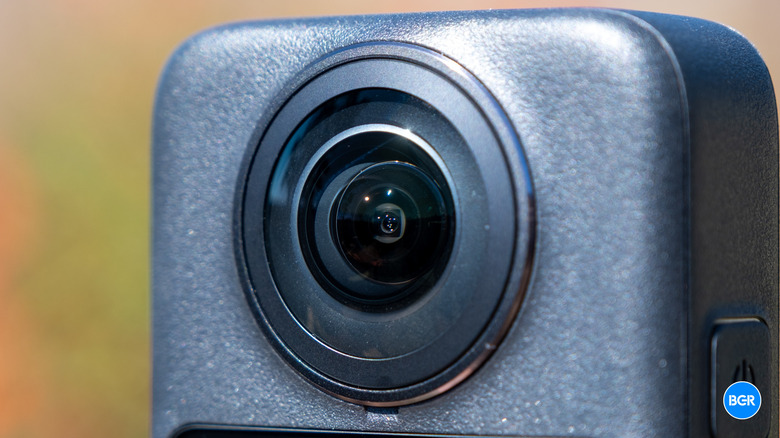
On imaging hardware, the camera uses two square 1/1.1‑inch CMOS sensors and can produce up to 8K spherical video by leveraging a 4,000‑pixel vertical count per lens. DJI’s marketing explains that the combined field of view and sensor arrangement approximates a “one‑inch imaging” coverage, though the sensors themselves are not literal one‑inch units. The reviewer notes the system’s strong on‑paper capability while also warning that first‑generation hardware still has some practical tradeoffs compared with more mature products.
Sources and methodology
This article is based on reporting from BGR Mobile Reviews, with PhonesGATE editorial context and buyer-focused analysis.