

Apple appears to be behind in the most visible part of the artificial intelligence race. ChatGPT changed public expectations almost overnight, Google accelerated Gemini across search and Android, Meta pushed open models into the mainstream, and new AI tools began appearing in productivity software, browsers and smartphones at remarkable speed.
Apple's response was slower, less complete and often harder to explain. Apple Intelligence arrived as a collection of writing tools, image features, notification summaries and promises around a more personal Siri. Several of the most ambitious ideas took longer than expected, while rival assistants continued improving.
That makes the obvious question easy to ask: did Apple lose the AI race?
Key takeaway
PhonesGate examines whether Apple lost the AI race, why Siri and Apple Intelligence remain behind leading assistants, and how hardware, privacy and on-device AI could still give Apple a major advantage.
The answer depends on which race we mean. If the contest is about building the most capable general-purpose AI assistant today, Apple is not leading. If the contest is about controlling the hardware, operating system and private computing environment where future AI will run, Apple remains one of the strongest companies in the industry.
This PhonesGate editorial examines both sides of the argument. Apple may have lost the first phase of the AI race, but the second phase—where AI becomes a permanent layer inside personal devices—has only begun.
13 min read
Apple coverage from PhonesGate. Published Jul 23, 2026.
The AI race is actually two different competitions
Public discussion often treats artificial intelligence as one single competition. In practice, there are at least two.
Race What matters Current advantage Race 1: AI models and assistants Reasoning, coding, world knowledge, multimodal ability, speed and cloud scale Companies focused primarily on AI models and cloud services Race 2: Personal AI hardware On-device processing, privacy, ecosystem access, chips, memory and distribution Companies controlling large device ecosystems
Apple is clearly weaker in the first race. It has not introduced a general-purpose assistant that matches the strongest cloud AI systems in breadth, coding capability or autonomous task execution.
But Apple is exceptionally well positioned in the second race. It controls the iPhone, iPad, Mac, Apple Watch, operating systems, custom processors, security architecture and one of the most valuable consumer ecosystems in technology.
Why many people believe Apple already lost
The case against Apple starts with timing. When generative AI became a mainstream technology shift, other companies moved immediately.
New chat assistants appeared, search products changed, coding tools improved and image generation became widely available. Apple, by comparison, spent a long period avoiding detailed public discussion of generative AI.
That silence created a perception problem. Investors, developers and consumers could see rapid progress elsewhere while Apple's most visible assistant, Siri, still struggled with basic context and follow-up questions.
When Apple Intelligence was eventually announced, the company presented a vision built around personal context, privacy and system integration. The idea was compelling, but the early feature set felt fragmented. Writing tools, image creation, summaries and visual features were useful in selected situations, but they did not immediately create a new computing experience.
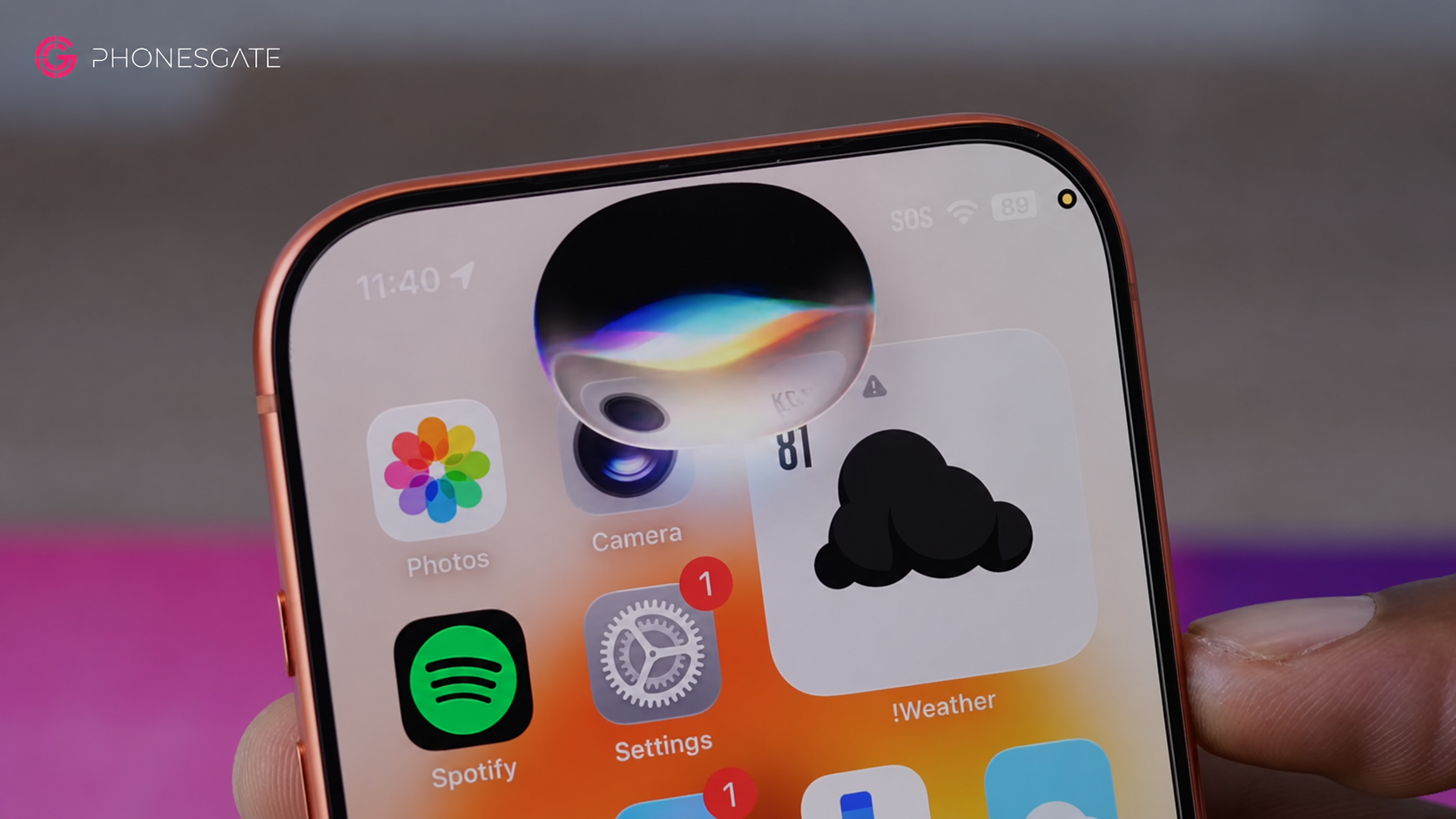
Siri became the symbol of Apple's delay
Siri was once one of the first widely recognized voice assistants. Over time, however, it became a symbol of missed potential.
Users increasingly expected assistants to understand natural language, maintain context, answer broad questions and interact with multiple applications. Siri often remained limited to short commands, basic device actions and web-result handoffs.
That weakness mattered because generative AI redefined what users expected from an assistant. The comparison was no longer between Siri and older voice tools. It was between Siri and systems capable of explaining concepts, writing code, analyzing documents and continuing long conversations.
Apple Intelligence initially felt like a feature bundle
Apple Intelligence included useful functions, but many were similar to features already available elsewhere:
- writing and rewriting assistance;
- notification and message summaries;
- image cleanup;
- custom emoji generation;
- basic image creation;
- more contextual Siri behavior.
The problem was not that these features were useless. The problem was that they did not immediately demonstrate leadership.
Apple is behind in model capability
General-purpose AI platforms are judged by how well they reason, write, code, analyze, remember context and work across different media.
Apple's current strategy does not make its own assistant the strongest option in those categories. The most capable external models can perform long-form research, generate software, analyze large files and work on complex tasks over extended sessions.
Siri remains more focused on personal-device interaction than open-ended computation.
Apple does not currently lead in coding
Developers increasingly use AI to explain code, generate functions, debug errors and plan software architecture. Apple's consumer assistant is not the leading tool for these workflows.
Apple does not lead in general reasoning
Leading cloud assistants can compare ideas, construct detailed explanations and solve multi-step problems. Apple has not yet established Siri as the strongest system for these tasks.
Apple does not lead in persistent memory
AI systems are beginning to preserve user preferences and context between conversations. Apple's personal-context approach is potentially powerful, but its broader conversational memory remains limited compared with systems designed around ongoing assistant relationships.
Why Apple may not need to win the model race
Apple's core business is not selling access to an AI model. It sells devices, services and ecosystem continuity.
This distinction changes the strategic goal. Apple does not necessarily need the world's most powerful standalone model. It needs AI that makes its hardware more valuable and keeps users inside the ecosystem.
An AI company may judge success by subscriptions, API usage or model benchmarks. Apple can judge success by whether AI helps sell more iPhones, increases device retention and strengthens the connection between Apple products.
“Good enough” AI can still protect the iPhone
For many users, the most valuable AI features are not advanced research or code generation. They are practical tasks:
- finding information from messages;
- summarizing notifications;
- editing photos;
- drafting short text;
- identifying objects through the camera;
- creating reminders and calendar actions;
- answering questions about on-screen content.
If Apple performs these tasks reliably and privately, it can remain competitive even when another company has the stronger general-purpose model.
Apple's real advantage is hardware distribution
The most important part of Apple's AI strategy may be the hardware already in users' hands.
Apple controls a global installed base of phones, tablets and computers. It also controls the processors inside many of those devices and the software layer connecting them.
This gives Apple several advantages:
- AI features can be integrated directly into the operating system;
- on-device models can use dedicated neural-processing hardware;
- personal data can be indexed locally;
- features can work across multiple Apple devices;
- AI can become part of existing applications instead of a separate destination.
On-device AI changes the meaning of leadership
Cloud models are currently more capable because they run on large data-center hardware. But personal AI is moving toward a hybrid model.
Fast, private and frequent tasks can run locally. More demanding requests can be sent to the cloud.
As local models improve, more work can remain on the device. That favors companies with strong chips, memory architecture, operating-system control and large hardware distribution.
Apple Silicon is strategically important
Apple designs its own processors for major product categories. This allows the company to optimize the CPU, GPU, neural-processing hardware, memory and software together.
AI workloads depend heavily on memory bandwidth, energy efficiency and specialized acceleration. Apple's control over these components could become more valuable as devices run larger local models.
Privacy may become a competitive advantage
Personal AI requires access to sensitive information. Messages, emails, photos, calendar events, location history, health data and financial activity can all make an assistant more useful.
They also create substantial privacy risk.
Apple's strategy emphasizes local processing and tightly controlled cloud execution. Whether every implementation meets that standard must be evaluated carefully, but the strategic position is clear: Apple wants users to believe that personal context can be used without becoming part of an advertising profile.
This could matter more as assistants become increasingly personal.
Apple's best AI feature may be ecosystem context
Standalone AI applications can be powerful, but they do not automatically have deep access to the rest of the phone.
Apple can integrate AI into Messages, Mail, Photos, Calendar, Wallet and system search. That gives Siri the potential to answer questions based on the user's actual life rather than only general world knowledge.
Examples include:
- finding a product mentioned in an old message;
- locating a reservation from email;
- identifying where a photo was taken;
- summarizing upcoming appointments;
- combining information from messages and calendar events.
This type of integration is difficult for a third-party app to replicate because operating systems restrict access to private data for security reasons.
Where Apple's ecosystem approach falls short
The same integration that creates Apple's advantage can also become a limitation.
Siri works best when the user's information is stored inside Apple applications. Users relying on third-party messaging, mail, calendar or cloud tools may receive a much weaker experience.
Developer support is therefore critical. Apple needs a safe framework allowing third-party applications to expose useful data and actions without giving the assistant unrestricted access.
AI photo editing shows Apple's practical strategy
Apple's AI approach is often clearest in photo tools. Instead of asking users to open a separate generative platform, the company places AI directly inside the Photos app.
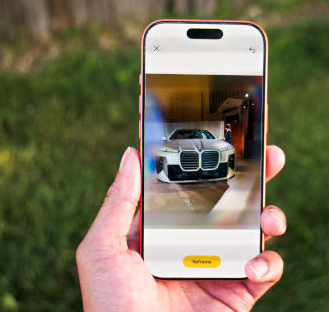
Features such as cleanup, image extension and reframing can solve common problems:
- removing unwanted background objects;
- changing aspect ratio;
- expanding a composition;
- improving symmetry;
- adjusting the apparent viewpoint.
These tools may not prove that Apple has the strongest AI model. They show how Apple can convert AI into a simple consumer feature inside an application people already use.
The cloud still matters
The idea that all future AI will run locally is attractive but incomplete.
Small and efficient models can handle many personal tasks. The most capable reasoning, coding and multimodal systems will continue to benefit from large cloud infrastructure.
The likely future is hybrid:
- local models for privacy, speed and routine actions;
- cloud models for complex reasoning and large workloads;
- secure routing between the two;
- clear user controls over what data leaves the device.
Apple does not need to eliminate cloud AI. It needs to decide when the cloud is necessary and make that transition understandable.
Why partnerships are not automatically a loss
Apple may use external AI providers for tasks its own models cannot perform well enough.
Some observers interpret this as proof that another company has won. In model capability, that may be true. Strategically, however, purchasing external intelligence can be rational if Apple retains control of the device, interface and user relationship.
Apple already relies on external companies for search, cloud services, components and manufacturing. The company often controls the product experience without building every underlying technology.
Could an AI company build a device that replaces the iPhone?
This is the most serious long-term risk to Apple.
If a new AI-first device becomes the primary way people communicate, search, create and manage their lives, the smartphone could lose some of its importance.
An AI company could attempt to build:
- a dedicated personal assistant device;
- AI glasses;
- a voice-first wearable;
- an AI-centered phone;
- a new operating system organized around agents instead of apps.
Success is far from guaranteed. Replacing the smartphone requires solving battery life, connectivity, input, privacy, applications, cameras, payments and global distribution.
Apple's advantage is that the iPhone already solves these problems. Its challenge is making sure AI does not make the traditional app-based interface feel outdated.
Could Apple win by turning the iPhone into the AI computer?
Apple does not need to create a completely new category if it can evolve the iPhone into the main personal AI device.
That would require:
- reliable on-device models;
- strong personal context;
- background task execution;
- deep third-party app actions;
- clear privacy controls;
- better conversational memory;
- fast access across iPhone, Mac, Watch and AirPods.
If Apple achieves this, its late start may matter less. The company would not need to win every benchmark. It would need to make AI feel inseparable from the device.
How the major companies are positioned
Company type Strongest advantage Main weakness AI model specialists General intelligence, reasoning and rapid model development Limited control over consumer hardware and operating systems Google AI models, search, Android and cloud infrastructure Fragmented hardware distribution outside its own devices Meta Open models and enormous social distribution Limited ownership of mainstream phone operating systems Microsoft Enterprise software, cloud and developer tools Weak position in consumer mobile hardware Apple Hardware, custom chips, ecosystem and personal data integration Behind in general-purpose AI capability and speed of delivery
What Apple must improve
Apple's hardware position does not guarantee success. The company still needs major software improvements.
1. Siri must become reliable
A personal assistant cannot depend on perfect wording. It must understand intent, handle ambiguity and explain failures clearly.
2. Background tasks are essential
Modern assistants should be able to work on longer requests while the user does something else.
3. Memory needs to improve
The assistant should remember preferences with clear controls and transparent deletion options.
4. Third-party integration must be broad
Apple cannot build a personal assistant that only understands Apple applications.
5. Developers need stable tools
AI actions must be predictable, secure and easy to implement across applications.
PhonesGate analysis: Apple lost the first race
If the first AI race is defined as building the strongest general-purpose assistant quickly, Apple lost.
Other companies created the products that changed user expectations. They established the conversational interface, the subscription market, the coding assistant category and the public idea of what generative AI could do.
Apple reacted later and delivered less.
That conclusion should not be softened simply because Apple remains profitable or continues selling iPhones. Model leadership is a real strategic advantage, and Apple currently does not hold it.
PhonesGate analysis: the second race remains open
The next race is about making AI personal, private, continuous and available across everyday hardware.
Apple begins that race with major strengths:
- a large premium device base;
- custom silicon;
- strong operating-system control;
- consumer trust around privacy;
- deep integration across devices;
- distribution that AI startups do not have.
But a strong starting position is not the same as victory. Apple must turn these assets into a genuinely useful assistant before a competitor creates a more compelling device experience.
Frequently asked questions
Did Apple lose the AI race?
Apple is behind in general-purpose AI models and assistants, but it remains strongly positioned in on-device AI, hardware and ecosystem integration.
Is Apple Intelligence better than ChatGPT?
Apple Intelligence is more deeply integrated into Apple devices, while ChatGPT is generally stronger for open-ended reasoning, writing, coding and research.
Why is Siri behind?
Siri was designed for a previous generation of voice commands and required major architectural changes to support modern conversational AI.
Can Apple catch up?
Yes, especially in personal and on-device AI, but catching up requires reliable Siri behavior, third-party integrations and stronger assistant memory.
Does Apple need its own foundation model?
Apple needs capable internal models for privacy and integration, but it can also use external providers for tasks requiring larger cloud systems.
What is Apple's biggest AI advantage?
Its biggest advantage is control over hardware, operating systems, custom chips and access to personal context across the Apple ecosystem.
Could an AI company replace the iPhone?
It is possible, but building a device that replaces the iPhone requires solving far more than AI model quality.
PhonesGate verdict
Apple did not win the first phase of the AI race. It moved too slowly, delivered incomplete features and allowed other companies to define what modern AI should feel like.
But declaring the entire race over would be premature.
The future of AI will not be determined only by who has the highest benchmark score or the most capable chatbot. It will also depend on who controls the devices, data, operating systems and private computing environments where people use AI every day.
Apple is behind in intelligence, but ahead in distribution. It lacks the strongest assistant, but owns one of the strongest hardware ecosystems. It may need outside models, but it controls the interface through which millions of users will access them.
The decisive question is no longer whether Apple can build a chatbot. It is whether Apple can make the iPhone the best personal AI computer before someone else creates a device that makes the iPhone feel unnecessary.
PhonesGate's conclusion is simple: Apple lost the opening round, not the entire race.